Connect with us

Business

In Burkina Faso, cashew cultivation is a lever for sustainable and inclusive rural development

Published

on

Cashew

Launched in 2017 and completed in 2024, the Cashew Development Support Project in the Comoé Basin for REDD+ (PADA/REDD+) exemplified sustainable development. The project combined poverty reduction, ecological transition and the empowerment of women and young people, achieving a remarkable implementation rate of 95 percent.  It has revitalised the cashew nut industry, Burkina Faso’s third largest agricultural export after cotton and sesame.

The PADA/REDD+ project received support from the African Development Bank, which granted a loan of $4 million, and the African Development Fund, the Bank Group’s concessional funding window, with a grant of $1.39 million, representing 61 percent of the total project cost of $8.82 million. The government of Burkina Faso and the beneficiaries provided the remaining funding.

The project mobilised the necessary resources to contribute to the sustainable transformation of the Cascades, Hauts Bassins and South-West regions, with significant participation from women. It enabled producers to reduce maintenance costs, improve soil fertility and structure, and increase cashew productivity and incomes in a sustainable manner.

Climate action combined with agricultural production

The first component of the PADA/REDD+ focused on carbon sequestration. This resulted in the creation of seven tree parks, the production of more than 1.6 million improved seedlings and the development of approximately 27,000 hectares of agroforestry plantations. One-third of these plantations are maintained by women, underlining the project’s commitment to promoting social inclusion. A total of 35,340 producers, including 6,047 women, were trained in good agricultural and organic practices.

This capacity-building approach for producers and processors equipped each stakeholder with the skills required to meet their needs and expectations, particularly in mastering technical production and processing methods.

Adama Patrick Sombié, a cashew nut processor in Bérégadougou, confirms his satisfaction: “Before the project, there were no cashew tree parks in the village, only forest and a few orchards. When the project offered plots to promoters, I signed up and received two hectares.”

Thanks to the project, we have been able to purchase six automatic shelling machines, which are twice as fast as our 25 manual shelling tables

Access to finance and modernization of processing

The second component of the project focused on strengthening value chains. Long hampered by limited access to finance, the sector’s development has benefited from an innovative partnership with the umbrella organisation of Burkina Faso’s Caisses populaires banks, alongside savings and loan cooperatives.

This mechanism enabled investment loans to be granted based on a sliding scale of interest rates, financing 103 microprojects for a total of 888 million CFA francs, or approximately $500,000. The project also created 9,580 additional “green” jobs, 92.66 percent of which were for women, by financing micro-investment projects.

Thanks to the funding provided, seven processing units were modernised. A new unit called “Tensya” was established in the commune of Toussiana, and three warehouses were built, one of which is reserved for women. The project also enabled the purchase of 12 trucks and 45 tricycles, training in good practices for 631 people, strengthening the environmental skills of 477 stakeholders, and the construction and equipping of infrastructure such as a cooking and shelling centre for women in Diéri, entirely subsidised by the African Development Bank.

An inclusive and sustainable impact

These microprojects reached nearly 18,000 people, 61 percent of whom were women, further strengthening the inclusive approach of PADA/REDD+. “This project is a blessing for us. Thanks to the income generated, we can send our children to school and keep them healthy. Before, we used to sell our products at rock-bottom prices, but now, with our own processing units, we control the entire value chain,” says Aramatou Barro, a processor in Diéri.

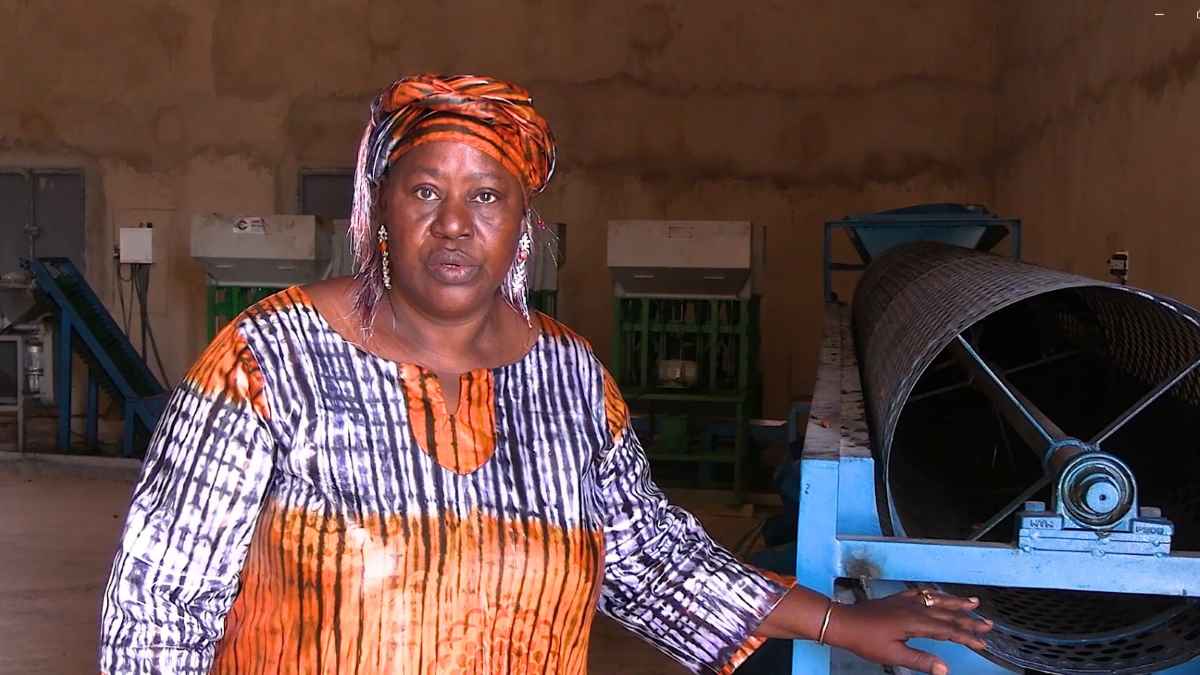
Christiane Koné, a processor in Toussiana, confirms this postive impact: “Thanks to the project, we have been able to purchase six automatic shelling machines, which are twice as fast as our 25 manual shelling tables.”

At the same time, the project structured supply networks, ensured that 96 cooperatives complied with OHADA (Organization for the Harmonization of Business Law in Africa) standards and implemented an environmental management plan. Working conditions have improved significantly. Isso Kindo, a trader in Bobo-Dioulasso, says: “Transport was our main obstacle. Today, thanks to the truck financed by the project, I can transport up to 60 tonnes of nuts from the towns of Banfora and Mangodara.”

The impact of PADA/REDD+ can also be measured in terms of job creation for young people and rural entrepreneurs. In Orodara, Arzouma Zougouri, a producer and business owner, explains that “the project’s support has enabled me to better equip my processing unit. I’ve gone from 200 to 300 employees,” he says proudly.

By structuring the cashew nut sector sustainably, increasing productivity and strengthening local processing, PADA/REDD+ achieved its objectives whilst laying the foundations for more resilient rural development. Its contribution to carbon sequestration through agroforestry plantations strengthens its environmental impact. Perennial plantations, modernised agricultural practices, a strengthened local processing network and better access to finance were the pillars of this success.

Distributed by APO Group on behalf of African Development Bank Group (AfDB).

Home  Facebook

Events

As global power structures shift, Invest Africa convenes The Africa Debate 2026 to redefine partnership in a changing world

Published

on

The Africa Debate 2026 will provide a platform for this essential, era-defining discussion, convening leaders to explore how Africa and its partners can build more balanced, resilient and sustainable models of cooperation

LONDON, United Kingdom, February 5, 2026/APO Group/ –As African economies assert greater agency in a rapidly evolving global order, Invest Africa (www.InvestAfrica.com) is delighted to announce The Africa Debate 2026, its flagship investment forum, taking place at the historic Guildhall in London on 3 June 2026.

Now in its 12th year, The Africa Debate has established itself as London’s premier platform for African investment dialogue since launching in 2014, convening over 800 global decision-makers annually to shape the future of trade, finance, investment, and development across the continent.

Under the theme “Redefining Partnership: Navigating a World in Transition”, this year’s forum will focus on Africa’s response to global economic realignment with greater agency, ambition and economic sovereignty.

The Africa Debate puts Africa’s priorities at the centre of the conversation, moving beyond traditional narratives to focus on ownership, resilience and long-term value creation.

“Volatility is not new to Africa. What is changing is the opportunity to respond with greater agency and ambition,” says Invest Africa CEO Chantelé Carrington.

“This year’s edition of The Africa Debate asks how we strengthen economic sovereignty — from access to capital and investment to financial and industrial policy — so African economies can take greater ownership of their growth. Success will be defined by how effectively we turn disruption into leverage and partnership into shared value.”

The Africa Debate 2026 will provide a platform for this essential, era-defining discussion, convening leaders to explore how Africa and its partners can build more balanced, resilient and sustainable models of cooperation.

Key challenges driving the debate

Core focus areas for this year’s edition of The Africa Debate include:

This year’s edition of The Africa Debate asks how we strengthen economic sovereignty — from access to capital and investment to financial and industrial policy

Global Realignment & New Partnerships

How shifting geopolitical and economic power structures are reshaping Africa’s global partnerships, trade dynamics and investment landscape.

Financing Africa’s Future

The growing need to reform the global financial architecture, new approaches to development finance, as well as the strengthening of market access and financial resilience of African economies in a changing global system.

Strategic Value Chains

Moving beyond primary exports to build local value chains in critical minerals for the green economy. Also addressing Africa’s energy access gap and mobilising investment in renewable and transitional energy systems.

Digital Transformation & Technology

Unlocking growth in fintech, AI and digital infrastructure to drive productivity, inclusion, and the next phase of Africa’s economic transformation.

The Africa Debate 2026 offers a unique platform for high-level dialogue, deal-making, and strategic engagement. Attendees will gain actionable insights from leading policymakers, investors and business leaders shaping Africa’s economic future, while building strategic partnerships that define the continent’s next growth phase.

Registration is now open (http://apo-opa.co/46b19gj).

Distributed by APO Group on behalf of Invest Africa.

Continue Reading

Business

Zion Adeoye terminated as Chief Executive Officer (CEO) of CLG due to serious personal and professional conduct violations

Published

on

After a thorough internal and external investigation, along with a disciplinary hearing chaired by Sbongiseni Dube, CLG (https://CLGglobal.com) has made the decision to terminate Zion Adeoye due to serious personal and professional conduct violations. This process adhered to the Code of Good Practice of the Labour Relations Act, ensuring fairness, transparency, and compliance with South African law.

Mr. Adeoye has been held accountable for several serious offenses, including:

  • Making malicious and defamatory statements against colleagues
  • Extortion
  • Intimidation
  • Fraud
  • Misuse of company funds
  • Theft and misappropriation of funds
  • Breach of fiduciary duty
  • Mismanagement

His actions are in direct contradiction to our firm’s core values. We do not approve of attorneys spending time in a Gentleman’s Club. CLG deeply regrets the impact this situation has had on our colleagues and continues to provide full support to those affected.

We want to express our gratitude to those who spoke up and to reassure everyone at the firm of our unwavering commitment to maintaining a respectful workplace. Misconduct of any kind is unacceptable and will be addressed decisively.

We recognize the seriousness of this matter and have referred it to the appropriate law enforcement, regulatory, and legal authorities in Nigeria, Mauritius, and South Africa. We kindly ask that the privacy of the third party involved be respected.

Distributed by APO Group on behalf of CLG.


Continue Reading

Business

The International Islamic Trade Finance Corporation (ITFC) Strengthens Partnership with the Republic of Djibouti through US$35 Million Financing Facility

Published

on

This facility forms part of the US$600 million, three-year Framework Agreement signed in May 2023 between ITFC and the Republic of Djibouti, reflecting the strong and growing partnership between both parties

JEDDAH, Saudi Arabia, February 5, 2026/APO Group/ –The International Islamic Trade Finance Corporation (ITFC) (https://www.ITFC-IDB.org), a member of the Islamic Development Bank (IsDB) Group, has signed a US$35 million sovereign financing facility with the Republic of Djibouti to support the development of the country’s bunkering services sector and strengthen its position as a strategic regional maritime and trade hub.

The facility was signed at the ITFC Headquarters in Jeddah by Eng. Adeeb Yousuf Al-Aama, Chief Executive Officer of ITFC, and H.E. Ilyas Moussa Dawaleh, Minister of Economy and Finance in charge of Industry of the Republic of Djibouti.

The financing facility is expected to contribute to Djibouti’s economic growth and revenue diversification by reinforcing the competitiveness and attractiveness of the Djibouti Port as a “one-stop port” offering comprehensive vessel-related services. With Red Sea Bunkering (RSB) as the Executing Agency, the facility will support the procurement of refined petroleum products, thus boosting RSB’s bunkering operations, enhancing revenue diversification, and consolidating Djibouti’s role as a key logistics and trading hub in the Horn of Africa and the wider region.

We look forward to deepening this partnership, creating new opportunities, and leveraging collaborative programs to advance key sectors and drive sustainable economic growth

Commenting on the signing, Eng. Adeeb Yousuf Al-Aama, CEO of ITFC, stated:

“This financing reflects ITFC’s continued commitment to supporting Djibouti’s strategic development priorities, particularly in strengthening energy security, port competitiveness, and trade facilitation. We are proud to deepen our partnership with the Republic of Djibouti and contribute to sustainable economic growth and regional integration.”

H.E. Ilyas Moussa Dawaleh, Minister of Economy and Finance in charge of Industry of the Republic of Djibouti, commented: “Today’s signing marks an important milestone in the development of Djibouti’s bunkering services and reflects our strong and valued partnership with ITFC, particularly in the oil and gas sector. This collaboration supports our ambition to position Djibouti as a regional hub for integrated maritime and logistics services. We look forward to deepening this partnership, creating new opportunities, and leveraging collaborative programs to advance key sectors and drive sustainable economic growth.”

This facility forms part of the US$600 million, three-year Framework Agreement signed in May 2023 between ITFC and the Republic of Djibouti, reflecting the strong and growing partnership between both parties.

Since its inception in 2008, ITFC and the Republic of Djibouti have maintained a strong partnership, with a total of US$1.8 billion approved primarily supporting the country’s energy sector and trade development objectives.

Distributed by APO Group on behalf of International Islamic Trade Finance Corporation (ITFC).

Continue Reading

Trending

Exit mobile version