Connect with us

Tech

HUAWEI Mate XT 2 | ULTIMATE DESIGN Debuts as the First Smartphone to Feature LogicFolding Tau (τ) Chip and Reach Mass Commercialization

Published

on

HUAWEI

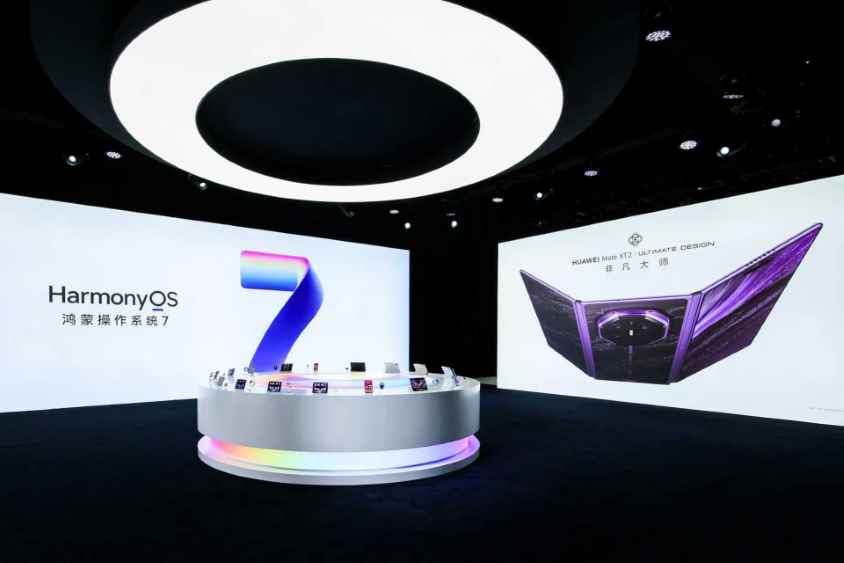
GUANGZHOU, CHINA – Media OutReach Newswire – 7 September 2026 – On September 7, Huawei officially unveiled the latest addition to its tri-fold lineup, the HUAWEI Mate XT 2 | ULTIMATE DESIGN. As the first smartphone to feature the LogicFolding Tau (τ) Chip, HUAWEI Mate XT 2 | ULTIMATE DESIGN marks the chip’s official entry into mass commercialization.

The phone debuts with a wing-like tri-fold design, continuously pushing the boundaries of ultimate aesthetics, craftsmanship, and innovation. It is the first device powered by the Kirin 9050 Pro chip and introduces several industry-first features and experiences, including the Xuanwu Ultra-Durable Tri-Fold Architecture, Smart Shield Privacy Screen, True-to-Color Camera 3.0, and the HarmonyOS 7 large-screen experience. As the pioneer of tri-fold phones, this new generation once again redefines the extraordinary.


The new HUAWEI Mate XT 2 | ULTIMATE DESIGN features a wing-like tri-fold design that opens from both sides, offering a more intuitive unfolding experience. The design philosophy draws on Chinese aesthetics, with a cloud pattern on the back panel created using Brocade Cloud craftsmanship. It is available in three colors: Purple, White, and Black. The camera ring inherits the iconic Star Diamond Glow design, crafted from Yttrium Crystal and fired at 1,800°C. Combining gemstone design and cutting techniques, it undergoes eight steps of fine polishing to form 33 star diamond facets, delivering a dazzling gemstone-like luster.

The device features the Xuanwu Ultra-Durable Tri-Fold Architecture, which re-engineers the hinge and screen technology for layered protection from the inside out. It is the first tri-fold phone to support IP58/59 dust and water resistance. The cover screen, made of Xuanwu Kunlun Glass, resists daily scratches and impacts with ease. It also features anti-glare technology, ensuring clear visibility even under direct sunlight. The main screen uses a multi-layer composite ultra-tough structure, including a large UTG glass layer, aerospace-grade ultra-thin high-strength steel, and a carbon fiber support layer, providing robust impact resistance. The Advanced Precision Hinge System 2.0 employs a 5 curved arm structure and a synchronized linkage mechanism for even force distribution and reliable pressure resistance.

Ultimate Performance: Kirin Chipset, a Leap in Power

The HUAWEI Mate XT 2 | ULTIMATE DESIGN is the first to feature the Kirin 9050 Pro chip, delivering a dual leap in performance and energy efficiency. Through deep collaboration between hardware, software, chips, and cloud, overall device performance is improved by 42% compared to the previous generation. The LinxiCore CPU, combined with the Ultra-smooth HUAWEI Ark Engine, enables faster loading of large files and superior performance when running multiple apps or multitasking. The Maleoon GPU features doubled computing units and cache, significantly enhancing rendering performance. In gaming scenarios, it supports 50 MRPS hardware-level real-time ray tracing, delivering a more immersive and realistic experience. The HUAWEI Da Vinci Architecture NPU brings a leap in on-device AI computing power, supporting large models of various sizes. For the first time in the industry, it natively supports the Pangu 30B-A2B MoE LLM, enabling smart experiences such as on-device AI album management with Celia.

The innovative heat dissipation architecture distributes heat sources across three frames, working with ultra-large vapor chambers and highly thermally conductive graphene materials to efficiently conduct heat across axes. Intelligent collaboration of multiple communication systems and 32 distributed antennas ensures faster 5A connectivity. It supports Tiantong satellite communication and Beidou satellite messaging, ensuring connectivity anywhere in the world. The Mobile Security Processor, combined with an independent security chip, enables post-quantum cryptography algorithm detection and has passed EAL5+ CCRC security certification, providing dual protection for personal data and assets.

Ultimate Technology: A Masterpiece of Innovation for Peace of Mind

The industry’s first foldable Smart Shield Privacy Screen is now available, marking the first time hardware-level privacy protection is achieved on a foldable device. It features an independent dual-pixel design, ensuring consistent screen resolution before and after activating Privacy mode, maintaining a clear front-facing view. With intelligent sensing capabilities, it provides smart reminders when entering airports or train stations. It also supports elegant activation of Privacy mode through methods such as double-tapping the cover screen or the Smart controls button.

The HUAWEI Mate XT 2 | ULTIMATE DESIGN is equipped with ECG analysis software and has obtained the NMPA Class II Medical Device Registration Certificate. Users can initiate an ECG measurement by holding the unfolded large screen with both hands. Celia intelligently interprets and analyzes the report, providing thoughtful care.

Ultimate Photography: True-to-Color Camera 3.0, Capturing Every Moment

The HUAWEI Mate XT 2 | ULTIMATE DESIGN undergoes a comprehensive upgrade from optical hardware to computing power. It is the first to feature the True-to-Color Camera 3.0, which effectively filters out infrared light interference, improving color reproduction by 95% compared to the previous generation. It also features an ultra-HDR main camera, ultra-wide aperture periscope telephoto camera, and Ultra-wide angle camera, delivering true-to-life colors, realistic portraits, and clear night shots, with excellent performance at both close and long distances. Video recording supports an ultra-high dynamic range of 18 EV, ensuring outstanding image quality in every frame.

XMAGE SmartCapture has been upgraded to intelligently recognize people, scenery, and food scenes, and supports AIGC real-time previews for clear composition and lighting recommendations. Its unique tri-fold form enables Desk-calendar mode shooting, making it easy to capture warm moments, whether for selfies or group photos.

Ultimate Experience: A Superior Large-Screen Experience

HUAWEI Mate XT 2 | ULTIMATE DESIGN is powered by the new HarmonyOS 7, redefining the large-screen interaction experience. The Live-Multitask capability supports three windows displayed in parallel, with adjustable window sizes and independent volume control. This large-screen experience covers core scenarios such as financial management, social entertainment, smart office, shopping comparison, and travel guides. Furthermore, it has been deeply adapted to leading industry apps, continuously driving innovation in the tri-fold large-screen ecosystem.

HUAWEI Mate XT 2 | ULTIMATE DESIGN starts at RMB 19,999 and will be available for purchase along with a stylus set, with official sales beginning at 10:08 on September 12th.


Business

Customer Experience Management (CEM) Africa 2026 closes on a high with a strong community response

Published

on

970 attendees across three days, 260 + companies representing 20 countries, came together in Cape Town for practical insight, technology, networking and conversations shaping the future of customer experience in Africa

CAPE TOWN, South Africa, September 7, 2026/APO Group/ –CEM Africa 2026 concluded at the Century City Conference Centre following three days of strong engagement across Africa’s customer experience community.


The 14th edition welcomed 970 attendees from more than 260 companies across 20 countries, bringing together senior CX, customer service, marketing, digital, technology and transformation leaders alongside solution providers and industry partners.

The event achieved a Net Promoter Score of 69, reflecting a strong response from delegates and reinforcing the relevance of the CEM Africa platform.

Across the programme, delegates had access to 43 workshop and breakout sessions and 10 main stage content sessions, with feedback consistently highlighting the quality, relevance and practical value of the content.

Discussions tackled the issues shaping CX today, including AI adoption, trust, customer intelligence, employee experience, digital transformation, customer journeys and the growing pressure to demonstrate measurable business value.

Standout voices and timely conversations

Under the theme “Trust, Technology and the Human Future of CX in Africa”, the programme combined global perspective with distinctly African CX challenges and opportunities.

Business journalist and best-selling author Bruce Whitfield delivered “The Trust Advantage”, exploring the role of trust in reducing friction and creating stronger business outcomes.

Zahirah Variawa, Founder of The Fourth Thread, opened Day Two with “The Moments People Remember: Why the Experiences We Create Matter More Than We Think”, placing human connection firmly at the centre of customer experience.

Martin Urrutia, Head of Global Retail Experience at The LEGO Group, delivered “Experience Is the Brand”, examining how organisations can design experiences that differentiate, scale and build loyalty.

From the public sector, Rashid Toefy, Deputy Director-General at the Western Cape Government, presented “Citizen Experience by Design: Building Trust Through Better Public Services”, highlighting the importance of experience design in strengthening trust between institutions and the people they serve.

Together, these sessions reinforced one of the strongest messages to emerge from CEM Africa 2026: technology is reshaping customer engagement, but trust, relevance and human connection remain fundamental to great experience.

Engagement across every part of the event

CEM Africa 2026 was designed to encourage participation beyond the main stage.

Delegates moved throughout the venue between keynote sessions, 43 workshops and breakouts, panel discussions, solution demonstrations, the exhibition and direct conversations with technology providers and peers.

Day Zero set the tone with The Social Club: Play. Taste. Connect, live podcast discussions and opening drinks, creating an informal environment for the community to connect before the main conference programme began.

Across Days One and Two, engagement continued through the exhibition, matchmaking and smaller-format sessions, while Matchmaking and Happy Hour and the CEM Engage Party created further opportunities for delegates, speakers and partners to build relationships outside the formal programme.

The event closed with WiN CX Africa, bringing female leaders together around leadership, safety, trust and inclusion in customer and employee experience.

Strong response from partners

Sponsors and exhibitors also reported a highly positive response, with partners contributing actively to both the content programme and the wider event experience.

NiCE, Lead Sponsor of CEM Africa 2026, played a prominent but integrated role throughout the summit, bringing practical perspectives on AI-powered customer experience, enterprise AI agents and the evolving relationship between human and AI-enabled service.

An NPS of 69 reinforces that the community is finding real value in these conversations and in the connections CEM Africa creates

The wider partner community contributed expertise across Voice of Customer, customer intelligence, automation, conversational engagement, journey orchestration, contact centres and CX measurement, helping ensure that technology conversations remained grounded in real operational and commercial challenges.

The numbers behind CEM Africa 2026

The post-event results underline both the scale of the community and the depth of engagement across the programme:

970 total attendance

260+ companies represented

20 countries represented

43 workshop and breakout sessions

10 main stage content sessions

+69 Event NPS

For CEM Africa, the NPS of 69 is particularly significant. It is not simply a measure of satisfaction, but an indication that delegates found genuine value in the content, connections and overall event experience.

“The response to CEM Africa 2026 has been incredibly encouraging. What stood out was the level of engagement across every part of the event, from the main stage and workshops to the exhibition, matchmaking and networking functions. An NPS of 69 reinforces that the community is finding real value in these conversations and in the connections CEM Africa creates.”

Terry Southam, Group Director retail – VUKA Group

Momentum builds towards CEM Johannesburg Edition

With the Cape Town flagship complete, attention now turns to the CEM Johannesburg Edition, taking place on 10–11 November 2026 at NH Hotel in Sandton.

The event expands to a full two-day format in 2026, bringing together senior CX decision-makers, practitioners and solution providers around practical workshops, peer-led insight, solution discovery and purposeful business networking.

The strong response in Cape Town is already carrying forward into Johannesburg, with growing interest from delegates, speakers and commercial partners.

Download the CEM Johannesburg Edition Sponsorship Brochure

Download Sponsorship Brochure (https://apo-opa.co/4ymJqhg)

Register your interest to attend

Register Interest (https://apo-opa.co/4igD4LH)

Explore the CEM Johannesburg Edition

Visit the CEM Johannesburg Edition website (https://apo-opa.co/4igK6jK)

Distributed by APO Group on behalf of VUKA Group.


Continue Reading

Business

Artificial Intelligence Done Right

Published

on

How a payroll platform built an AI assistant that its customers can trust

JOHANNESBURG, South Africa, August 26, 2026/APO Group/ –Generative AI can be a powerful business knowledge service, saving considerable time for employees. Yet, concerns grow around AI accuracy and how it handles sensitive information. According to a 2025 KPMG survey (https://apo-opa.co/3UgIjBb), only 46% of company workers trust AI, and that proportion is shrinking, especially since 56% say they are making more mistakes because of AI. 


Despite such growing doubts, the technology can be an exceptional information source and time-saver, especially for sensitive, technical, and contextual queries. A South African payroll platform developed these advantages, using AI to provide detailed and contextual information for customer employees and payroll teams.


Payroll staff spend considerable amounts of time answering routine questions, such as why someone’s net pay decreased, what amount of taxes they paid, or how much overtime they earned last month. Said staff also have queries around formulas and components, regulations, payroll statuses in different business units, and creating new payroll structures.


“Payroll staff juggle a lot of queries,” says Warren van Wyk, Director at Deel Local Payroll, home of the PaySpace payroll platform. “Can generative AI handle those queries while adding real context? We believe it can, but that’s not enough. There has to be trust, accuracy, and oversight. How do we create those things? That was the challenge we set for ourselves.”


Building an AI assistant worthy of payroll


Generative AI excels at conversing in natural language, changing how we communicate with technology. Already, search engines produce AI-compiled answers that users can expand with follow-up questions.


Yet, search answers are relatively simple. An AI that handles payroll queries must meet specific parameters. Van Wyk didn’t want another chatbot that simply responded to keywords. Payroll information is very contextual, and the AI must reflect that. Payroll environments are also full of private information, security limits, and regulations that require strict oversight and privileges.


These stipulations define the baseline for a useful generative AI payroll assistant. Thus, the engineers at Deel Local Payroll developed AI Assist, a remarkable assistant that can answer payroll questions tailored to the person asking. Employees get specific answers about their payslips, from what they pay in tax to deductions and overtime.


Payroll staff additionally use AI Assist to surface and study specific payroll components and formulas, handle detailed queries, and explore the PaySpace platform’s knowledge base. AI Assist provides answers relevant to an organisation’s payroll setup, such as calculation formulas or listing components sharing specific tax codes. Payroll departments also use AI Assist to understand and exploit the PaySpace system’s features.


Building trust in AI

Generative AI done right is changing business for the better


However, being helpful is not enough. Generative AI can make mistakes. Firms worry about AI’s access to information. Can someone use AI to learn other people’s salaries? Will the AI unearth forgotten and under-supervised data? What about the current data? Payroll information is incredibly sensitive. What if the AI causes a data leak or embeds that information in its model?


Developers understand how crucial it is to answer those concerns and use them as their baseline, says Van Wyk.


“We are very conservative with AI Assist’s features, focusing on several important things from the start. We host pre-engagements with our customers to identify specific use cases, and we established several rules. The AI will be native to the platform, not an integration. It will conform to ISO and SOC standards, and it will show a user only what they have authority to access. Nobody can ask AI Assist about other people’s salaries if they don’t have the authority to see those details. If a feature can’t meet those criteria, it goes back onto the shelf.”


The team designed AI Assist’s infrastructure to ensure sensitive data doesn’t appear to the wrong user or end up inside an AI’s model. Whenever someone interacts with the AI, it creates a temporary instance on secure Microsoft Azure cloud infrastructure. No data leaves that space, and access to data depends on the user’s profile as determined by the PaySpace platform.


To reduce the risk of hallucinations and other mistakes, the system doesn’t rely solely on the AI model. It runs subsystems that handle specific queries and data access, passing information to the AI.


“We cannot use our customers’ data to train the model,” says Van Wyk. “Instead, we have systems that curate the right data and hand information to the AI, which then responds to the user. This is very important and has two advantages. It stops data from leaking into the AI model, and it improves answer accuracy because we directly control the mechanisms that link the data with AI Assist.”


Intuitive and effective


Hype and misconceptions cloud generative AI’s potential. Deel Local Payroll avoids these issues by focusing on the technology’s most obvious value and deliberately slowing its development pace to ensure maximum, focused benefits.


“We start from a basic premise: how can generative AI make things easier for our customers, whether they are working on payroll or need answers from payroll. How do we create thoughtful communication that gives them answers they can trust? It’s that simple, but it’s still very difficult to figure out because this is a new technology with many unknowns. So, we move carefully, test thoughtfully, and involve our customers through user engagements and beta testing.”


The results are incredible: “It’s amazing; there’s nothing like it. This will change payroll and every aspect of how we engage with business information. Generative AI done right is changing business for the better.”

Distributed by APO Group on behalf of Deel Local Payroll, powered by PaySpace.


Continue Reading

Business

Google, KAESO and National Transmission Company of South Africa (NTCSA) to Drive Critical Infrastructure and Operational Technology Dialogue at African Energy Week (AEW) 2026


Published

on

African Energy Week 2026 will feature executives from Google, KAESO, and the National Transmission Company of South Africa in high-level discussions on accelerating the deployment of advanced technologies and critical infrastructure to enhance energy asset performance and bolster energy security across the continent

CAPE TOWN, South Africa, August 26, 2026/APO Group/ –Africa’s energy sector is transforming as countries diversify their energy mixes and prioritize regional integration for energy security, increasing demand for digital technologies, infrastructure expansion and skilled local workforces capable of managing increasingly complex energy assets.


African Energy Week (AEW) 2026, taking place in Cape Town from October 12-16, will convene technology and energy service providers and utilities to examine how infrastructure-led and technology-driven solutions can improve the reliability of energy assets for socioeconomic development.

Africa’s next generation of energy infrastructure will require more than investment in physical assets

Technology is redefining Africa’s power sector. As real-time management and digital energy networks become the norm, Google is accelerating this transformation by building out the continent’s digital infrastructure, AI tools, and tech ecosystem. Having already exceeded its $1 billion investment goal in Africa, Google’s cloud and connectivity solutions are actively tackling core grid challenges – from balancing demand against generation to minimizing transmission losses and optimizing renewable assets. During AEW, Alex Okosi, Managing Director for Sub-Saharan Africa, will outline how Google plans to continue driving infrastructure growth and supporting the future of Africa’s energy assets.

Meanwhile, KAESO is demonstrating how African service companies can build the local infrastructure, technical capacity, and supply chains needed for increasingly complex oil and gas projects. At AEW 2026, Jorge de Morais, General Manager of KAESO Services, is expected to detail how the company is driving project development, supporting exploration, and boosting local workforce capacity as Angola and Namibia enter a new offshore investment cycle. The company is exploring a fully operational base in Lüderitz to support growing regional demand across Namibia and Mozambique.

To strengthen grid security and expand capacity, National Transmission Company of South Africa (NTCSA) is executing a R440-billion initiative to build 14,500 km of new transmission lines. At AEW, Chief Engineer Popi Mfapa is expected to outline global investor opportunities tied to this massive rollout. Rapidly scaling transmission infrastructure is essential as South Africa works toward a 40% renewable energy mix by 2030 and strengthens its position in regional power trading.

“Africa’s next generation of energy infrastructure will require more than investment in physical assets. It will require digital intelligence, operational expertise, resilient transmission networks and a skilled African workforce capable of managing these systems,” stated NJ Ayuk, Executive Chairman of the African Energy Chamber. “The participation of Google, KAESO and NTCSA at AEW 2026 reflects the convergence of these capabilities and the opportunities emerging as African markets modernize their energy systems.”

Distributed by APO Group on behalf of African Energy Chamber.


Continue Reading

Trending

Exit mobile version