Connect with us

Business

From Vision to Reality: African Energy Chamber (AEC) G20 Forum to Discuss African Liquefied Petroleum Gas (LPG) Plans, Investment Prospects

Published

on

African Energy Chamber

A session on Africa’s LPG market will explore investment needs, supply chain infrastructure and market developments as the continent strives to bolster clean cooking expansion

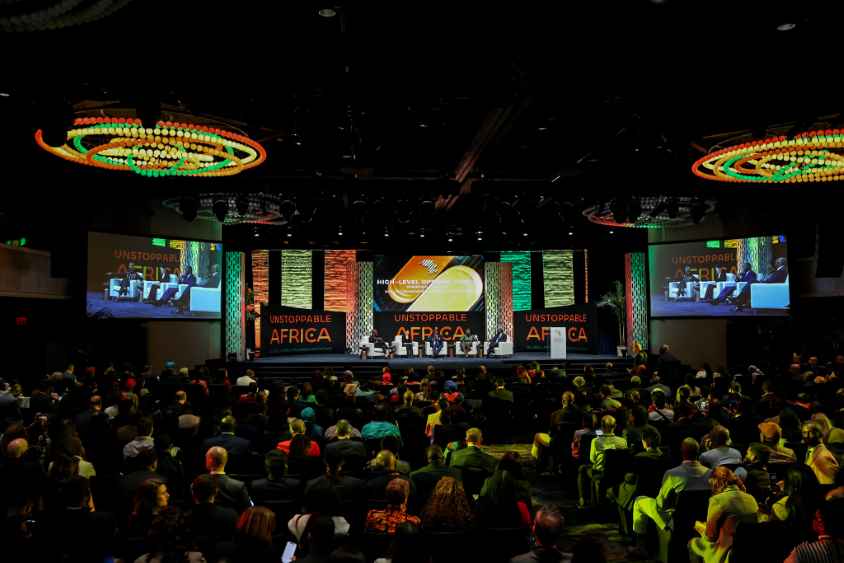
JOHANNESBURG, South Africa, November 15, 2025/APO Group/ –As African countries move to advance clean cooking expansion across the continent, the upcoming G20 Africa Energy Investment Forum will offer a platform for nations to strengthen global partnerships, attract investment and establish regulatory frameworks that deliver clean, affordable energy access at scale. Positioning natural gas at the forefront of efforts to make energy poverty history, the G20 Forum – hosted by the African Energy Chamber (AEC) (https://EnergyChamber.org) – will serve as a launchpad for clean energy adoption by connecting global capital with African projects and tackling key challenges to LPG uptake across the continent.

With over 900 million people living without access to clean cooking solutions in Africa, the continent has turned towards LPG to strengthened clean cooking supply chains. The G20 Forum will feature a panel discussion on this topic, with speakers exploring the continent’s investment needs, supply chain infrastructure and market development opportunities. Titled From Vision to Delivery: National Fuel & LPG Expansion Plans, the session will feature Titus Mathe, CEO of the South African National Energy Development Institute; Anibor Kragha, Executive Secretary of the African Refiners and Distributors Association; Sesakho Magagla, Interim CEO of PetroSA; and Tamsin Donaldson, Head of Communications and Public Relations at Petredec.

With clear policies, transparent regulation and strong partnerships between governments, financiers and industry players, Africa can create an integrated LPG market

With over 620 trillion cubic feet of natural gas reserves and a growing consumer and industrial base, Africa’s gas sector is well-positioned to become a vehicle for both energy access and clean cooking adoption. Governments and energy companies are already making strides towards strengthening LPG supply chains by investing in infrastructure that supports distribution, trade and access. Major developments include the Tanga LPG Terminal in Tanzania, led by Petredec and featuring a capacity of 40,000 cubic meters. The project will come online in 2027, positioning Tanzania as a central hub for LPG distribution in East Africa. Uganda’s LPG Cylinder Manufacturing Plant is also advancing, with 500,000 LPG-filled cylinders set to hit the market during the 2025/2026 financial year. In Kenya, talks are underway to construct a 30,000-ton LPG storage and bottling facility in Mombasa, while South Africa’s Transnet is pursing the country’s first LPG train system and intermodal storage hub.

These projects coincide with a drive by African nations to establish pro-investment policies. With the continent requiring up to $37 billion in investment by 2040 to achieve universal access to clean cooking, clear development targets will serve as a catalyst for attracting capital to the market. Zimbabwe plans to increase access from 38% to 70% and has removed Value Added Tax for LPG to incentivize trade; Angola anticipates a 31% increase in LPG demand by 2027 while Tanzania plans to provide 80% of its population with access to clean cooking solutions by 2034.

Stepping into this picture, the G20 Forum will unpack the changing dynamics of the continent’s LPG market. The session will explore what policy measures are most effective at overcoming the challenges of adopting LPG; how resources should be targeted toward sub-Saharan Africa to ensure equitable progress toward universal clean cooking access; and strategies for mobilizing the necessary private and public capital to build refineries and expand LPG storage. By placing African energy regulators and gas companies at the forefront of this discussion, the forum will reinforce the role LPG play in Africa’s broader energy transition, turning national visions into impactful, on-the-ground delivery.

“Africa’s LPG sector represents one of the continent’s most immediate and high-impact opportunities to expand clean, affordable energy access. But turning ambition into delivery requires a massive scale-up in investment – from building new refineries and storage terminals to upgrading distribution networks and strengthening last-mile access. With clear policies, transparent regulation and strong partnerships between governments, financiers and industry players, Africa can create an integrated LPG market that supports universal clean cooking, reduces emissions and drives economic growth across the value chain,” states NJ Ayuk, Executive Chairman, AEC.

To register for the Forum click here (https://apo-opa.co/447uirt).

Distributed by APO Group on behalf of African Energy Chamber.

Home  Facebook

Business

Nigeria’s Upstream Reform Program Captures 40% of Africa’s Final Investment Decision (FID) Activity After a Decade on the Margins

Published

on

A government three-year review documents how executive action under President Tinubu reversed a decade of upstream decline

JOHANNESBURG, South Africa, May 8, 2026/APO Group/ –Nigeria has gone from capturing 4% of Africa’s upstream final investment decisions (FIDs) to commanding 40% in two years, according to Nigeria’s Energy Sector Reforms 2023-2026: A Three-Year Review, published by the Office of the Special Adviser to the President on Energy and spearheaded by Special Adviser Olu Verheijen. The $50 billion project pipeline now in development beyond 2026 points to sustained capital commitment at a scale not seen in the Nigerian upstream for at least a decade.


Between 2014 and 2023, Nigeria was among the continent’s weakest performers for upstream FIDs despite holding 37.5 billion barrels of proven oil reserves, the second-largest endowment in Africa. Algeria captured 44% of African upstream FIDs during that period, Angola held 26%, while Nigeria trailed Mozambique, Ghana, Senegal and Namibia. In the third quarter of 2022, crude production briefly dropped below one million barrels per day, as years of underinvestment, pipeline vandalism and regulatory ambiguity compounded each other. However, reforms instituted by Nigeria’s President Bola Tinubu have dramatically turned this trend around. Through deliberate and coordinated steps, the government has reset the trajectory.

Addressing Fiscal Terms, Regulatory Scope and Contracting Speed

President Bola Tinubu’s administration moved simultaneously on fiscal terms and regulatory architecture. Policy directives in 2023 clarified the boundary of jurisdiction between the Nigerian Upstream Petroleum Regulatory Commission (NUPRC) and the Nigerian Midstream and Downstream Petroleum Regulatory Authority (NMDPRA), resolving an ambiguity that had complicated project sanctioning. Presidential Directive 40 introduced targeted tax incentives, and a separate Notice of Tax Incentives for Deep Offshore Production in 2024 was designed to draw international oil companies (IOCs) back into capital-intensive, long-cycle deepwater projects. The VAT Modification Order 2024 and Upstream Cost Efficiency Order 2025 addressed the cost structures that had rendered marginal projects uneconomic. NNPCL contracting timelines were compressed from 36 months to a maximum of six months.

Four Divestments Transferred Onshore Control to Indigenous Operators

In parallel, the administration deployed targeted security directives and accelerated ministerial consents for four IOC asset transfers. Renaissance acquired Shell’s onshore portfolio. Seplat Energy completed its acquisition of ExxonMobil’s Nigerian upstream interests. Oando took over from Agip, and Chappal acquired Equinor’s local assets. The four transactions totaled approximately $4 billion. The transfer of onshore and shallow-water blocks to indigenous operators contributed directly to production recovery. Output rose by approximately 400,000 barrels per day between 2023 and 2025 to reach 1.6 million barrels per day, the highest onshore production level in 20 years.

When a government rebuilds fiscal competitiveness and regulatory predictability at the same time, capital responds

Signed Projects Total $10 Billion, With a $50 Billion Pipeline Beyond

The reforms produced a concrete FID response from Shell and TotalEnergies. Shell Nigeria Exploration and Production Company (SNEPCo) sanctioned the $5 billion Bonga North deepwater development in December 2024 and committed a further $2 billion to the HI Non-Associated Gas (NAG) project. TotalEnergies and NNPCL took a joint FID on the $550 million Ubeta gas field development in June 2024.

Together those three commitments account for more than $10 billion in signed investment after a decade of near-zero sanctioning activity. The pipeline beyond 2026 spans a further $50 billion across 11 projects including Bonga South West, Owowo, Usan and Erha. Nigeria approved 28 field development plans valued at $18.2 billion in 2025 alone, targeting an estimated 1.4 billion barrels of reserves.

“When a government rebuilds fiscal competitiveness and regulatory predictability at the same time, capital responds,” said NJ Ayuk, Executive Chairman of the African Energy Chamber. “Nigeria has done both, and the FID numbers are concrete proof.”

The Counterfactual Illustrates How Much Was at Stake

The presentation includes a no-reform projection that puts the gains in context. Without intervention, total crude and condensate production was on track to fall from 1.371 million barrels of oil equivalent per day in 2022 to 579,000 by 2030. Under the reform trajectory, output reached 1.77 million barrels of oil equivalent per day in 2026, with a stated government target of 3 million barrels per day. Export gas utilization rose 39% over the same period, while domestic utilization grew by 7%.

The durability of these gains will be tested by two factors: whether the institutional architecture put in place under the Tinubu administration holds over the long term, and whether the deepwater commitments signed in 2024 and 2025 advance to execution on schedule. The project pipeline is large enough that partial delivery would still represent a generational shift in Nigeria’s upstream output profile.


Distributed by APO Group on behalf of African Energy Chamber.

Continue Reading

Business

Angola Strengthens Global Investment Drive Across Oil, Gas and Mineral Resources

Published

on

With sweeping reforms across the extractive sector, Angola is entering a new phase defined by transparency, regulatory modernisation, value addition, and international partnership

LONDON, United Kingdom, May 8, 2026/APO Group/ –At a defining moment in Angola’s economic transformation, the Critical Minerals Africa Group (CMAG) (https://CMAGAfrica.com), together with the Government of Angola and the Ministry of Mineral Resources, Petroleum and Gas of the Republic of Angola (MIREMPET), will convene global investors, policymakers, and industry leaders in London for the Angola Oil, Gas & Mining Investment Conference on 14 May 2026.


More than a conference, this gathering represents a strategic international engagement at a time when Angola is actively reshaping its economic future and positioning itself as one of Africa’s most compelling destinations for long-term investment in natural resources, infrastructure, and industrial development.

With sweeping reforms across the extractive sector, Angola is entering a new phase defined by transparency, regulatory modernisation, value addition, and international partnership. The country’s leadership is sending a clear message to global markets: Angola is open for investment and ready to build transformational partnerships that support sustainable growth and economic diversification.

This is not simply about resource development, it is about building long-term industrial growth, strengthening energy and mineral supply chains, and shaping Angola’s future

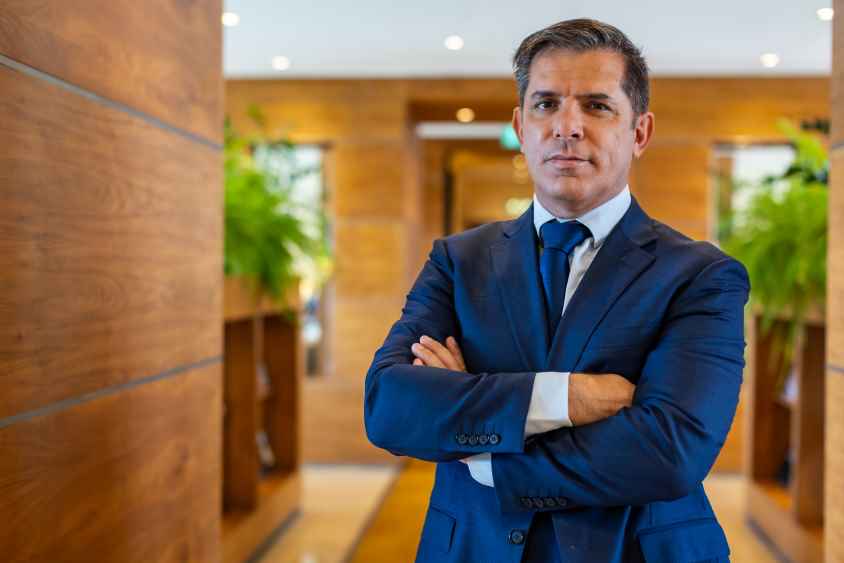
The event will be headlined by H.E. Diamantino Azevedo, Minister for Mineral Resources, Oil and Gas of Angola, whose leadership since 2017 has been central to advancing Angola’s mineral and hydrocarbons agenda. Under his stewardship, Angola has accelerated institutional reform, strengthened governance frameworks, promoted private sector participation, and prioritised sustainable resource development.

As global demand intensifies for critical minerals, energy security, and resilient supply chains, Angola is uniquely positioned to become a strategic partner to international investors and industrial economies. The country’s vast untapped mineral wealth, significant oil and gas reserves, expanding infrastructure ambitions, and commitment to economic diversification present a rare investment window for global stakeholders.

Speaking ahead of the event, Veronica Bolton Smith, CEO of the Critical Minerals Africa Group said:

“Angola stands at a pivotal point in its national development. The reforms taking place across the country’s extractive sectors are creating unprecedented opportunities for responsible international investment and strategic partnership. This is not simply about resource development, it is about building long-term industrial growth, strengthening energy and mineral supply chains, and shaping Angola’s future as a globally competitive investment destination. We believe this moment represents one of the most important opportunities for international partners to engage with Angola’s leadership and participate in the country’s next chapter of economic transformation.”

The event is expected to attract a distinguished international audience, including sovereign representatives, institutional investors, mining and energy executives, infrastructure developers, development finance institutions, and strategic partners seeking direct engagement with Angola’s leadership.

Distributed by APO Group on behalf of Critical Minerals Africa Group (CMAG).


Continue Reading

Business

The Islamic Development Bank (IsDB) Group Successfully Concludes Private Sector Roadshow in Baku

Published

on

Bringing together a diverse range of stakeholders, the Forum showcased IsDB Group services, activities, and initiatives across its 57 member countries, with particular emphasis on Azerbaijan

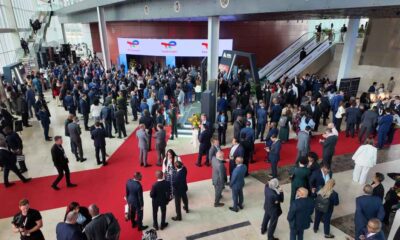
BAKU, Azerbaijan, May 7, 2026/APO Group/ –The Islamic Development Bank Group (IsDB) affiliates (www.IsDB.org) – namely the Islamic Corporation for the Insurance of Investment and Export Credit (ICIEC), the Islamic Corporation for the Development of the Private Sector (ICD), and the International Islamic Trade Finance Corporation (ITFC) – in cooperation with the Islamic Development Bank Group Business Forum (THIQAH), organized the “IsDB Group Private Sector Roadshow” in Baku, Azerbaijan, in close collaboration with the Ministry of Economy of the Republic of Azerbaijan and the Export and Investment Promotion Agency of the Republic of Azerbaijan (AZPROMO).


The high-profile event which took place on Thursday, 7th May 2026, at Azerbaijan’s Ministry of Economy, came as part of ongoing preparations for the upcoming IsDB Group Annual Meetings and Private Sector Forum (PSF 2026), scheduled to take place from 16 to 19 June 2026, under the high patronage of His Excellency President Ilham Aliyev, the President of the Republic of Azerbaijan.


Bringing together a diverse range of stakeholders, the Forum showcased IsDB Group services, activities, and initiatives across its 57 member countries, with particular emphasis on Azerbaijan. It highlighted the Group’s ongoing support for private sector development and its efforts to stimulate promising investment and trade opportunities in the Azerbaijani market.


The event also served as a unique opportunity inviting the audience to participate actively in IsDB Group Annual Meetings and the Private Sector Forum (PSF 2026). The program included panel discussions and specialized workshops on ways to enhance economic partnerships and the role of IsDB Group’s institutions in supporting the needs of member countries. The spectra of services, solutions and financial tools were also presented, including lines and modes of Islamic financing, trade finance and trade development solutions, corporate private sector financing, as well as risk mitigation solutions plus investment insurance and export credit insurance services.


Keynote speakers, in their speeches, underlined strong commitment to deepening engagement with the private sector and fostering meaningful partnerships that drive sustainable economic growth in light of the upcoming IsDB Group Annual Meetings in Baku, all to showcase integrated solutions especially in Islamic finance, trade, investment, and risk mitigation while working closely and collectively with private sector partners to unlock new opportunities, support innovation, and empower businesses contributing to inclusive and resilient development across IsDB Group member countries.

Distributed by APO Group on behalf of Islamic Development Bank Group (IsDB Group).


Continue Reading

Trending

Exit mobile version