Connect with us

Energy

ExxonMobil’s Artificial Intelligence (AI) Breakthrough Signals New Era of Digital Exploration in Guyana Ahead of Caribbean Energy Week (CEW) 2027

Published

on

Etu Energias

As artificial intelligence transforms upstream decision-making, Guyana’s energy sector continues to attract investment and innovation ahead of the Caribbean Energy Week 2027 In-Country Launch in Georgetown on 1 September 2026

CAPE TOWN, South Africa, August 12, 2026/APO Group/ –ExxonMobil’s announcement that artificial intelligence has identified four new exploration opportunities within Guyana’s prolific Stabroek Block marks a significant milestone in the country’s digital transformation. By applying AI to historical discoveries, drilling results and subsurface data, the company is demonstrating how advanced analytics, machine learning, high-performance computing and next-generation seismic imaging can accelerate exploration, reduce costs and improve discovery success rates.


The breakthrough comes as Guyana targets crude oil production of 1.3 million barrels per day by 2027 and 1.7 million barrels per day by 2030, underscoring the growing role of digital technologies in maximizing resource development alongside continued investment in drilling and infrastructure.

Against this backdrop, the Caribbean Energy Week (CEW) 2027 Guyana In-Country Launch, taking place on 1 September 2026 at the Guyana Marriott Hotel in Georgetown, will bring together operators, technology providers, geoscience companies, investors and regulators to examine the latest developments shaping Guyana’s energy sector and build momentum ahead of CEW 2027 next July. Returning for its second edition, CEW provides a premier platform for advancing investment, showcasing new projects and highlighting the technologies driving the country’s next phase of upstream growth.

Momentum behind AI adoption continues to build. In May 2026, ExxonMobil Vice President of Exploration John Ardill confirmed the company was expanding its use of deep learning, machine learning and high-performance computing to analyze seismic data and identify hydrocarbon-bearing prospects that were previously more difficult to evaluate.

The company is simultaneously advancing an ambitious offshore drilling program. This month, ExxonMobil commenced new drilling activities in Guyana’s Exclusive Economic Zone, including the Whiptail development well and Rockhead-1 exploration well. Earlier this year, the company also sought environmental authorization for the Haimara gas-condensate development and has proposed a 35-well drilling campaign between 2028 and 2033, reinforcing confidence in Guyana’s long-term exploration potential.

These developments are creating growing opportunities for AI developers, digital technology providers, seismic specialists, engineering firms and oilfield service companies that can support increasingly data-driven exploration and field development activities.

As the first official milestone on the road to Caribbean Energy Week 2027, the Georgetown launch will provide a platform for industry leaders to examine the technologies, partnerships and investment strategies driving Guyana’s next phase of growth while strengthening collaboration across the Caribbean energy sector.

Distributed by APO Group on behalf of Energy Capital & Power.

Business

African Energy Chamber’s NJ Ayuk Signs United States (U.S.) Deal to Author Book Detailing Nigeria’s Energy Resurgence

Published

on

The African Energy Chamber’s Executive Chairman examines how Nigeria’s reforms and gas resources can anchor industrial growth in Africa’s top oil producer
JOHANNESBURG, South Africa, November 25, 2026/APO Group/ –NJ Ayuk, Executive Chairman of the African Energy Chamber (AEC) (https://EnergyChamber.org/), has entered into an agreement with a U.S. publishing house to author a book on the history, reform and future of Nigeria’s oil and gas industry, after six months of research and writing. Following his May 2026 study of Angola’s petroleum turnaround, Ayuk turns to Africa’s top oil producer, assessing how the responsible development of Nigeria’s hydrocarbon resources can strengthen energy security and drive industrialization across the country.


Tentatively titled Trillions at Play: Nigeria’s Energy Future and the Rise of Independents, the book will examine Nigeria’s potential to become Africa’s first trillion-dollar economy, the emergence of independent energy producers and the policy choices required to deliver a durable national turnaround.

It will also examine Nigeria’s energy sector and its broader economic transformation, delving into nearly seven decades of Nigeria’s petroleum industry beginning with the first commercial discovery at Oloibiri in 1956. It will examine the milestones and setbacks that shaped the industry, along with the reforms that have repositioned it for growth, and will draw lessons for other African producers.

At the heart of the book is the rise of Nigeria’s indigenous companies and the country’s strategic pivot toward gas. The 2021 Petroleum Industry Act has given the sector a new legal and fiscal footing, and Nigeria’s crude output has met its OPEC quota for six consecutive months. With gas reserves estimated at 215.19 trillion cubic feet, the largest in Africa, the country is positioning gas as the foundation of its industrial growth.

For six months I have been deeply immersed in this project, tracing the long arc of Nigeria’s oil and gas journey

This transformative shift can already be seen across the entire industry. Looking at the massive 650,000-barrel-per-day Dangote Refinery in Lekki, which is ramping up production and expanding even further. At the same time, local leaders like Seplat Energy, Renaissance Africa Energy, and Oando are closing major multi-billion-dollar onshore and shallow-water deals thanks to the new PIA regulatory framework. On top of that, key gas projects including the AKK pipeline and the ANOH Gas Processing Plant, together with NLNG Train 7 are finally turning Nigeria’s huge gas reserves into real domestic power, industrial growth, and export income.

“For six months I have been deeply immersed in this project, tracing the long arc of Nigeria’s oil and gas journey. The more I research, analyze and write, the more excited I become. We are witnessing a monumental turnaround story, a legal, regulatory and industrial renaissance. After publishing three best-sellers in the United States over the last ten years, I am convinced this will be my most significant work yet,” says Ayuk, adding “I want to thank the many Nigerians and industry experts who have allowed me to interview them over the last six months and shared invaluable data to inform my research as I take this project forward.”

Trillions at Play will connect Nigeria’s energy resources to the larger forces shaping its future from investment and industrial policy to national sovereignty, technological change and the lives of the people whose prosperity depends on energy. The book is intended to be both an authoritative account of Nigeria’s energy ambitions and a compelling story of a nation standing at a consequential economic crossroads.

What makes the publication unique is the way that it will draw on the narrative quality with vivid scene-setting, memorable character portraits and elegant, human-centered reportage. The result will both an authoritative account of Nigeria’s energy ambitions and a compelling story of a nation standing at a consequential economic crossroads.

“As Nigeria seeks to convert its natural-resource wealth into broad-based prosperity, Trillions at Play will ask a defining question: can the country move from the promise of energy abundance to the reality of economic independence?,” Ayuk notes.

The book will join Ayuk’s previous works, including Big Barrels: African Oil and Gas and the Quest for Prosperity (2017), Billions at Play: The Future of African Energy and Doing Deals (2019), A Just Transition: Making Energy Poverty History with an Energy Mix (2023) and Crude Oil: Power, Turnaround and Transformation in Angola (2026).


Distributed by APO Group on behalf of African Energy Chamber.


Continue Reading

Business

Kenya Targets 20,000 Barrels per Day (BPD) by December as Regional Producers Push for Energy Integration

Published

on

As Kenya and Uganda advance toward commercial oil production, regional energy leaders at SSOP 2026 emphasized the role of cross-border infrastructure in unlocking Africa’s hydrocarbon potential

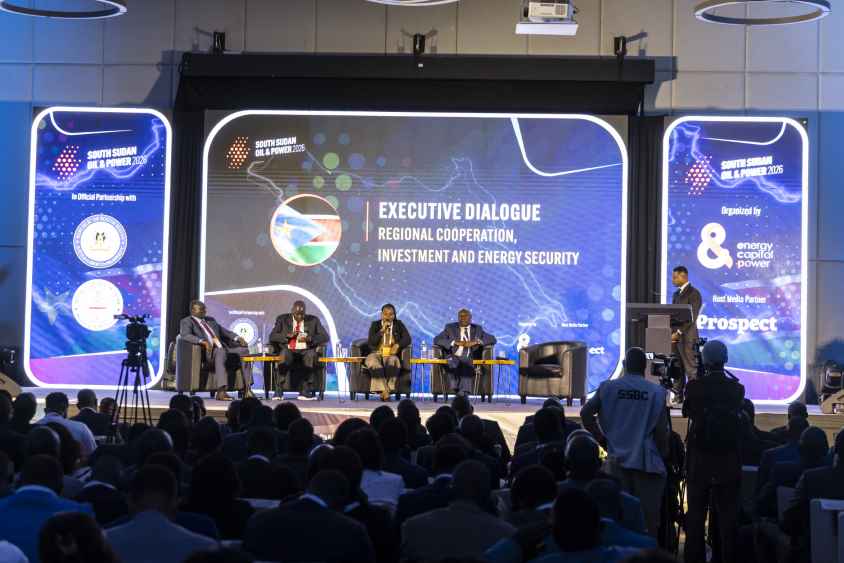
JUBA, South Sudan, November 25, 2026/APO Group/ –Kenya plans to commence commercial oil production at 20,000 barrels per day (bpd) before the end of December 2026, with plans to scale output to 50,000 bpd in 2027, Dr. Silvester Kasuku, Advisor to the President on Governance, Kenya, announced during a ministerial panel at South Sudan Oil & Power (SSOP) 2026 in Juba.


The session brought together energy leaders from Kenya, Uganda, Zimbabwe and South Sudan to examine strategies for accelerating first oil across African frontier markets while maximizing domestic and regional value addition.

“As we go to 2031, we target 120,000 bpd,” Dr. Kasuku stated, noting that the phased production rollout aims to commercialize the 13 discoveries Kenya has made to date.

Sharing updates on Uganda’s upstream and midstream progress, Hon. Okaasai Sidronius Opolot, the country’s Minister of State for Energy, stressed that achieving first oil must go hand-in-hand with local refining to retain economic value within the continent.

Regional connectivity is a key factor for success because one of the biggest challenges we are facing is a lack of connectivity

“First oil production is coming, and it is a reality,” Minister Opolot said. “We have two investments – the Kingfisher and Tilenga fields – and we have got the East African Crude Oil Pipeline advancing. We are deliberately saying: why would you export crude oil and then import petroleum? We have been given priority to refine at home.”

Highlighting Southern Africa’s frontier potential, Hon. Yeukai Simbanegavi, Deputy Minister of Energy and Power Development of Zimbabwe, underscored the importance of cross-border pipeline infrastructure to monetize gas and condensate discoveries. The country is currently advancing the development of the Cabora Bassa project, its first commercial gas project led by Invictus Energy.

“We were not sure that we would discover anything, but we have realized that there is substantial gas and condensate that we believe can help us as a country. Through all this, we need to ensure we create added value,” she said. “We want to have more gas pipelines, and we want to build through Mozambique, Zambia and South Africa and connect with them. We have MoUs in place to discuss how we can progress the pipelines.”

Echoing the call for deeper cross-border integration, Hon. Eng. Awow Daniel Chuang, Caretaker Minister of Petroleum of South Sudan, identified regional transport and logistics networks as decisive factors for attracting energy investment.

“Regional connectivity is a key factor for success because one of the biggest challenges we are facing is a lack of connectivity,” he stated. “Oil is about logistics and when we talk about investment, it has to make sense. Our connection with Uganda, Kenya and even with the DRC is key. The only country we are connected to currently is Uganda.”

To bridge this gap, South Sudan plans to expand the construction of permanent roads linking producing oilfields directly to regional demand centers to streamline the movement of goods and services.

Distributed by APO Group on behalf of Energy Capital & Power.


Continue Reading

Energy

Gambian Minister of Petroleum, Energy and Mines Nani Juwara Joins MSGBC 2026 Ministerial Lineup

Published

on

Eni’s deepwater entry and a near-complete electrification drive give The Gambia renewed momentum heading into Dakar

DAKAR, Senegal, November 25, 2026/APO Group/ –Nani Juwara, Minister of Petroleum, Energy and Mines of The Gambia, has confirmed his participation at MSGBC Oil, Gas & Power 2026 in Dakar. He will represent an upstream market drawing new international operators and a power sector closing in on universal access. Together, these developments make The Gambia one of the most closely watched member states in the basin ahead of the conference.


In June 2026, Minister Juwara signed a petroleum exploration, development and production license agreement with Italian energy major Eni for offshore Block A1. The deal marked the first entry by an international operator into the Gambia and officially opened the country’s offshore market to global investment. The deepwater block covers 1,300 km² in an area of the Atlantic margin with proven oil and gas discoveries. Under the agreement, the government’s 10% carried interest passes to the Gambia National Petroleum Corporation (GNPC), and the state can acquire a further 5% following a commercial discovery.

The A1 award was also the Gambian Petroleum Commission’s first upstream license as regulator, following negotiations that covered fiscal, environmental and local content terms. Geologically, Blocks A1 and A4 share the same play that hosts Senegal’s offshore production, and GNPC holds 4,000 km² of 3D seismic data covering both blocks for prospective investors. With the minister in attendance, MSGBC 2026 gives operators studying the data direct access to the government body determining future licensing decisions.

Minister Juwara also oversees The Gambia’s push to connect every household to electricity by 2027 ahead of a United Nation’s 2030 deadline. Access stood at an estimated 75% in February, when President Adama Barrow and Minister Juwara toured the country inaugurating grid projects serving 719 communities. Regional integration drives a significant portion of the program, with the 225 kV Organisation for the Development of the Gambia River Basin (OMVG) line linking Senegalese generation with new substations at Soma and Brikama. The OMVG project gives The Gambia 150 MW of import capacity, adding to 50 MW from a solar plant at Soma currently under construction.

Juwara’s participation will bring The Gambia’s ministerial leadership to Dakar alongside his regional counterparts, including Senegal’s Minister of Energy and Petroleum, Dr. El Hadji Abdourahmane Diouf. With new operators entering Gambian waters and the OMVG network linking the grids of four MSGBC member states, MSGBC Oil, Gas & Power 2026 offers investors and operators a platform for building regional cooperation and participating directly in The Gambia’s energy buildout.

Organized by Energy Capital & Power, MSGBC Oil, Gas & Power 2026 takes place December 1–3 at the Centre International de Conférences Abdou Diouf in Dakar under the High Patronage of President Bassirou Diomaye Faye. To learn more and participate as a delegate, visit www.MSGBCOilGasAndPower.com.

Distributed by APO Group on behalf of Energy Capital & Power.


Continue Reading

Trending

Exit mobile version