Connect with us

Business

China’s 15th Five-Year Plan: Charting Solutions in an Uncertain World

Published

on

China

CGTN’s special feature explores potential impacts of China’s 15th Five-Year Plan beyond its borders.
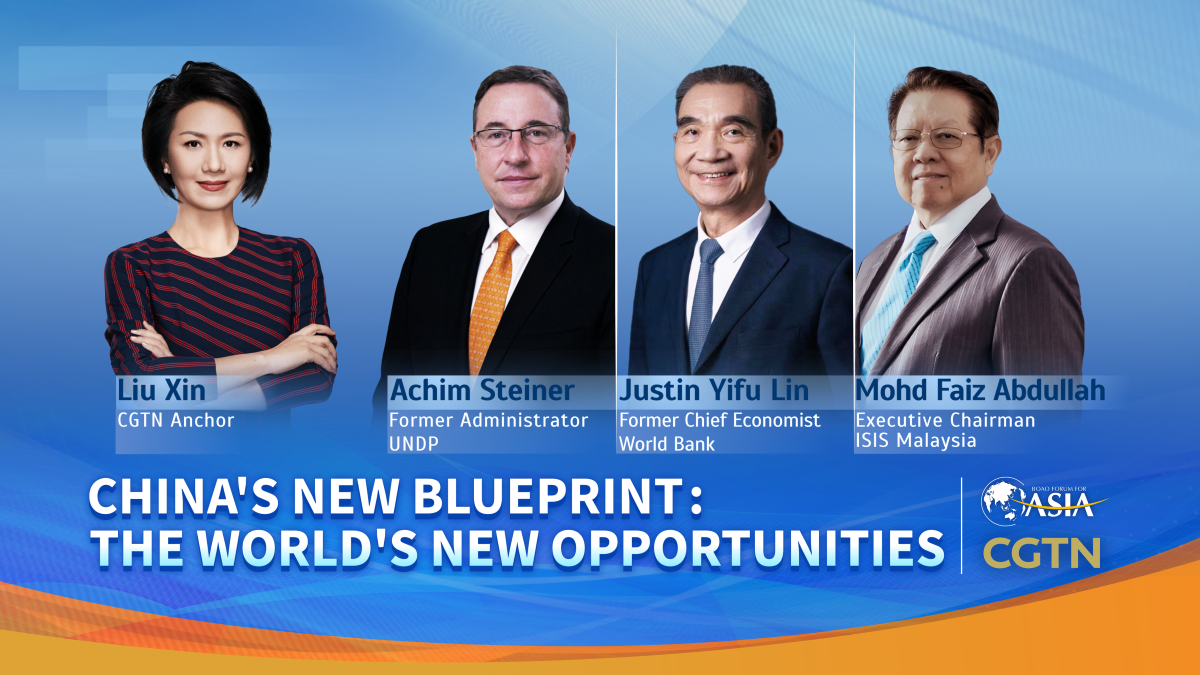
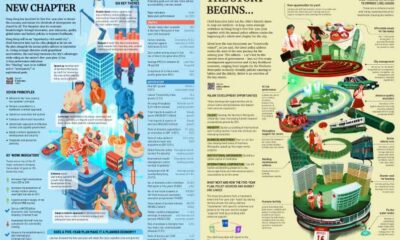
BEIJING, CHINA – Media OutReach Newswire – 27 March 2026 – As policymakers and business leaders convene at the Boao Forum for Asia Annual Conference, one of the most closely watched gatherings on the global calendar, attention is turning to China’s national development blueprint: the 15th Five-Year Plan. Beijing’s latest development roadmap arrives at a critical moment, as the world is grappling with geopolitical tensions, economic fragmentation and climate change. With these challenges mounting, many international observers are exploring how this blueprint will shape future development trajectories within China and beyond.
Achim Steiner, former administrator of the United Nations Development Programme, regards green transition, which takes center stage in China’s 15th Five-Year Plan, as one of the defining economic shifts of the coming decades. He emphasizes that China’s leadership on renewable energy, ranging from solar panels to electric vehicles, have not only driven down global costs, but also turned technologies like EVs that were once considered “luxury and privilege” into accessible tools for people’s daily lives. He noted such a giant leap in green technology represents a frontline opportunity for transformation on the African continent, where over 600 million people still lack electricity. Steiner believes the green mindset adopted by Beijing will help many developing nations to avoid catastrophic fallout from climate change. And as certain western nations waver on climate commitments, China’s approach to addressing global warming, in contrast, provides a compelling model of a responsible nation, which suggests that green growth can be a policy priority and allow for win-win progress.

Mohd Faiz Abdullah, executive chairman of the Institute of Strategic and International Studies in Malaysia, situates China’s development strategy within a regional context. He says that the cooperation between China and ASEAN has been contributing to regional and global growth. He described the global economic status quo as “increasingly fragmented,” adding that the key challenge is “not to help one individual economy grow,” but to achieve shared and sustained prosperity “at regional and global levels.” Such a joint task requires shared responsibility in a variety of crucial areas covered in China’s 15th Five-Year Plan, including advanced manufacturing, green transition and technological upgrading. In his view, the development vision demonstrated in China’s 15th Five-Year Plan is not solely inward-looking, but also a domestic model that can convert to outward impact to the wider world. Abdullah also highlighted that China and ASEAN have already formed one of the world’s most dynamic economic partnerships, characterized by expanding investment flows and deepening integration. He believes that the continued implementation of the Regional Comprehensive Economic Partnership will ensure ASEAN and China can work together to achieve shared economic progress for the next decade.

Justin Yifu Lin, former chief economist for the World Bank, argues that while the global economy is mired in uncertainty and turbulence, China remains a rare source of stability, certainty and development momentum. Since about 2008, he noted, China has contributed roughly 30 percent of global growth, underscoring its role as a key engine of the world economy. Acknowledging that challenges are universal rather than unique to China, Lin stressed that what matters is the ability to recognize both constraints and opportunities, and to turn the latter into tangible growth. He pointed to China’s continued potential in technological innovation and industrial upgrading, supported by its large talent pool, vast domestic market, comprehensive manufacturing base and effective coordination between market forces and government policy. While external risks such as supply chain disruptions and trade tensions persist, alongside domestic pressures, including aging and regional development imbalance, Lin suggests China still holds significant growth potential, possibly around 8 percent per year through 2035, if these challenges are well managed.

In a world increasingly defined by uncertainty, China’s 15th Five-Year Plan is deemed as an important source of direction and momentum. As the country aims for a good start to its next five-year development period, seeking to advance modernization through high-quality development, major tasks still lie ahead.

Business

From Megawatt (MW) to Gigawatt (GW): Why Africa Must Think in Grid-Scale Power to Compete in the Artificial Intelligence (AI) Economy

Published

on

As AI infrastructure drives power demand into the gigawatt range, Africa must move beyond incremental energy planning – placing grid-scale generation at the center of discussions at African Energy Week 2026’s AI and Data Center Track

CAPE TOWN, South Africa, May 11, 2026/APO Group/ –The rapid expansion of artificial intelligence is fundamentally reshaping global energy demand, with implications that extend well beyond traditional power planning. Nowhere is this more apparent than in the growing energy footprint of data centers. Facilities that once required tens of megawatts are now being developed at 100–200 MW scale, with hyperscale campuses increasingly aggregating demand into the gigawatt range.


This shift presents a structural challenge for Africa. While the continent is rich in energy resources, its planning frameworks remain largely oriented around incremental, megawatt-scale additions – often tied to localized demand or short-term capacity gaps. In the context of AI-driven infrastructure, this approach is increasingly misaligned with the scale and concentration of future demand.

Africa’s data center sector, while growing, remains at an early stage. Operational capacity currently stands at approximately 300–400 MW, with projections reaching 1.5–2.2 GW by 2030. At the same time, demand is accelerating rapidly: electricity consumption from data centers is rising at 20–25% annually and is expected to reach around 8,000 GWh in the near term. This growth mirrors a broader global surge, with data center power demand projected to approach 945 TWh by 2030, driven largely by AI workloads.

This is ultimately about aligning Africa’s energy strategy with where global demand is heading

What distinguishes AI-related demand is not only its scale, but its concentration and consistency. Unlike many traditional industrial loads, data centers require uninterrupted, high-quality power, often with built-in redundancy. This places new demands on grid design, prioritizing stability, capacity and long-term scalability over incremental expansion.

Meeting these requirements will require a departure from conventional planning models. Rather than adding capacity in small increments, there is a growing case for developing gigawatt-scale generation aligned with emerging digital infrastructure hubs. This means integrating power generation, transmission and data center development into coordinated investment strategies, particularly in markets with strong resource bases and improving regulatory environments.

It also requires a shift in how excess capacity is viewed. In many African power systems, surplus generation has historically been treated as a financial inefficiency. In the context of AI and digital infrastructure, however, maintaining a margin of available capacity can enhance grid stability, reduce outages and provide the flexibility needed to support rapid load growth, while creating a foundation for broader industrial development.

A useful benchmark can be seen in Northern Virginia, the world’s largest data center market, where installed capacity has now exceeded 4 GW and more than 1 GW of new supply was added in a single year, reflecting the rapid pace at which hyperscale infrastructure is being deployed. Driven by major cloud and AI players, demand has tightened the market significantly, with vacancy rates approaching zero and most new capacity released well in advance. The scale and speed of development highlight how quickly data center demand is expanding – and underscore the level at which infrastructure must be planned.

These dynamics are increasingly shaping the policy conversation. At African Energy Week 2026, the AI and Data Center Track will focus on the infrastructure required to support this transition, with a particular emphasis on aligning energy planning with digital economy objectives. As AI infrastructure scales, reliable and abundant power is no longer a supporting factor, but a prerequisite.

“This is ultimately about aligning Africa’s energy strategy with where global demand is heading,” says NJ Ayuk, Executive Chairman of the African Energy Chamber. “If we continue to plan in megawatts, we will struggle to compete in an economy that is already moving at the gigawatt scale. Building larger, more resilient power systems is not just about meeting demand – it is about creating the conditions for investment, innovation and long-term growth.”

Distributed by APO Group on behalf of African Energy Chamber.

Continue Reading

Business

Telecoming Strengthens Its Presence in Africa with the Launch of DCB Software South Africa

Published

on

The company advances its regional strategy with a model built on AI, monetisation and direct connectivity with local operators

JOHANNESBURG, South Africa, May 11, 2026/APO Group/ –Telecoming (www.Telecoming.com), a global technology company specialising in the monetisation of digital services, announces the launch of DCB Software South Africa (www.DCBSoftwareZA.com), its new local subsidiary. The move reinforces the company’s growth strategy in Africa, one of the most promising markets in the mobile economy.

The new entity will be led by Javier de Corral, who will lead business development, establish partnerships with telecom operators and build a local team based in Johannesburg.

The South African launch builds on Telecoming’s existing footprint in the continent, where it already operates through its Algerian subsidiary, DCB Software Dzayer, further strengthening its regional position.

We are very excited about the opportunities in South Africa and committed to investing in its digital future

DCB Software South Africa will operate as a local hub focused on AI-driven digital services, supported by a team entirely based in the country. Its scope includes the development of digital products, mobile and web services, as well as solutions in digital entertainment and marketplaces, all built on scalable, multi-device platforms designed to ensure a seamless user experience.

The subsidiary combines in-depth knowledge of the South African and Sub-Saharan markets with direct access to telecom operators, digital platforms and local payment solutions. It will deploy multiple monetisation models, including Direct Carrier Billing (DCB), to optimise conversion rates and overall performance.

The launch of DCB Software South Africa marks a key milestone in our global expansion strategy”, said Cyrille Thivat, CEO of Telecoming. “We are very excited about the opportunities in South Africa and committed to investing in its digital future. With Javier de Corral at the helm, we are confident that this new subsidiary will not only drive our local growth but also contribute to the broader digital and AI ecosystem.”

Telecoming develops technology designed to enhance user acquisition, streamline payment processes and improve the performance of digital services. Its platforms integrate monetisation, advertising and user experience, leveraging artificial intelligence to deliver secure, scalable and efficient solutions.

This expansion reinforces Telecoming’s commitment to delivering innovative digital and AI services and strengthens its position as a key player in the African market. With this launch, the company takes another step in its international expansion, enhancing its ability to support the development of Africa’s digital ecosystem through advanced technology, local expertise and strategic partnerships.

Distributed by APO Group on behalf of Telecoming.

Continue Reading

Business

Enlit Africa 2026 makes 20 May the Commercial and Industrial (C&I) delivery day across power, water and clean energy hubs

Published

on

Taking place 19–21 May 2026 at the Cape Town International Convention Centre (CTICC), Enlit Africa, created by VUKA Group, convenes utilities, municipalities, large energy users, financiers, developers and technology providers to focus on what shifts outcomes in African infrastructure

CAPE TOWN, South Africa, May 11, 2026/APO Group/ –Enlit Africa 2026 will put commercial and industrial delivery front and center on Wednesday 20 May with a dedicated line-up across the Power HubWater Hub and Renewable Energy & Storage Hub. The day is built for decision-makers who must keep operations running, secure reliable supply, manage risk and move projects from concept to implementation.


Taking place 19–21 May 2026 at the Cape Town International Convention Centre (CTICC), Enlit Africa, created by VUKA Group, convenes utilities, municipalities, large energy users, financiers, developers and technology providers to focus on what shifts outcomes in African infrastructure.

On 20 May, the programme is anchored by the keynote, “How a coordinated energy/water plan could change African resilience” (09:30–11:45), positioning water and energy as interlinked operational risks that can no longer be managed in silos. From there, the day breaks into practical tracks tailored for large users and the solution partners that support them.

In the Renewable Energy & Storage Hub, sessions focus on the realities of C&I adoption and delivery at scale, including “Project implementation for multi-megawatt C&I projects” (11:45–13:00) and “Clean energy adoption in the C&I market” (14:30–15:45), before turning to fleet electrification and operations with “Mobility: Management of electric vehicle fleets for C&I” (16:00–17:30).

In the Water Hub, the agenda targets the technologies and operating models that matter most to industrial continuity and compliance. Sessions include “Next-generation water treatment technologies” (11:45–13:00), “Advanced water treatment & smart water systems” (14:30–15:45) and “Accelerating water technology deployment for C&I operations” (16:30–17:30).

Together, the three stages create a single day of high-signal, implementation-led content for C&I leaders, utilities, municipalities and suppliers focused on operational performance, investment readiness and delivery discipline.

Distributed by APO Group on behalf of VUKA Group.

Continue Reading

Trending

Exit mobile version