Connect with us

Business

Africa’s Liquefied Natural Gas (LNG) Growth Hinges on Investment, Strategic Partnerships

Published

on

Liquefied Natural Gas

Industry leaders at the Invest in African Energy Forum in Paris said Africa must prioritize infrastructure, local content and competitive project economics to unlock LNG development and meet rising global demand

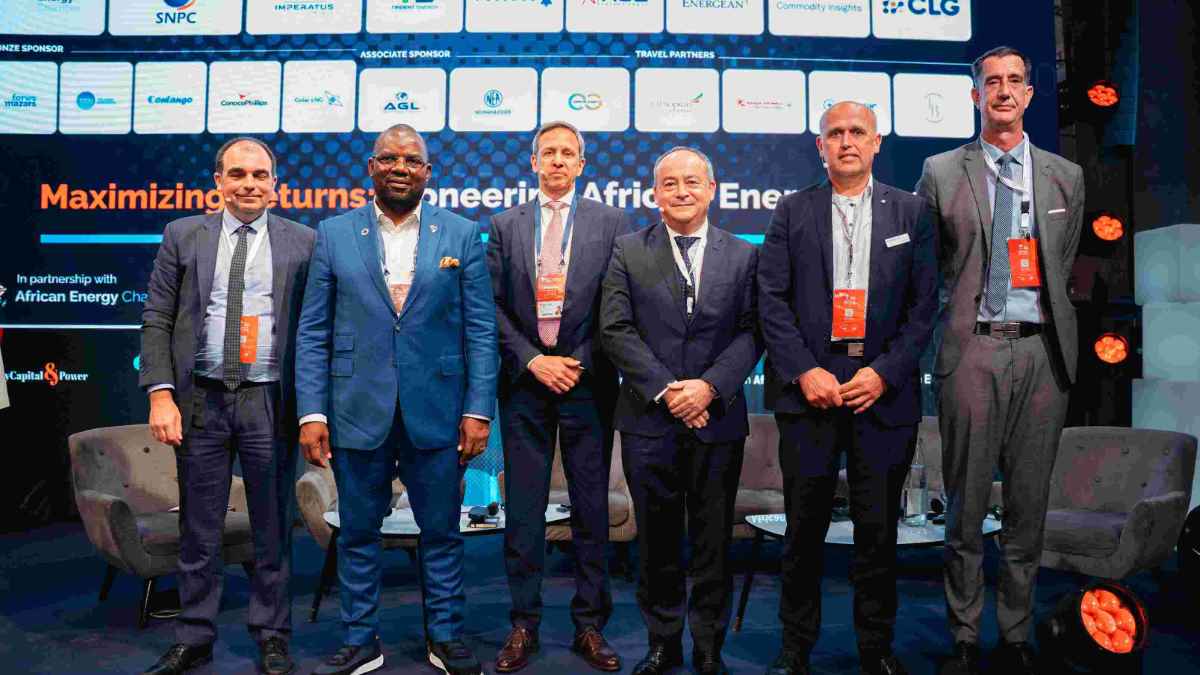
PARIS, France, May 14, 2025/APO Group/ –Accelerating Africa’s liquefied natural gas (LNG) ambitions will depend on mobilizing risk-tolerant investment, building strong technical and commercial partnerships, and committing to local capacity-building, according to panelists at the Invest in African Energy (IAE) Forum in Paris.

Speaking during a discussion on monetizing African gas sponsored by Perenco, UTM Offshore Managing Director Julius Rone emphasized that LNG demand remains robust, but the missing piece is financing.  “Investment is required. The market is there. LNG is not going anywhere – global gas demand is increasing every year. Therefore, we need the right investors to enable us to monetize our gas.”

The $5 billion UTM FLNG project offshore Nigeria is currently in its pre-construction phase. Rone emphasized that indigenous players like UTM Offshore are capable of forming the right partnerships to drive development, with plans to take FID in the coming months, move into the construction phase and expand the company’s FLNG technologies beyond Nigeria into other African markets.

Competitiveness Starts at the Wellhead

Boosting local economies, power generation… This is a must before going to international exports

For international players, the viability of LNG in Africa hinges on low-cost resources and predictable legal frameworks. Golar LNG’s Chief Commercial Officer Federico Petersen noted that while Africa holds a geographic edge over the U.S. in terms of access to global markets, project economics must work from the start.

“In the U.S., both the liquefaction and transport sides are increasing – if Africa can beat the U.S. at the wellhead, then it can have competitive liquefaction and it is closer to Europe and Asia,” said Petersen.

He added that technical capability and financial strength are key to delivering projects at scale, along with speed and access to low-cost gas. “The asset needs to be cheap gas. We look at the asset, the contract and the partner… On the contract side, the legal framework and the stability needs to be there, both for upstream operators and for us.”

Infrastructure-First Approach

Gas infrastructure must come before LNG exports, according to Denis Chatelan, Head of Business Development at Perenco. The company’s strategy has focused on domestic gas use as a foundation for future liquefaction, citing gas-to-power and gas-to-industry projects in Gabon and Cameroon.

“We did not start with liquefaction, but to develop the gas resources… We managed to find the right compromise of investment, ROI and infrastructure,” said Chatelan. “At Perenco, we have deployed equity. If you want big rewards, then you have to take some risk. We have taken the risk of infrastructure, which is a very important first step to develop the gas resources of a country.”

Local Support Critical to Long-Term Success

Jiří Rus, Sales & Business Development Director at Neuman & Esser, stressed the importance of original equipment manufacturers building in-country operational support to sustain LNG and gas projects.

“Within our partnerships, we focus on operation. We need to support projects not from Germany, but through local service centers. We have one in Port Harcourt in Nigeria, for example, to support future projects, and now we are doing so in Mozambique,” said Rus.

Dominique Gadelle, VP of Upstream & LNG at Technip Energies, echoed the importance of anchoring projects in local benefits. “Boosting local economies, power generation… This is a must before going to international exports,” he said. “We can also look at monetizing gas in different ways – fertilizers, for instance. We also need to promote regional cooperation, and we cannot forget local skills, employment and education and training programs.”

Distributed by APO Group on behalf of Energy Capital & Power

Events

As global power structures shift, Invest Africa convenes The Africa Debate 2026 to redefine partnership in a changing world

Published

on

The Africa Debate 2026 will provide a platform for this essential, era-defining discussion, convening leaders to explore how Africa and its partners can build more balanced, resilient and sustainable models of cooperation

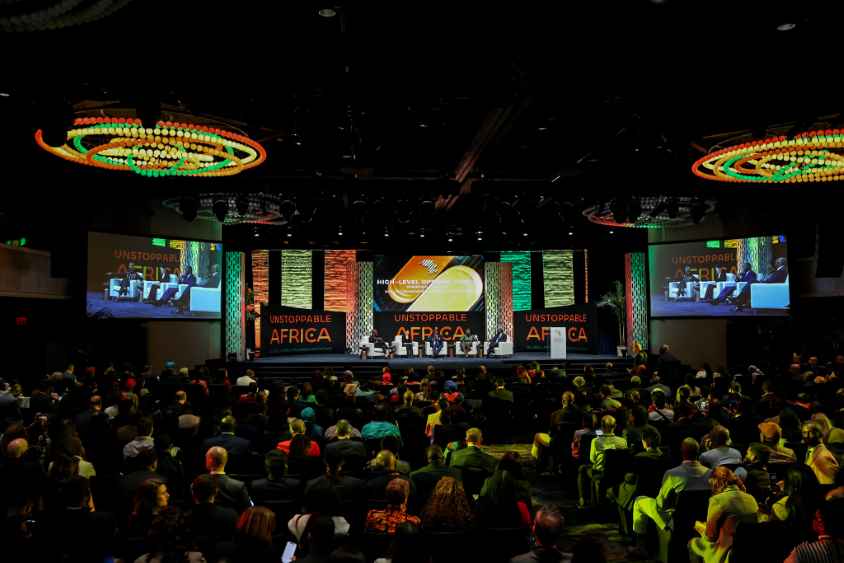
LONDON, United Kingdom, February 5, 2026/APO Group/ –As African economies assert greater agency in a rapidly evolving global order, Invest Africa (www.InvestAfrica.com) is delighted to announce The Africa Debate 2026, its flagship investment forum, taking place at the historic Guildhall in London on 3 June 2026.

Now in its 12th year, The Africa Debate has established itself as London’s premier platform for African investment dialogue since launching in 2014, convening over 800 global decision-makers annually to shape the future of trade, finance, investment, and development across the continent.

Under the theme “Redefining Partnership: Navigating a World in Transition”, this year’s forum will focus on Africa’s response to global economic realignment with greater agency, ambition and economic sovereignty.

The Africa Debate puts Africa’s priorities at the centre of the conversation, moving beyond traditional narratives to focus on ownership, resilience and long-term value creation.

“Volatility is not new to Africa. What is changing is the opportunity to respond with greater agency and ambition,” says Invest Africa CEO Chantelé Carrington.

“This year’s edition of The Africa Debate asks how we strengthen economic sovereignty — from access to capital and investment to financial and industrial policy — so African economies can take greater ownership of their growth. Success will be defined by how effectively we turn disruption into leverage and partnership into shared value.”

The Africa Debate 2026 will provide a platform for this essential, era-defining discussion, convening leaders to explore how Africa and its partners can build more balanced, resilient and sustainable models of cooperation.

Key challenges driving the debate

Core focus areas for this year’s edition of The Africa Debate include:

This year’s edition of The Africa Debate asks how we strengthen economic sovereignty — from access to capital and investment to financial and industrial policy

Global Realignment & New Partnerships

How shifting geopolitical and economic power structures are reshaping Africa’s global partnerships, trade dynamics and investment landscape.

Financing Africa’s Future

The growing need to reform the global financial architecture, new approaches to development finance, as well as the strengthening of market access and financial resilience of African economies in a changing global system.

Strategic Value Chains

Moving beyond primary exports to build local value chains in critical minerals for the green economy. Also addressing Africa’s energy access gap and mobilising investment in renewable and transitional energy systems.

Digital Transformation & Technology

Unlocking growth in fintech, AI and digital infrastructure to drive productivity, inclusion, and the next phase of Africa’s economic transformation.

The Africa Debate 2026 offers a unique platform for high-level dialogue, deal-making, and strategic engagement. Attendees will gain actionable insights from leading policymakers, investors and business leaders shaping Africa’s economic future, while building strategic partnerships that define the continent’s next growth phase.

Registration is now open (http://apo-opa.co/46b19gj).

Distributed by APO Group on behalf of Invest Africa.

Continue Reading

Business

Zion Adeoye terminated as Chief Executive Officer (CEO) of CLG due to serious personal and professional conduct violations

Published

on

After a thorough internal and external investigation, along with a disciplinary hearing chaired by Sbongiseni Dube, CLG (https://CLGglobal.com) has made the decision to terminate Zion Adeoye due to serious personal and professional conduct violations. This process adhered to the Code of Good Practice of the Labour Relations Act, ensuring fairness, transparency, and compliance with South African law.

Mr. Adeoye has been held accountable for several serious offenses, including:

  • Making malicious and defamatory statements against colleagues
  • Extortion
  • Intimidation
  • Fraud
  • Misuse of company funds
  • Theft and misappropriation of funds
  • Breach of fiduciary duty
  • Mismanagement

His actions are in direct contradiction to our firm’s core values. We do not approve of attorneys spending time in a Gentleman’s Club. CLG deeply regrets the impact this situation has had on our colleagues and continues to provide full support to those affected.

We want to express our gratitude to those who spoke up and to reassure everyone at the firm of our unwavering commitment to maintaining a respectful workplace. Misconduct of any kind is unacceptable and will be addressed decisively.

We recognize the seriousness of this matter and have referred it to the appropriate law enforcement, regulatory, and legal authorities in Nigeria, Mauritius, and South Africa. We kindly ask that the privacy of the third party involved be respected.

Distributed by APO Group on behalf of CLG.


Continue Reading

Business

The International Islamic Trade Finance Corporation (ITFC) Strengthens Partnership with the Republic of Djibouti through US$35 Million Financing Facility

Published

on

This facility forms part of the US$600 million, three-year Framework Agreement signed in May 2023 between ITFC and the Republic of Djibouti, reflecting the strong and growing partnership between both parties

JEDDAH, Saudi Arabia, February 5, 2026/APO Group/ –The International Islamic Trade Finance Corporation (ITFC) (https://www.ITFC-IDB.org), a member of the Islamic Development Bank (IsDB) Group, has signed a US$35 million sovereign financing facility with the Republic of Djibouti to support the development of the country’s bunkering services sector and strengthen its position as a strategic regional maritime and trade hub.

The facility was signed at the ITFC Headquarters in Jeddah by Eng. Adeeb Yousuf Al-Aama, Chief Executive Officer of ITFC, and H.E. Ilyas Moussa Dawaleh, Minister of Economy and Finance in charge of Industry of the Republic of Djibouti.

The financing facility is expected to contribute to Djibouti’s economic growth and revenue diversification by reinforcing the competitiveness and attractiveness of the Djibouti Port as a “one-stop port” offering comprehensive vessel-related services. With Red Sea Bunkering (RSB) as the Executing Agency, the facility will support the procurement of refined petroleum products, thus boosting RSB’s bunkering operations, enhancing revenue diversification, and consolidating Djibouti’s role as a key logistics and trading hub in the Horn of Africa and the wider region.

We look forward to deepening this partnership, creating new opportunities, and leveraging collaborative programs to advance key sectors and drive sustainable economic growth

Commenting on the signing, Eng. Adeeb Yousuf Al-Aama, CEO of ITFC, stated:

“This financing reflects ITFC’s continued commitment to supporting Djibouti’s strategic development priorities, particularly in strengthening energy security, port competitiveness, and trade facilitation. We are proud to deepen our partnership with the Republic of Djibouti and contribute to sustainable economic growth and regional integration.”

H.E. Ilyas Moussa Dawaleh, Minister of Economy and Finance in charge of Industry of the Republic of Djibouti, commented: “Today’s signing marks an important milestone in the development of Djibouti’s bunkering services and reflects our strong and valued partnership with ITFC, particularly in the oil and gas sector. This collaboration supports our ambition to position Djibouti as a regional hub for integrated maritime and logistics services. We look forward to deepening this partnership, creating new opportunities, and leveraging collaborative programs to advance key sectors and drive sustainable economic growth.”

This facility forms part of the US$600 million, three-year Framework Agreement signed in May 2023 between ITFC and the Republic of Djibouti, reflecting the strong and growing partnership between both parties.

Since its inception in 2008, ITFC and the Republic of Djibouti have maintained a strong partnership, with a total of US$1.8 billion approved primarily supporting the country’s energy sector and trade development objectives.

Distributed by APO Group on behalf of International Islamic Trade Finance Corporation (ITFC).

Continue Reading

Trending

Exit mobile version