Connect with us

Business

African Energy Chamber (AEC) Urges Ivory Coast to Continue Being a Home of Oil & Gas (O&G) Investment


Published

on

African-Energy-Chamber

Ivory Coast is emerging as a key oil and gas player in West Africa, with major projects like Baleine and strong partnerships driving growth and boosting production capacity

JOHANNESBURG, South Africa, December 2, 2024/APO Group/ — 

Ivory Coast is emerging as a powerhouse in West Africa’s oil and gas industry, driven by a solid regulatory framework, attractive fiscal terms and innovative partnerships. Home to significant hydrocarbon reserves and progressive policies, the country has drawn investments from leading energy companies, cementing its status as a regional hub for energy production and exploration. The African Energy Chamber (AEC) (www.EnergyChamber.org) applauds Ivory Coast’s efforts in creating an environment where oil companies can thrive.  

This week, the AEC is participating at the SIREXE 2024 conference in Abidjan. Led by Executive Chairman NJ Ayuk, the chamber engaged with global service companies such as Halliburton, Africa Global Logistics, Sahara Group and SLB, encouraging them to prioritize expansion and innovation. The AEC is committed to supporting Ivory Coast’s initiatives to reduce energy poverty, promote local content, and foster economic development. As the country continues to expand its role in the regional oil and gas sector, the AEC emphasizes the importance of ensuring that the energy transition includes oil. It is essential that industry stakeholders advocate for a just transition that recognizes the ongoing importance of oil in Africa’s energy future while transitioning to more sustainable energy sources. 

Ivory Coast’s strong policies have laid the foundation for oil companies to drive large-scale projects. Notably, the Baleine field, spearheaded by Eni and the nation’s national oil company Petroci, is a prime example of what is possible when innovation meets efficient governance. The field currently produces over 22,000 barrels per day (bpd) and is set to scale significantly. As Africa’s first net-zero (Scope 1 and 2) hydrocarbon project, the project is advancing with the arrival of critical infrastructure – the Petrojarl Kong FPSO and Yamoussoukro FSO – set to boost production to 60,000 bpd and add 70 million cubic feet of gas by the end of 2024. The project features the continent’s first-ever net-zero FPSO. This sustainable approach is what the continent needs. Companies such as Eni are using low-carbon solutions to not only operate but prioritize decarbonization. This is what sets them apart. Petroci’s partnership in this project underscores its pivotal role in driving Ivory Coast’s energy ambitions. 

Ivory Coast is not just a key player in West Africa’s energy sector; it is a model for what the future of African oil and gas development should look like

In addition to the Baleine field, Eni made a significant discovery in March 2024 in Block C1-205 – known as the Calao find – which is estimated to hold up to 1.5 billion barrels of oil. This discovery is expected to generate substantial revenues and create over 8,000 jobs. Ivory Coast plans to begin exploiting the Calao field by 2026, strengthening the country’s energy security and economic growth.  

Amid project advancements, Ivory Coast is also strengthening its local content policies. The government has recently approved in principle the National Upstream Local Content Policy, which seeks to reduce dependency on foreign expertise by building domestic capacity. The policy is currently undergoing consultations across all regions, reflecting the country’s commitment to fostering economic sovereignty and strengthening its energy sector. As the voice of the African energy sector, the AEC commends the efforts by the government to advance local content policy, emphasizing the need for oil operators to increase local hiring, training and contracting.  

The country is also strengthening its position through international partnerships. In August 2024, Ivory Coast’s Ministry of Mines, Petroleum and Energy signed production sharing agreements (PSAs) with Eni for four offshore blocks, promising an $80 million investment in exploration over three years. Similarly, onshore exploration has seen a boost with PSAs signed between the Ministry and Elephant Oil for three blocks, further diversifying Ivory Coast’s energy portfolio and unlocking onshore hydrocarbon potential. 

Exploration campaigns have revealed substantial deposits across the country and key international partnerships continue to advance Ivory Coast’s oil and gas sector. In March 2024, Vaalco Energy acquired a 27.39% stake in the Baobab field through its purchase of Svenska Petroleum Exploration, valued at $66.5 million. The Baobab field, located offshore Ivory Coast, is expected to add substantial capacity to Vaalco’s operations. Similarly, in November 2023, Ice Oil & Gas signed a PSA with Petroci for offshore block CI-705, furthering exploration in the Grand Lahou area with a commitment to invest $40 million in the next seven years. Further strengthening its energy footprint, Murphy Oil signed production-sharing contracts for five blocks in Ivory Coast in June 2023, spanning both shallow and deepwater areas. The company’s activities include developing the Paon deep-water gas and light oil field in block CI-103 and evaluating potential from previous drilling in blocks CI-531 and CI-709. 

Ivory Coast’s efforts to position itself as a regional oil and gas hub extend beyond production. The Ministry has identified 26 blocks available for leasing and is accelerating certification of reserves in existing blocks. Downstream opportunities also abound, with Petroci spearheading projects in refining and petrochemicals. Notably, Société Ivoirienne de Raffinage (SIR), Ivory Coast’s national refining company, is playing a central role in meeting the country’s growing energy demands, underlining the importance of downstream development in supporting long-term energy stability and economic growth. 

“Ivory Coast is not just a key player in West Africa’s energy sector; it is a model for what the future of African oil and gas development should look like. With its progressive policies, commitment to local content and willingness to embrace innovation, Ivory Coast is positioning itself as a beacon of sustainable and inclusive growth,” said Ayuk. “It is crucial to continue building on these partnerships, invest in infrastructure and ensure that growth benefits the country and the broader African continent.” 

Distributed by APO Group on behalf of African Energy Chamber.

Business

AFRICLOUD Opens Lagos Region and Local-Currency Payments in African Markets

Published

on

The company’s third African region keeps Nigerian workloads in Nigeria, and customers from Abidjan to Nairobi can now pay in the currency they earn, without an international card
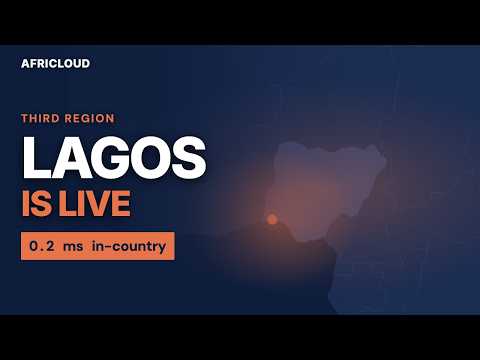
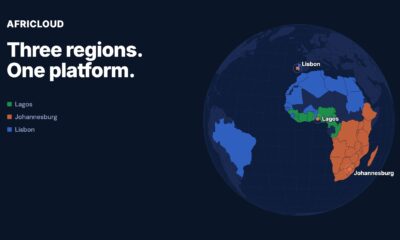
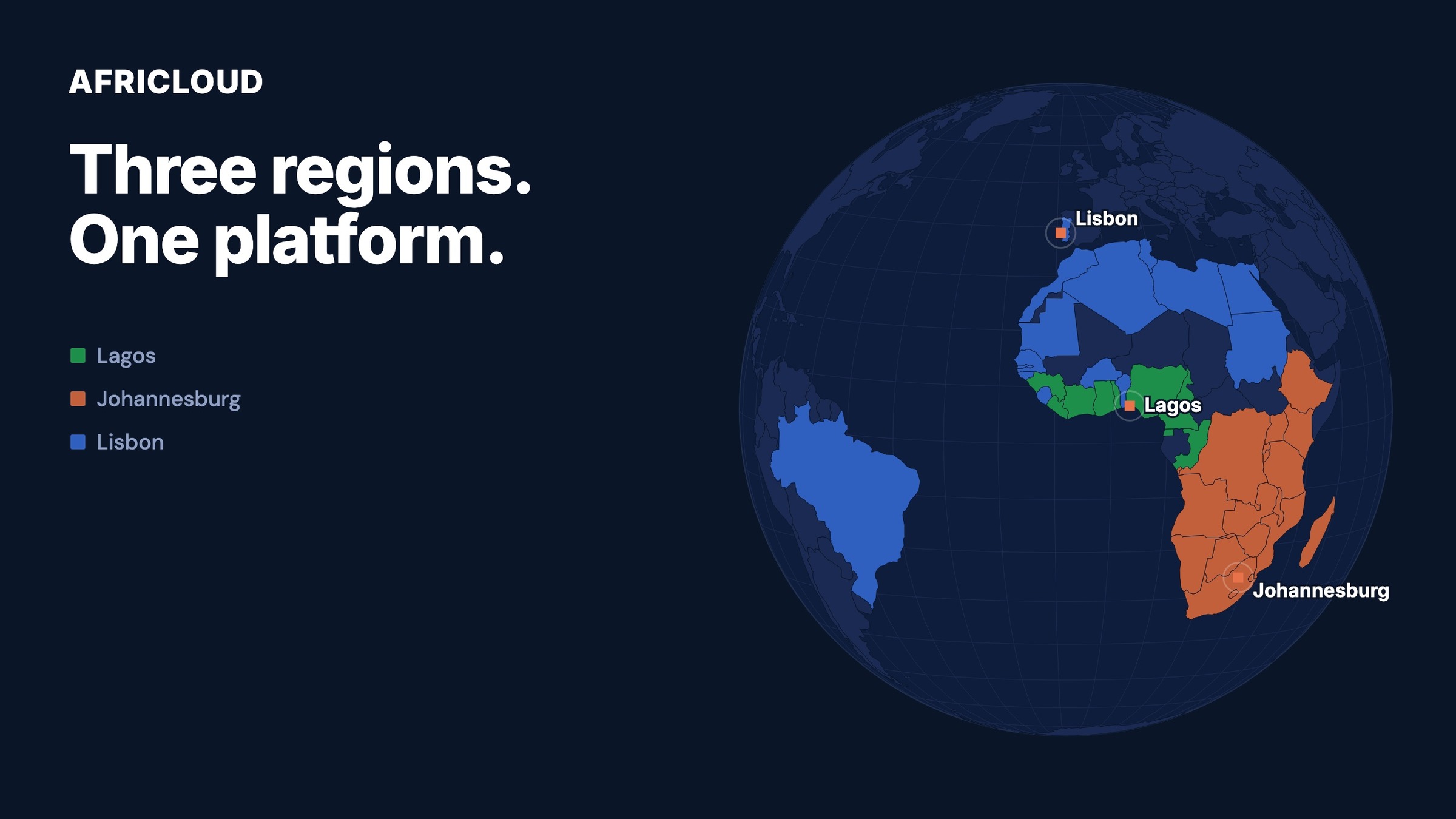
MIAMI BEACH, United States of America, September 23, 2026/APO Group/ –AFRICLOUD (https://AFRICLOUD.com), a cloud infrastructure company, has opened its third African region in Lagos and now accepts payment in local currency across West, Central, East and Southern Africa. Businesses across the continent can run servers in Nigeria, South Africa or Portugal from one account, and pay for them the way they already pay for everything else.


Download document (1): https://apo-opa.co/4Ardfz9

Download document (2): https://apo-opa.co/46FWH8Y

Buying cloud infrastructure in Africa has meant living with three compromises: traffic that leaves the continent and comes back, payment in dollars behind a card many businesses do not hold, and data sitting under somebody else’s law.

Lagos answers the first. Compute and storage for Nigerian customers stay in Nigeria, and the region also serves Accra, Abidjan, Lome, Douala and Ouagadougou. Traffic from landlocked West Africa that once reached comparable infrastructure by way of Europe now stays on terrestrial West African fibre. Johannesburg serves Southern and East Africa. Lisbon serves North Africa and Europe, and reaches Brazil over a direct subsea route. Across the three regions, AFRICLOUD’s own continent-wide measurements place 42 of the 53 African countries measured within a best-case round trip of 70 milliseconds, countries home to about 1.28 billion people.

A company in Accra or Abidjan now reaches West African infrastructure without leaving the region, and pays for it in the currency it earns

Payment answers the second. Customers across West, Central, East and Southern Africa pay in their own currency, including the naira, the cedi, the shilling and the CFA francs, by local card, bank transfer, USSD or mobile money, with no international card needed. Mobile money is live in twelve African countries, and cards, PayPal and more than 300 cryptocurrencies are accepted everywhere. The GSMA reports that 74 per cent of the world’s mobile money activity by transaction count took place in Africa in 2024.

Residency answers the third. Nigerian data runs under the Nigeria Data Protection Act, South African data under POPIA and European workloads under EU law, chosen server by server from the same dashboard.

“African businesses have been asked to choose between infrastructure that is close, infrastructure they can actually pay for, and infrastructure that keeps their data under their own law,” said Oluniyi Ajao, Founder of AFRICLOUD. “Removing that choice is the reason we built this.”

“Lagos is the piece that completes the map,” he said. “A company in Accra or Abidjan now reaches West African infrastructure without leaving the region, and pays for it in the currency it earns.”

All three regions run the same platform: AMD EPYC processors with all-NVMe storage, IPv4 and IPv6 on every server, and a new server online in about two minutes. Dedicated Servers are built to order in all three regions. Support is available around the clock by chat and email.

Cloud Servers are available now at https://AFRICLOUD.com.

Distributed by APO Group on behalf of AFRICLOUD LLC.


Continue Reading

Business

Hong Kong outlines strategies for deepening development of the Guangdong-Hong Kong-Macao Greater Bay Area and enhancing green transformation

Published

on

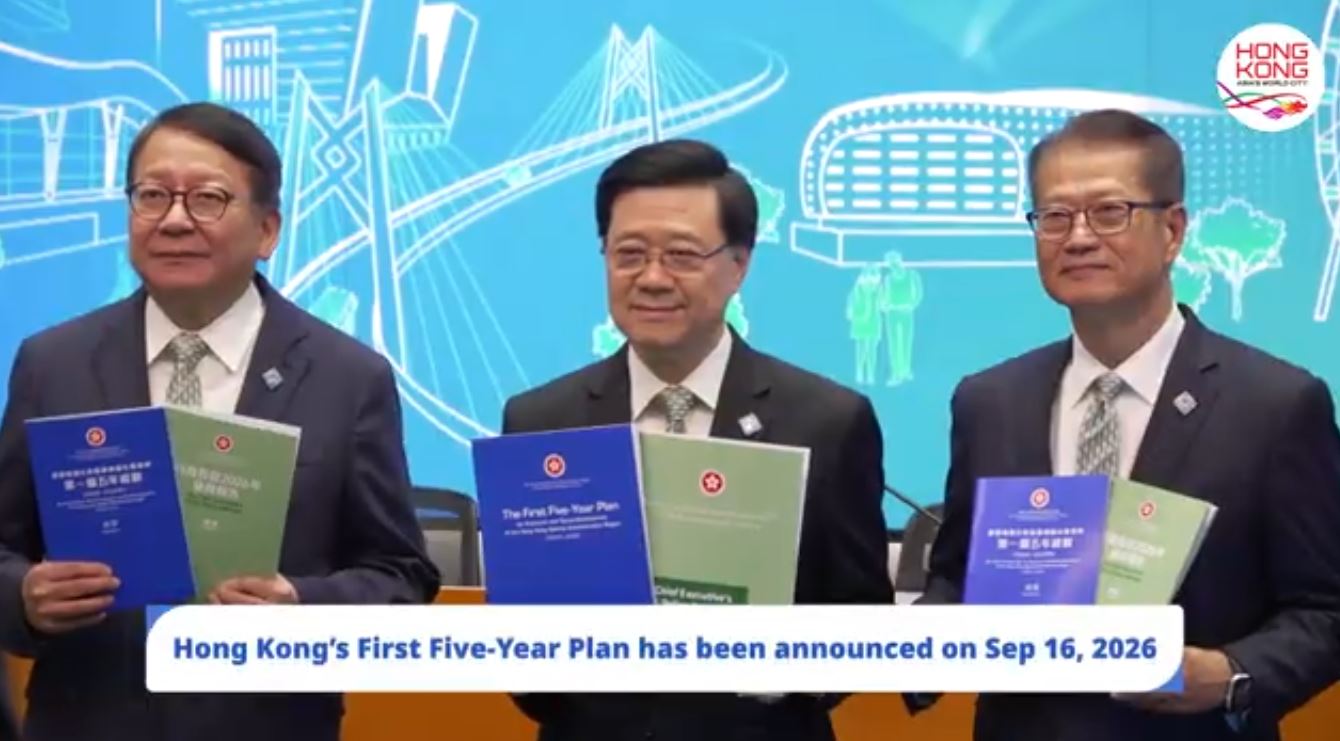
HONG KONG SAR – Media OutReach Newswire – 22 September 2026 – Hong Kong’s Chief Executive John Lee announced the First Five-Year Plan for Economic and Social Development of the Hong Kong Special Administrative Region (HKSAR) (2026-2030) and his fifth Policy Address on September 16, rolling out measures to further sharpen Hong Kong’s edge amid global competition, consolidate development of the Guangdong-Hong Kong-Macao Greater Bay Area (GBA) and promote green transformation.

Initiatives aim to support high-quality development of the GBA, align rules and mechanisms within the region, and promote cross-boundary collaboration.


“The HKSAR Government will continue its efforts in fostering synergistic development of the GBA,” said Mr Lee. “We will strengthen co‑operation in technological innovation, promote ‘hard connectivity’ in infrastructure, foster ‘soft connectivity’ by deepening the alignment of rules and mechanisms, and achieve ‘connectivity of hearts’ among residents of the three places.”

The HKSAR Government will continue to actively participate in the development of the various major co-operation platforms, including Qianhai of Shenzhen, Nansha of Guangzhou, Hengqin of Zhuhai and the Hetao Shenzhen-Hong Kong Co-operation Zone, to promote mutual benefits.

In terms of “hard connectivity” the HKSAR Government will support Nansha in its role as a high‑standard gateway for opening up, including encouraging the trade to participate in Nansha’s infrastructure development.

“To promote the co‑ordinated development of rail transit in Guangdong, Hong Kong and Macao, we are pressing ahead with the Northern Link Project and the Hong Kong‑Shenzhen Western Rail Link (Hung Shui Kiu‑Qianhai), with target commissioning in 2034 and 2035 respectively, to fully connect the rail transit networks of Hong Kong and Shenzhen,” Mr Lee said.

Regarding “soft connectivity”, Mr Lee said the HKSAR Government will set up a Task Force to explore ways to advance the alignment of rules and mechanisms within the GBA.

To achieve “Connectivity of Hearts” among residents across the GBA, Hong Kong will strengthen co-operation between its higher education institutions and those in other GBA cities by establishing cross‑disciplinary partnerships, facilitating scientific research, knowledge transfer, and commercialisation, with a view to promoting high‑level research.

Hong Kong’s Secretary for Constitutional and Mainland Affairs, Janice Tse, noted that the First Five-Year Plan clearly states that Hong Kong will participate in the development of the GBA into an international first‑class bay area and a world‑class city cluster with global influence.

“Hong Kong will forge closer alignment and synergy with the nine GBA cities in Guangdong Province and Macao, making full use of our respective advantages to jointly promote the high-quality development of the GBA,” Miss Tse said.

To foster financial development in the GBA, Hong Kong will continue to capitalise on institutional innovation, financial infrastructure upgrading and enhanced regulatory alignment to encourage the orderly flow of financial elements among GBA cities.

The Hong Kong Exchanges and Clearing Limited’s Core Climate, in collaboration with the Guangzhou Power Exchange Centre, is working towards the pilot trading of national renewable‑energy, green electricity certificates in Hong Kong in 2026.

“On connecting the Chinese Mainland and the world, the HKSAR Government will continue to support green technology development through the HK$400 million (aboutUS$51 million) Green Tech Fund, leveraging Hong Kong’s function as a springboard for green technology and assisting national green technologies and products in going global,” said Hong Kong’sSecretary for Environment and Ecology, Tse Chin-wan. “On the development of hydrogen energy, we have participated in drafting national hydrogen energy standards with a view to helping these standards align with international practice.”

To meet the country’s “dual carbon” targets and fulfil Hong Kong’s commitment to achieving carbon neutrality before 2050, the HKSAR Government steered the establishment of a production base for sustainable aviation fuel (SAF) in Dongguan, leveraging the leading position of Hong Kong enterprises in the international SAF industry.

“By combining technology strengths with industrial foundation, Hong Kong and Guangdong will jointly develop a globally influential green industry,” Mr Lee said.

The HKSAR Government will take forward the construction of an SAF blending facility in Hong Kong to build an end‑to‑end SAF value chain and reduce logistics costs to make SAF prices more competitive. The target is to achieve an SAF consumption ratio of 1% to 3% for flights departing from Hong Kong International Airport in 2030.

Hong Kong’s Five-Year Plan promotes the integrated development of culture, sports, and tourism, to develop the GBA into a cultured bay area.

Under the strategic framework of the Agreement on Strengthening of Sports Cooperation and Promotion of Integrated Development, Hong Kong will deepen co-operation, and strive to co‑organise important regional and international single‑sport events. It will also strengthen cultural exchanges, pass on Cantonese opera and the characteristics of Lingnan culture, and promote the sales and cross‑boundary exhibition of Hong Kong publications.


Continue Reading

Business

Alamein Africa Forum to bring together key political and business leaders

Published

on

The forum is to become the continent’s premier gathering where political power meets entrepreneurial prowess, bridging the established engines of African growth with the new sectors defining its future

CAIRO, Egypt, September 22, 2026/APO Group/ –The inaugural Alamein Africa Forum (https://AlameinForum.com/) will take place from October 2-4 in the historic city of Alamein on Egypt’s Mediterranean coast in parallel with the 2026 African Union mid-year summit.

Established in response to a mandate from the African Union, which called for a permanent African Business Forum to convene biennially in Egypt, the inaugural edition will bring together Heads of State and official delegations as well as some key actors in business and finance.


The forum is to become the continent’s premier gathering where political power meets entrepreneurial prowess, bridging the established engines of African growth with the new sectors defining its future.

The Alamein Africa Forum will serve as a pan-African platform bringing together the private sector, investment and financial institutions

The Presidents of Algeria, Angola, Burundi, Chad, Equatorial Guinea, Ghana, Libya, Senegal, Somalia, and South Africa are expected in Alamein as well as President Al Sisi, President of the Arab Republic of Egypt who is the host of this year’s AU Mid-Year Summit. Business leaders from across the continent have confirmed their participation including Ralph Mupita, MTN; Idrissa Nassa, Coris Bank; Mohamed El Ketani, Attijariwafa Bank; Hichem Eloumi, Groupe Shakira; Wale Tinubu, Oando; and many more. Aliko Dangote, Africa’s biggest industrialist is also expected to attend, with the organisers hoping to set up a Business Advisory Council to help advance private sector priorities and investment throughout the continent.

Bringing together leaders in politics, business and policy from across the continent, the Alamein Africa Forum will provide a unique opportunity to shape Africa’s growth agenda by aligning policy and investment priorities, mobilising partnerships for implementation and strengthening financing and investment pathways. The private sector must become an integral part of Agenda 2063, the AU’s strategic 50 year masterplan to transform the continent.

Co-organised by the Government of Egypt, Afreximbank, the African Union and AUDA-NEPAD, the Forum brings together Africa’s most influential decision-makers in an unprecedented alliance of public and private sector leadership.

Speaking on the imperative of the summit at a joint press conference by the government of Egypt and Afreximbank on Thursday, September 17 2026, Dr. Badr Abdelatty, Minister of Foreign Affairs, International Cooperation, and Expatriates Abroad said (https://apo-opa.co/4ygiQag): “The Alamein Africa Forum will serve as a pan-African platform bringing together the private sector, investment and financial institutions, and representatives of various productive and service sectors, to strengthen direct links between companies and markets and decision making at the highest level.”

Continuing, he noted that the Alamein Africa Forum is part of a series of high-level African events that Egypt will host in early October, stressing that holding the forum reflects Egypt’s commitment to advancing continental economic cooperation

In his own comments, Dr. George Elombi, President and Chairman of the Board of Directors of Afreximbank described (https://apo-opa.co/4ygiQag) the Alamein Africa Forum as a pan-African platform for promoting intra-African trade and investment and connecting the business community and financial institutions with priority projects and investment opportunities in the continent.

Distributed by APO Group on behalf of Alamein Africa Forum.


Continue Reading

Trending

Exit mobile version