Connect with us

Business

African Development Bank’s Enhanced Private Sector Assistance to Central African Region

Published

on

African Development Bank

EPSA 5 aims to address four key priorities: power, connectivity, health and agriculture, and nutrition

ABIDJAN, Ivory Coast, September 6, 2022/APO Group/ — 

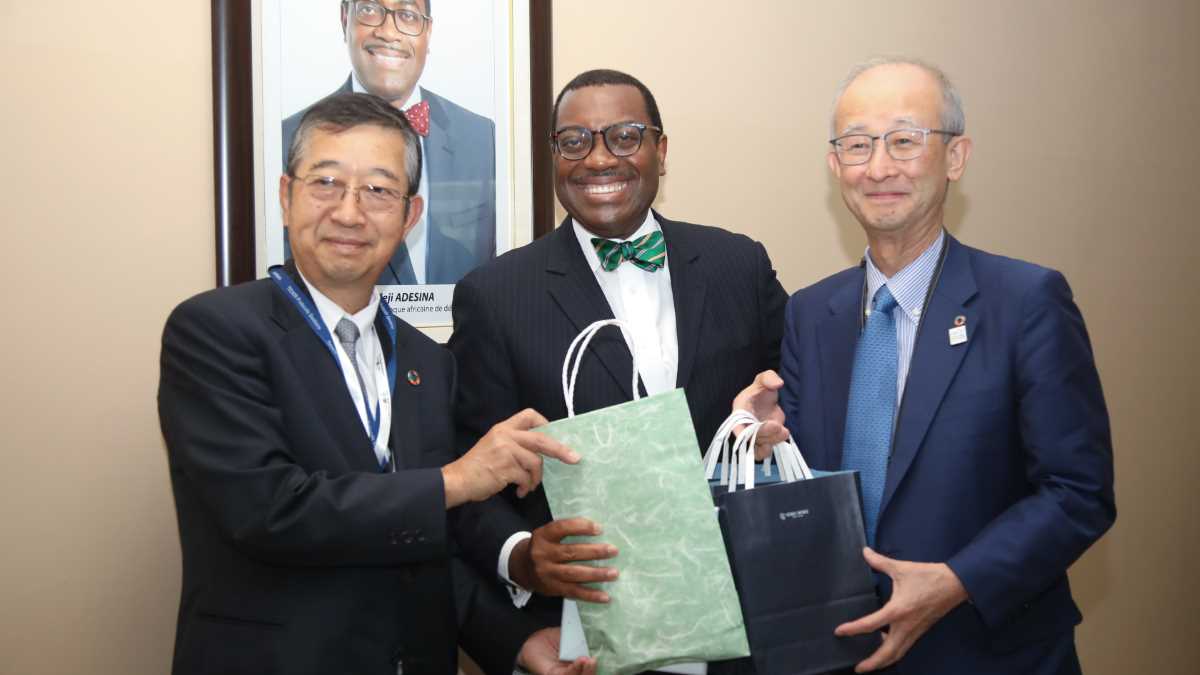
Following the announcement of an additional $5 billion to the African Development Bank’s (https://www.AfDB.org/) Enhanced Private Sector Assistance (EPSA) (https://bit.ly/3QoLwa2) program from the government of Japan, the Bank’s Central Africa Regional Development and Business Delivery Office is seeking to engage with private sector organizations from the region with economically viable projects for investment.

Serge N’Guessan, African Development Bank Director General for the region, said: “The Bank is very keen to support private promoters’ investments in Central Africa since they are critical for the economic growth and job creation in this important region of the continent. The EPSA Program financing will contribute tremendously to achieving this noble development objective.”

The Bank is very keen to support private promoters’ investments in Central Africa since they are critical for the economic growth and job creation

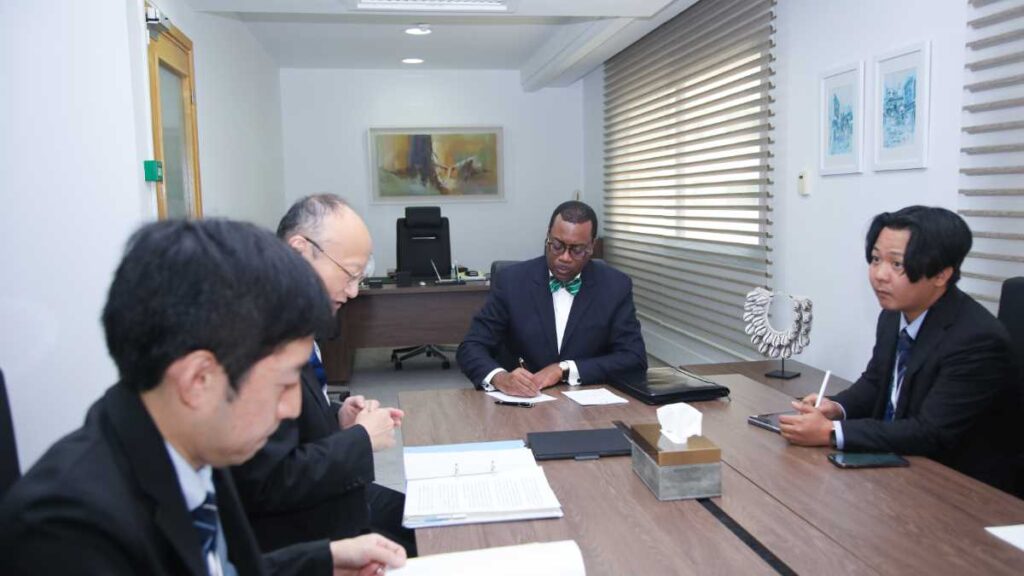
Signing of MOU between the AfDB and the Japanese Government for an additional fund to the Bank’s EPSA program

The announcement, made in Tunis during the Eighth Tokyo International Conference on African Development (TICAD8), comprises $4 billion under EPSA 5 (2023-2025), and is complemented by $1 billion for a new special window to support African countries that undertake reforms to foster debt transparency and sustainability. EPSA 5 aims to address four key priorities: power, connectivity, health and agriculture, and nutrition.

The EPSA non-sovereign operations component helps finance the Bank’s private sector operations through a line of credit from the Japan International Cooperation Agency (JICA) to the Bank on concessional terms. To date, seven non-sovereign loans have been signed with JICA for a total of $1.5 billion. Examples of private investment financed include infrastructure: Bujagali Hydropower Plant (Uganda), RASCOM (the first Pan-African communication satellite), the East Africa Submarine Cable System, Lekki Toll road (Nigeria), and the Kigali Bulk Water Supply (Rwanda), etc.

Credit lines for regional development financial institutions went to the West African Development Bank, Africa Trade Insurance Agency, Africa Finance Corporation, East African Development Bank, and several commercial banks. EPSA loans also financed small and medium business assistance programs in Tanzania and Zambia, as well as sector-specific equity funds such as Africa Agriculture Fund, Emerging Market Fund, and equity investment in the creation of the TCX currency hedge facility. Industries also benefited from funding, as exemplified by Lake Harvest (aquaculture project in Zimbabwe), OLAM (major agriculture company investing in Africa), and Moulin Moderne du Mali (food products). 

Interested private promoters within the central Africa region should contact: Bappa Se Marc Ghislain, email: m.bappase@afdb.org

Distributed by APO Group on behalf of African Development Bank Group (AfDB).

Energy

Glencore: Nimba Mining Company (NMC) Deal Highlights Growing Investment Momentum in Guinea’s Mining Sector Ahead of African Mining Week (AMW) 2026
Published

on

The upcoming African Mining Week will provide a platform for Daouda Diakite, Senior Advisor to the Minister of Mines and Geology of the Republic of Guinea to engage with international investors on emerging, lucrative investment and partnership opportunities within Guinea’s mining value chain

CAPE TOWN, South Africa, October 2, 2026/APO Group/ –Anglo-Swiss commodity trading and mining giant Glencore has signed a five-year offtake and pre-financing agreement with Guinea’s state-owned Nimba Mining Company (NMC), reinforcing the strong global appetite for the West African nation’s bauxite and broader mineral resources. The deal comes amid rising international demand for aluminum, driven primarily by growth across the automotive, packaging, and solar energy sectors.


Under the terms of the agreement, Glencore will provide $300 million in upfront financing to support NMC’s operations. In return, NMC will supply Glencore with 10 to 12 million tons of bauxite annually over a five-year period – representing a total volume of 50 to 60 million tons. Beyond securing a reliable international commercial channel for NMC, the structure provides essential liquidity to accelerate production and field development.

The agreement reflects a broader surge in capital inflows into Guinea’s mining and infrastructure sectors as the government advances its multi-billion-dollar Simandou economic diversification agenda. The national framework leverages mining investments as the foundational engine for broader, multi-sector economic development.

International financial institutions are also scaling up support for Guinea’s macroeconomic and structural transition. In August 2026, Guinea reached a staff-level agreement with the International Monetary Fund for approximately $410 million to strengthen fiscal management, boost external buffers, improve governance, and channel mining revenues into sustainable development. Additionally, in June 2026, the World Bank Group approved three financing operations totaling $293 million under Guinea’s 2027–2033 Country Partnership Framework. This initiative aims to harness Simandou-driven growth to stimulate investment across agriculture, manufacturing, energy, and logistics.

Investment is also diversifying beyond traditional bauxite and iron ore assets. Resolute Mining – operator of the Syama mine in Mali and the Mako mine in Senegal, and developer of the Doropo project in Ivory Coast – recently committed to gold exploration in Guinea. The move opens up new development pathways across the country’s precious metals value chain.

Collectively, these developments underscore a dynamic evolution in Guinea’s capital-raising strategy, combining pre-financing offtake deals, infrastructure-linked investments, and multilateral facilities to unlock its vast resource base.

These evolving financing structures and investment opportunities will take center stage at African Mining Week (AMW) 2026 – organized by Energy Capital & Power – held in Cape Town from October 14–16. Daouda Diakite, Senior Advisor to the Minister of Mines and Geology of the Republic of Guinea, will deliver a keynote address detailing the country’s key sector milestones, emerging project pipelines, and future strategic outlook. Through targeted discussions and high-level engagements, AMW 2026 will offer global investors a direct view into Guinea’s rapidly expanding mining sector.

Under the theme Mining the Future: Unearthing Africa’s Full Mineral Value, AMW 2026 will bring together governments, investors, mining companies and international partners to advance investment across mineral exploration, production, processing and supporting infrastructure. The event offers a strategic international forum to foster engagement, strengthen mineral ties and advance development in Africa and across international markets.  Book you delegate passes here to attend, https://apo-opa.co/4ALyewQ

Distributed by APO Group on behalf of Energy Capital & Power.


Continue Reading

Business

De-Risking a Frontier Basin: Why Liberia’s Offshore Opportunity is Defined by Certainty, Not Speculation

Published

on

Regulatory reform, disciplined licensing and advanced subsurface data are reshaping how investors assess frontier risk in Liberia’s offshore petroleum sector

CAPE TOWN, South Africa, October 1, 2026/APO Group/ –For decades, “frontier basin” has been synonymous with uncertainty. Investors have typically associated frontier exploration with limited geological data, unclear regulatory frameworks, speculative acreage allocation and elevated commercial risk. That perception no long accurately reflects Liberia.


The country’s offshore sector is entering a fundamentally different phase. Risk has not disappeared – no frontier basin is without it – but it has become increasingly identifiable, measurable and manageable. Through institutional reform, structured licensing and one of the most comprehensive offshore data acquisition campaigns in Liberia’s history, the country is systematically reducing the uncertainties that have historically constrained investment.

Regulatory certainty forms the first pillar of this strategy.

The Amended Petroleum (Exploration and Production) Act of 2019 clearly separates regulatory oversight from commercial participation. The Liberia Petroleum Regulatory Authority (LPRA) independently administers licensing, compliance and petroleum agreements, while the National Oil Company of Liberia (NOCAL) manages the state’s commercial interests. Distinct institutional mandates create transparent decision-making and reduce governance risk for investors.

The market has responded. In September 2025, TotalEnergies signed PSCs for Blocks BL-6, LB-11, LB-17 and LB-29, generating a $16 million signature bonus and ending more than a decade of limited upstream activity. In January 2026, the company extended into the Harper Basin through a Joint Study and Application Agreement with BluEnergies covering Blocks LB-26, LB-30 and LB-31 across 8,924 km2.

Liberia’s second competitive advantage is geological visibility.

Frontier exploration has historically relied on limited subsurface information. Today, operators are evaluating Liberia using modern seismic imaging and geochemical analysis designed to identify the highest-confidence drilling opportunities before exploration wells are committed.

TGS has surpassed the halfway mark in reprocessing more than 6,100 km2 of legacy 3D seismic using advanced pre-stack depth migration workflows that preserve direct hydrocarbon indicators. Since June 2026, GeoPartners has simultaneously conducted a 4,045 km2 seabed survey aboard the R/V GYRE, integrating bathymetric mapping, water-column imaging and piston coring across water depths of 500‒3.500 meters. Combined datasets scheduled for completion in the fourth quarter of 2026 will significantly improve target definition and reduce subsurface uncertainty.

Liberia is also de-risking investment through disciplined licensing.

Rather than allocated acreage to the highest bidder, the LPRA’s targeted direct negotiation framework prioritizes companies with proven technical capability, financial capacity and long-term commitment. Applicants are expected to demonstrate access to more than $50 million in liquidity per block alongside ultra-deepwater operating experience before negotiations advance.

Equally important are Liberia’s “drill-or-drop” provisions. Exploration licenses require operators to execute agreed work programs or relinquish acreage, preventing speculative block holding and ensuring continuous investment across the basin.

Institutional reforms have continued alongside technical progress. During 2025 and 2026, the LPRA strengthened regulatory cooperation with the U.S., signed a strategic partnership with Ghana’s Petroleum Commission and worked with NOCAL to enhance judicial capacity for petroleum dispute resolution. Meanwhile, the government expects active mining and petroleum agreements to mobilize $4.8 billion in investment, including approximately $800 million dedicated to upstream exploration.

No frontier basin is without risk. Commodity prices fluctuate, exploration can disappoint and deepwater developments require significant capital. Investors understand those realities.

The difference is that Liberia is systematically addressing the risks it can control. Strong regulation, transparent licensing, active data acquisition and disciplined contract enforcement are transforming uncertainty into informed investment decisions. For companies seeking exposure to one of the last underexplored basins along the West Africa Transform Margin, Liberia’s greatest asset is not longer simply its geology. It is the confidence created by a regulatory framework deliberately built to support responsible, long-term investment.

The Launch of the Liberia 2026 Offshore Direct Negotiation Licensing Round – organized by Energy Capital and Power – will take place at African Energy Week (AEW) 2026 on October 14 at The Orchid, CTICC 2. Visit, https://apo-opa.co/4y0VlRB for more information.


Distributed by APO Group on behalf of Energy Capital & Power.


Continue Reading

Business

Liberia Lays the Infrastructure Foundation for Offshore Petroleum Sector Ahead of 2026 Exploration Push

Published

on

Liberia expands ports, petroleum storage and regulatory capacity as TotalEnergies and BluEnergies accelerate offshore exploration ahead of potential drilling

CAPE TOWN, South Africa, October 1, 2026/APO Group/ –Liberia is entering a new phase of offshore exploration as international companies advance seismic and geological programs while the government strengthens the infrastructure and institutions needed to support a growing petroleum sector. Activity is accelerating in the Harper Basin, while port modernization, petroleum storage and regulatory capacity are developing in parallel.


TotalEnergies and BluEnergies are already advancing a technical work program across Blocks LB-26, LB-30 and LB-31 in the Harper Basin. Announced in July 6, the program includes seismic reprocessing, seabed surveys and geochemical work aimed at identifying drillable prospects and potential drilling locations.

Port Infrastructure Enters a New Modernization Cycle

Liberia’s port system is being upgraded as offshore activity gains momentum. The National Port Authority (NPA), which oversees the Freeport of Monrovia and Port of Buchanan, is implementing its RESET Strategic Plan for 2025–2030, focused on port modernization, operational efficiency, safety and international maritime cooperation.

Buchanan already provides an established industrial logistics platform, with a commercial quay, open storage areas, warehouse facilities and heavy-lift capabilities. The NPA is now pursuing broader modernization and planning initiatives designed to improve the country’s maritime infrastructure and operating standards.

In July, the NPA also concluded a cooperation agreement with France’s HAROPA PORT, covering operational efficiency, technical cooperation and maritime modernization. The partnership forms part of the authority’s wider effort to bring Liberia’s ports closer to international standards.

Storage Expansion Builds Downstream Capacity

Liberia is also expanding petroleum storage capacity. In 2024, the Liberia Petroleum Refining Company (LPRC) completed a new gasoline storage tank, increasing national petroleum storage capacity by approximately 17,000 m3.

The next expansion phase is set to be substantially larger. In June, President Joseph Boakai reviewed the LPRC’s proposal for a new 50,000-ton tank farm at the company’s Product Storage Terminal. The project is intended to strengthen fuel security, expand strategic storage and improve Liberia’s petroleum distribution capacity.

The investment comes as exploration activity moves forward offshore, giving Liberia additional storage and logistics capacity as petroleum sector activity expands.

Strengthening Liberia’s Petroleum Institutions

Regulatory capacity is developing alongside the physical infrastructure, with the Liberia Petroleum Regulatory Authority – led by Director General Marilyn T. Logan -and Ghana’s Petroleum Commission having signed an MoU in June covering regulatory cooperation, knowledge sharing, stakeholder engagement and institutional capacity building. The agreement provides for cooperation in areas including petroleum-sector governance and technical expertise.

Liberia’s production-sharing framework also embeds local content and workforce development requirements into upstream contracts, creating mechanisms for Liberian workers and companies to participate as exploration and production activity expands.

With TotalEnergies and BluEnergies advancing offshore technical work in 2026, Liberia is simultaneously expanding port infrastructure, petroleum storage and regulatory capacity. The developments are giving the country’s emerging offshore sector a broader operational foundation as exploration moves toward potential drilling activity.

The Launch of the Liberia 2026 Offshore Direct Negotiation Licensing Round – organized by Energy Capital and Power – will take place at African Energy Week (AEW) 2026 on October 14 at The Orchid, CTICC 2. Visit, https://apo-opa.co/4rHXpMI for more information.

Distributed by APO Group on behalf of Energy Capital & Power.


Continue Reading

Trending

Exit mobile version