Connect with us

Business

African Development Bank Group Commits $40 Million to Catalyze the Alliance for Green Infrastructure – Project Development Fund

Published

on

Alliance

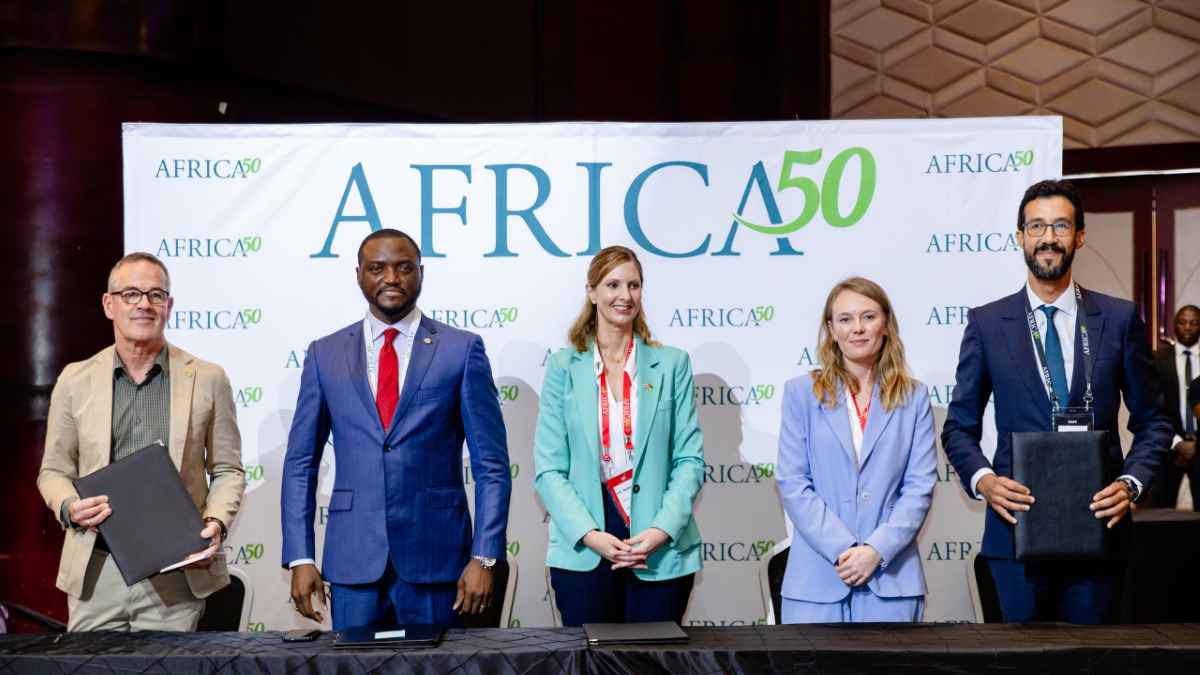
The Alliance for Green Infrastructure in Africa – Project Development Fund is part of the AGIA initiative, led by the African Development Bank, the African Union Commission, and Africa50

MAPUTO, Mozambique, August 14, 2025/APO Group/ —
  • Bank’s investment anchors first close of $118 million for Africa’s leading green infrastructure initiative
  • The Fund, managed by Africa50, seeks to raise $400 million of blended, early-stage development capital to deliver a pipeline of investment-ready green infrastructure projects in Africa

The African Development Bank Group (www.AfDB.org) has announced $40 million in blended capital to the Alliance for Green Infrastructure in Africa – Project Development Fund, anchoring the Fund’s first close of $118 million. This milestone marks a new era towards mobilizing blended capital in project development, to unlock a robust pipeline of investment-ready green infrastructure projects across the continent.

The AGIA-PD’s strong alliance of development finance institutions, public agencies, philanthropic organizations, and private investors includes KfW (the German development bank), the West African Development Bank (BOAD), the UK’s Foreign, Commonwealth & Development Office (FCDO), the Three Cairns Group, and the Soros Economic Development Fund.

The African Development Bank’s strategic investment in the Fund — comprising $20 million in grants, $10 million in commercial equity, and $10 million in junior equity from the Sustainable Energy Fund for Africa, which the Bank administers— underscores the Bank’s leadership in de-risking early-stage projects and catalyzing private investment into infrastructure.

“Through this $40 million spanning grants, junior equity, and commercial equity, the African Development Bank is pioneering a comprehensive approach that will unlock Africa’s vast green infrastructure potential,” said Solomon Quaynor, the Bank’s Vice President for Private Sector, Infrastructure and Industrialization. “This investment represents more than capital. It is a bold declaration that the Bank stands ready to share early-stage risk alongside our partner. The resources will be deployed for co-development with both emerging and established developers, ensuring a diverse and scalable pipeline. Our blended-finance model is designed to mobilize billions in private-sector investment for Africa’s low-carbon and climate-resilient infrastructure.”

Our blended-finance model is designed to mobilize billions in private-sector investment for Africa’s low-carbon and climate-resilient infrastructure

The Alliance for Green Infrastructure in Africa – Project Development Fund is part of the AGIA initiative, led by the African Development Bank, the African Union Commission, and Africa50. The initiative aims to raise $500 million, with $100 million in grants for project preparation overseen by the Bank and $400 million for project development through the Fund, to unlock a $10 billion investment pipeline in strategic areas, including energy, sustainable transport, and ICT.

“Since the unveiling of the initiative at COP27, the Alliance for Green Infrastructure in Africa has moved from ambition to execution, and this first close of the AGIA Project Development Fund is a powerful testament to that progress”, Africa50, Alain Ebobissé, CEO.

He added. “We are deeply grateful to our founding partners and investors for their trust and commitment. By unlocking early-stage capital, AGIA will help accelerate the development of bankable green infrastructure projects, strengthen local capacity, and pave the way for a more sustainable, resilient, and prosperous Africa. Africa50 is proud to serve as fund manager and drive this vital initiative forward.”

Minister of State for Development of the United Kingdom, Jenny Chapman, said, “We are partnering with countries to unlock private investment in the places hardest hit by climate change. This is good news for local communities, helping create growth, and for the UK. Today’s UK investment will support African-led projects like solar farms and water treatment plants, helping build stronger economies which can deal better with the effects of climate change.”

Christine de Barros Said, Head of Cooperation, German Embassy in Maputo underscored the  German government’s commitment to support Africa on its path to a sustainable and climate-resilient future.

Christine de Barros Said remarked: “Through KfW, we are providing €26 million to promote more private and public investment in green infrastructure. AGIA identifies and develops projects until they reach creditworthiness and then sells them to investors. This generates important investments in renewable energy, transport, water, and digitalization, which the continent urgently needs to foster economic growth and job creation.”

Commenting on the first close, President and Chairman of West African Development Bank, Serge Ekue, said: “BOAD’s commitment to supporting Africa50 in implementing AGIA reaffirms our dedication to closing Africa’s infrastructure gap and fostering private sector investment in innovative projects. This contribution is poised to drive sustainable development across the West African Economic and Monetary Union member states and the continent at large.”

Mark Gallogly, co-founder of Three Cairns Group, described the AGIA’s first close as “a significant milestone in tackling persistent barriers to scaling clean energy and climate-resilient infrastructure across Africa. We are proud to support this effort and to see catalytic capital flow into early-stage project development — a critical enabler for unlocking economic vitality on the continent.”

The CEO of the Soros Economic Development Fund, Georgia Levenson Keohane, said: “The Soros Economic Development Fund (SEDF) is proud to support the Alliance for Green Infrastructure in Africa, a critically important Africa-led partnership to catalyze transformative green infrastructure projects that enhance climate resilience, accelerate a just energy transition, and drive inclusive, sustainable development across the continent.”

Distributed by APO Group on behalf of African Development Bank Group (AfDB).

Home  Facebook

Business

Congo Is Turning Reserves into Bankable Projects – and the Investment Window Is Opening

Published

on

Eni-led LNG expansion and ongoing deepwater investment are pushing the Republic of Congo’s energy sector toward more bankable projects ahead of the Congo Energy & Investment Forum 2027

BRAZZAVILLE, Congo (Republic of the), June 23, 2026/APO Group/ –With LNG exports set to triple to 3 mtpa, upstream oil production targeting 500,000 bpd and a renewed push on local content, the Republic of Congo is positioning itself as one of Central Africa’s most investable hydrocarbon markets. Under the leadership of the newly-appointed Minister of Hydrocarbons, Stev Simplice Onanga, the country is prioritizing industry growth by balancing local content with reserve replacement and project advancement.


What sets Congo apart is not the scale of its reserves, but the pace at which those reserves are being turned into commercially viable projects. From Eni’s LNG expansion and TotalEnergies’ deepwater developments to brownfield optimization by Trident Energy and output growth at Ammat Global Resources, capital is flowing into projects with clearer monetization pathways and nearer-term returns.

Ahead of the Congo Energy & Investment Forum (CEIF) 2027 – the country’s leading platform for energy investment and partnerships – the story is shifting away from frontier potential toward bankable projects already under development.

Policy Reform Is De-Risking Investment

Congo’s investment case is being reshaped by the alignment of resource base, regulatory reform and project delivery. Established oil production, expanding LNG capacity and fiscal adjustments are gradually reducing above-ground risk.

Recent reforms led by the Ministry of Hydrocarbons and Société Nationale des Pétroles du Congo have added structure to the sector. The Gas Code, introduced in October 2025, formalizes fiscal terms for gas commercialization, while the Gas Master Plan prioritizes flaring reduction and gas-to-power deployment, targeting 1,500 MW by 2030.

A new upstream licensing round is also under consideration, aimed at attracting fresh capital into both mature and frontier acreage. Together, these measures are improving visibility across upstream, midstream and downstream segments, with recent project activity reinforcing the shift.

The Projects Driving the Next Cycle

Deepwater oil remains central to Congo’s production outlook, with operators progressing both new developments and brownfield optimization. TotalEnergies is advancing work at the Moho licence following the April 2026 Moho G discovery, backed by a $500–$600 million infill drilling program targeting about 40,000 bpd in incremental output.

Local independent Ammat Global Resources is targeting 70% production growth from its Loango and Zatchi fields, where reactivated wells and upgraded platforms have already lifted output by 75%. Perenco continues steady gains, adding roughly 6,000 bpd through its 2025–2026 drilling program.

Trident Energy, after acquiring an 85% working interest in the Nkossa and Nsoko II assets in 2025, is focused on extending field life through subsea optimization and redevelopment work.

While oil continues to anchor revenues, gas is rapidly emerging as Congo’s fastest-growing segment. Eni’s Congo LNG project delivered its first cargo from Phase 2 in February 2026, following the startup of the Nguya FLNG unit in December 2025. Together with Tango FLNG, capacity has risen from 0.6 mtpa to 3 mtpa. Trident Energy has also proposed an FLNG project aimed at adding further capacity across the country’s gas market. The project is expected to operate as shared infrastructure, allowing multiple operators to process gas from their respective fields. This creates an outlet for associated gas that might otherwise be stranded, supporting the country’s broader diversification goals.

Local Content Is Reshaping Investment Terms

Beyond upstream policy, Minister Onanga has positioned local content as a central pillar of Congo’s investment framework, and a key determinant of how capital is structured and deployed.

Decrees 2019-342, 343, 344 and 345 set requirements around subcontracting, workforce localization and training commitments, with the effect being a gradual shift in how projects are structured and how partnerships are formed. Operators are increasingly assessed not only on technical delivery but on in-country value creation, including partnerships with local firms and skills development. Logistics, maintenance and other service areas are increasingly channeled through domestic providers.

At CEIF 2027 – taking place June 1–3 in Brazzaville – attention will shift to what is moving forward and to the investors positioned to take part in that pipeline. Congo’s energy sector is no longer defined by potential alone: projects are moving, capital is being committed and policy is starting to catch up with activity on the ground.

As the Republic of Congo moves from reserves to revenue, the signal to investors is clear: this is already unfolding, not a future opportunity.

Distributed by APO Group on behalf of Energy Capital & Power.


Continue Reading

Business

Afreximbank secures double honours at the 2026 International Association of Business Communicators (IABC) Gold Quill Awards for excellence in strategic communications

Published

on

The Award of Excellence for IATF2025 recognises the successful communications and stakeholder engagement programme delivered around the fourth edition of the Intra-African Trade Fair, Africa’s premier trade and investment event

CAIRO, Egypt, June 23, 2026/APO Group/ –African Export-Import Bank (Afreximbank) (www.Afreximbank.com) has been recognised with two prestigious honours at the 2026 International Association of Business Communicators (IABC) Gold Quill Awards, one of the world’s most prestigious awards programmes for strategic communications.


The Bank received an Award of Excellence in Special and Experiential Events category for the Intra-African Trade Fair 2025 (IATF2025) held in Algiers, Algeria and an Award of Merit in the Social Media category for its Afreximbank Social Media Campaigns, reaffirming Afreximbank’s commitment to delivering impactful communications that advance its mandate of promoting trade, investment and industrialisation across Africa and the Caribbean.

We are delighted to receive these two awards, which attest to the expertise, creativity and efficiency of Afreximbank’s communication

The Award of Excellence for IATF2025 recognises the successful communications and stakeholder engagement programme delivered around the fourth edition of the Intra-African Trade Fair, Africa’s premier trade and investment event. IATF2025 brought together governments, businesses, investors, buyers, sellers and entrepreneurs from across Africa and beyond, creating a platform for trade and investment opportunities while advancing the objectives of the African Continental Free Trade Area (AfCFTA). The communications campaign played a pivotal role in driving global awareness, stakeholder participation, media visibility and engagement before, during and after the event, while showcasing the scale, ambition and dynamism of African enterprise and reinforcing a positive narrative about Africa’s capacity to trade, industrialise and compete on the global stage. Over 120,000 delegates attended IATF2025 in person and virtually, with deals worth over US$50 billion recorded.

The Award of Merit for Afreximbank Social Media Campaigns recognises the Bank’s strategic use of digital platforms to engage stakeholders, amplify its developmental impact and elevate conversations around trade, industrialisation, economic integration and investment opportunities across Africa and the Caribbean. Through a combination of compelling storytelling, thought leadership content, executive advocacy, multimedia production and real-time event coverage, Afreximbank’s social media platforms have continued to expand their reach and influence among policymakers, businesses, investors, development partners and the wider public. Among these platforms is the Afreximbank TV, a digital TV channel that is wholly owned and managed by Afreximbank, whose fifth edition was celebrated with dedicated coverage of IATF2025, providing live coverage of the activities to both pan African and global audiences.

Anne Ezeh, Director & Global Head, Communications and Events at Afreximbank commented: “We are delighted to receive these two awards, which attest to the expertise, creativity and efficiency of Afreximbank’s communications. As a pan African multilateral financial institution, we see storytelling as a powerful tool for advancing our mission — ensuring our initiatives, events, programmes and key announcements not only inform, but also inspire confidence, deepen engagement and amplify Africa’s transformation. These awards reinforce our resolve to continue delivering world-class communications that elevate African voices and projects a bold and authoritative narrative of the continent.”

Ms. Ezeh added that through innovative storytelling, digital engagement and integrated campaigns, the Bank will continue to amplify the impact of its programmes and partnerships  to project a more authentic narrative of Africa, one defined by opportunity, innovation, resilience and growing influence in the global economy.

For more than five decades, the IABC Gold Quill Awards have recognised excellence in strategic communications globally, celebrating programmes and campaigns that demonstrate measurable impact, innovation, creativity and outstanding execution. Widely regarded as the pinnacle of achievement in the communications profession, the awards are judged through a rigorous and independent evaluation process conducted by experienced communication leaders from around the world.

Distributed by APO Group on behalf of Afreximbank.


Continue Reading

Business

Islamic Development Bank (IsDB) Institute Unveils 2025 Annual Report During Group Annual Meetings in Baku

Published

on

In 2025, IsDBI significantly expanded its footprint in Islamic finance transformation, approving 25 new technical assistance projects valued at US$4.14 million and completing 19 projects worth US$3 million

The Islamic Development Bank Institute (IsDBI) (https://IsDBInstitute.org) has released its 2025 Annual Report during the 2026 IsDB Group Annual Meetings held in Baku, Azerbaijan, showcasing a year of expanded impact in Islamic finance transformation, innovative solutions, and capacity development.


The report highlights how IsDBI strengthened its role as a global knowledge leader by advancing innovative solutions and scaling support to Member Countries through knowledge-based interventions, Islamic finance grants, and strategic partnerships.

In 2025, IsDBI significantly expanded its footprint in Islamic finance transformation, approving 25 new technical assistance projects valued at US$4.14 million and completing 19 projects worth US$3 million, supporting countries in strengthening regulatory frameworks and promoting inclusive financial systems.

Since 2013, the Institute’s interventions in this regard have reached over US$27.57 million across 181 projects benefiting more than 34 countries, underlining its sustained contribution to development outcomes across the Islamic world.

I am pleased to note that the Institute has continued to strengthen its unique role in the global development ecosystem

The Annual Report highlights major progress in IsDBI’s three flagship transformative projects, namely Awqāf Free Zones, Digital Postal Islamic Financial Services, and Smart Countertrade System, which have all advanced to pilot-ready stages. These initiatives aim to address global challenges such as financial inclusion, food and energy security, and trade resilience.

Furthermore, the Institute accelerated its focus on digital innovation in Islamic finance, enhancing its Islamic Finance Artificial Intelligence Assistant (IFAA) and hosting its first AI Hackathon on Islamic Finance, engaging more than 40 teams in developing cutting-edge solutions aligned with industry standards.

Human capital development in Islamic finance also remained a cornerstone of IsDBI’s work in 2025, with the delivery of over 20 training programs reaching around 500 professionals across Member Countries. A key achievement in this area was the Entrepreneurial Mindset Development Program, a flagship initiative equipping emerging leaders from 20 countries with innovation-driven and values-based entrepreneurship skills. The program was designed and implemented in collaboration with Prince Mohammed Bin Salman College of Business and Entrepreneurship, Saudi Arabia.

The Institute also strengthened its thought leadership through flagship publications, global partnerships, and digital engagement, reinforcing its position as a leading voice in Islamic economics and finance.

Commenting on the issuance of the Annual Report, Dr. Sami Al-Suwailem, Acting Director General of IsDBI, said: “I am pleased to note that the Institute has continued to strengthen its unique role in the global development ecosystem by bridging knowledge creation, building human capital, and designing innovative solutions to address economic challenges.”

The 2025 Annual Report is accessible on IsDBI website here (https://isdbinstitute.org/product/isdbi-annual-report-2025/).

Distributed by APO Group on behalf of Islamic Development Bank Institute (IsDBI).


Continue Reading

Trending

Exit mobile version