The report is based on data from over 12.5 million users across 35,681 organisations in 19 different industries
JOHANNESBURG, South Africa, August 16, 2023/APO Group/ —
More than one in three of corporate employees in Africa are vulnerable to phishing attacks and social engineering scams. However, regular training can significantly reduce their chances of falling victim to such cyber threats.
This is among the key findings of KnowBe4’s 2023 Phishing by Industry Benchmarking Report for Africa (https://apo-opa.info/3KJj9nc), which measures organisations’ Phish-prone Percentage (PPP) – an indication of how many of their employees are likely to fall for phishing or a social engineering scam.
The report is based on data from over 12.5 million users across 35,681 organisations in 19 different industries. The results of over 32.1 million simulated phishing security tests are also included. This year’s report details international phishing benchmarks from North America, The United Kingdom and Ireland, Europe, Africa, South America, Asia, Australia and New Zealand.
In Africa, 412 organisations from South Africa, Kenya, Nigeria and Botswana participated in the phishing simulation tests, with a total of 337,937 emails sent. The majority of these organisations (58%) were small (1-249 employees), followed by medium (26%, 250-999 employees) and large (16%, 1000+ employees) ones.
The resulting baseline PPP measured the percentage of employees in organisations that had not conducted any KnowBe4 security training and clicked a simulated phishing email link or opened an infected attachment during testing.
African business users had a lower baseline PPP than many other regions, meaning they were less likely to fall for phishing attacks before any training. However, their improvement after 90 days of training was also lower than other regions. After a year of ongoing training, African users achieved a 79.8% improvement in their PPP, showing the effectiveness of consistent security awareness education.
Africa’s human firewall
Africa’s average was 32.8%, slightly better than the global average and much better than South America, where the average was 41.1%
“The report underscores the fact that while technology plays an important role in preventing and recovering from an attack, organisations cannot afford to ignore the human factor,” says Anna Collard, Senior Vice President of Content Strategy & Evangelist for KnowBe4 Africa. “The root cause of most data breaches can be traced to the human factor.”
The report shows that without security training, 33.2% of employees across all regions and industries are likely to fall for phishing attacks or fraudulent requests. Africa’s average was 32.8%, slightly better than the global average and much better than South America, where the average was 41.1%. Asia had the lowest rate of phishing – 30%.
Collard notes: “Africa’s baseline phishing security test results shows that one out of three employees are likely to click on a suspicious link or email or comply with a fraudulent request before receiving training. This is very concerning considering that Africa has seen the fastest growth in cyber crimes in recent years, especially among small and medium-sized organisations.”
Training slashes risk
90 days after training, Africa’s PPP average was 20.5% compared to the global average of 18.5%. After a year of consistent training, Africa’s PPP was 6.6%, compared to a global average of 5.4%, indicating that new habits become normal, fostering an improved security culture.
At baseline, Africa’s medium-sized enterprises had the lowest PPP – at 29.4%, followed by small enterprises at 30% and large enterprises with a surprisingly high 33.3%. After training, large enterprises performed best, with a PPP average of 19% 90 days after training and 5.7% after a year. Medium sized enterprises improved to 22.7% 90 days after training, and 10.5% after a year. Small enterprises’ PPP improved to 25.2% after 90 days and 9% after a year.
The report also revealed which industries are most vulnerable to cyber threats and have the highest PPP, indicating more vulnerability and a greater need for security awareness training. Across small and medium organisations globally, the healthcare and pharmaceuticals industries had the highest PPP of 32.3% and 35.8%, respectively. In large organisations, the insurance industry remained the most at risk for a second consecutive year with a PPP of 53.2% globally. With consistent training for a year or more, the global average PPP improvement across sectors was 82%.
“These findings highlight the importance of ongoing, consistent cybersecurity awareness training and testing to achieve significant risk reduction,” says Collard. “Simply warning users or having a once-off training session is not enough. Cybersecurity needs to be ingrained into company culture.”
To download a copy of the 2023 KnowBe4 Phishing by Industry Benchmarking Report, visit https://apo-opa.info/3KH885z.
The Africa Debate 2026 will provide a platform for this essential, era-defining discussion, convening leaders to explore how Africa and its partners can build more balanced, resilient and sustainable models of cooperation
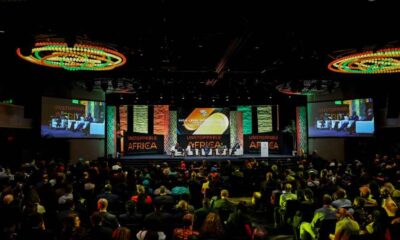
LONDON, United Kingdom, February 5, 2026/APO Group/ –As African economies assert greater agency in a rapidly evolving global order, Invest Africa (www.InvestAfrica.com) is delighted to announce The Africa Debate 2026, its flagship investment forum, taking place at the historic Guildhall in London on 3 June 2026.
Now in its 12th year, The Africa Debate has established itself as London’s premier platform for African investment dialogue since launching in 2014, convening over 800 global decision-makers annually to shape the future of trade, finance, investment, and development across the continent.
Under the theme “Redefining Partnership: Navigating a World in Transition”, this year’s forum will focus on Africa’s response to global economic realignment with greater agency, ambition and economic sovereignty.
The Africa Debate puts Africa’s priorities at the centre of the conversation, moving beyond traditional narratives to focus on ownership, resilience and long-term value creation.
“Volatility is not new to Africa. What is changing is the opportunity to respond with greater agency and ambition,” says Invest Africa CEO Chantelé Carrington.
“This year’s edition of The Africa Debate asks how we strengthen economic sovereignty — from access to capital and investment to financial and industrial policy — so African economies can take greater ownership of their growth. Success will be defined by how effectively we turn disruption into leverage and partnership into shared value.”
The Africa Debate 2026 will provide a platform for this essential, era-defining discussion, convening leaders to explore how Africa and its partners can build more balanced, resilient and sustainable models of cooperation.
Key challenges driving the debate
Core focus areas for this year’s edition of The Africa Debate include:
This year’s edition of The Africa Debate asks how we strengthen economic sovereignty — from access to capital and investment to financial and industrial policy
Global Realignment & New Partnerships
How shifting geopolitical and economic power structures are reshaping Africa’s global partnerships, trade dynamics and investment landscape.
Financing Africa’s Future
The growing need to reform the global financial architecture, new approaches to development finance, as well as the strengthening of market access and financial resilience of African economies in a changing global system.
Strategic Value Chains
Moving beyond primary exports to build local value chains in critical minerals for the green economy. Also addressing Africa’s energy access gap and mobilising investment in renewable and transitional energy systems.
Digital Transformation & Technology
Unlocking growth in fintech, AI and digital infrastructure to drive productivity, inclusion, and the next phase of Africa’s economic transformation.
The Africa Debate 2026 offers a unique platform for high-level dialogue, deal-making, and strategic engagement. Attendees will gain actionable insights from leading policymakers, investors and business leaders shaping Africa’s economic future, while building strategic partnerships that define the continent’s next growth phase.
After a thorough internal and external investigation, along with a disciplinary hearing chaired by Sbongiseni Dube, CLG (https://CLGglobal.com) has made the decision to terminate Zion Adeoye due to serious personal and professional conduct violations. This process adhered to the Code of Good Practice of the Labour Relations Act, ensuring fairness, transparency, and compliance with South African law.
Mr. Adeoye has been held accountable for several serious offenses, including:
Making malicious and defamatory statements against colleagues
Extortion
Intimidation
Fraud
Misuse of company funds
Theft and misappropriation of funds
Breach of fiduciary duty
Mismanagement
His actions are in direct contradiction to our firm’s core values. We do not approve of attorneys spending time in a Gentleman’s Club. CLG deeply regrets the impact this situation has had on our colleagues and continues to provide full support to those affected.
We want to express our gratitude to those who spoke up and to reassure everyone at the firm of our unwavering commitment to maintaining a respectful workplace. Misconduct of any kind is unacceptable and will be addressed decisively.
We recognize the seriousness of this matter and have referred it to the appropriate law enforcement, regulatory, and legal authorities in Nigeria, Mauritius, and South Africa. We kindly ask that the privacy of the third party involved be respected.
The International Islamic Trade Finance Corporation (ITFC) Strengthens Partnership with the Republic of Djibouti through US$35 Million Financing Facility
This facility forms part of the US$600 million, three-year Framework Agreement signed in May 2023 between ITFC and the Republic of Djibouti, reflecting the strong and growing partnership between both parties
JEDDAH, Saudi Arabia, February 5, 2026/APO Group/ –The International Islamic Trade Finance Corporation (ITFC) (https://www.ITFC-IDB.org), a member of the Islamic Development Bank (IsDB) Group, has signed a US$35 million sovereign financing facility with the Republic of Djibouti to support the development of the country’s bunkering services sector and strengthen its position as a strategic regional maritime and trade hub.
The facility was signed at the ITFC Headquarters in Jeddah by Eng. Adeeb Yousuf Al-Aama, Chief Executive Officer of ITFC, and H.E. Ilyas Moussa Dawaleh, Minister of Economy and Finance in charge of Industry of the Republic of Djibouti.
The financing facility is expected to contribute to Djibouti’s economic growth and revenue diversification by reinforcing the competitiveness and attractiveness of the Djibouti Port as a “one-stop port” offering comprehensive vessel-related services. With Red Sea Bunkering (RSB) as the Executing Agency, the facility will support the procurement of refined petroleum products, thus boosting RSB’s bunkering operations, enhancing revenue diversification, and consolidating Djibouti’s role as a key logistics and trading hub in the Horn of Africa and the wider region.
We look forward to deepening this partnership, creating new opportunities, and leveraging collaborative programs to advance key sectors and drive sustainable economic growth
Commenting on the signing, Eng. Adeeb Yousuf Al-Aama, CEO of ITFC, stated:
“This financing reflects ITFC’s continued commitment to supporting Djibouti’s strategic development priorities, particularly in strengthening energy security, port competitiveness, and trade facilitation. We are proud to deepen our partnership with the Republic of Djibouti and contribute to sustainable economic growth and regional integration.”
H.E. Ilyas Moussa Dawaleh, Minister of Economy and Finance in charge of Industry of the Republic of Djibouti, commented: “Today’s signing marks an important milestone in the development of Djibouti’s bunkering services and reflects our strong and valued partnership with ITFC, particularly in the oil and gas sector. This collaboration supports our ambition to position Djibouti as a regional hub for integrated maritime and logistics services. We look forward to deepening this partnership, creating new opportunities, and leveraging collaborative programs to advance key sectors and drive sustainable economic growth.”
This facility forms part of the US$600 million, three-year Framework Agreement signed in May 2023 between ITFC and the Republic of Djibouti, reflecting the strong and growing partnership between both parties.
Since its inception in 2008, ITFC and the Republic of Djibouti have maintained a strong partnership, with a total of US$1.8 billion approved primarily supporting the country’s energy sector and trade development objectives.
Distributed by APO Group on behalf of International Islamic Trade Finance Corporation (ITFC).
We use cookies on our website to give you the most relevant experience by remembering your preferences and repeat visits. By clicking “Accept”, you consent to the use of ALL the cookies.
This website uses cookies to improve your experience while you navigate through the website. Out of these, the cookies that are categorized as necessary are stored on your browser as they are essential for the working of basic functionalities of the website. We also use third-party cookies that help us analyze and understand how you use this website. These cookies will be stored in your browser only with your consent. You also have the option to opt-out of these cookies. But opting out of some of these cookies may affect your browsing experience.
Necessary cookies are absolutely essential for the website to function properly. These cookies ensure basic functionalities and security features of the website, anonymously.
Cookie
Duration
Description
cookielawinfo-checkbox-analytics
11 months
This cookie is set by GDPR Cookie Consent plugin. The cookie is used to store the user consent for the cookies in the category "Analytics".
cookielawinfo-checkbox-functional
11 months
The cookie is set by GDPR cookie consent to record the user consent for the cookies in the category "Functional".
cookielawinfo-checkbox-necessary
11 months
This cookie is set by GDPR Cookie Consent plugin. The cookies is used to store the user consent for the cookies in the category "Necessary".
cookielawinfo-checkbox-others
11 months
This cookie is set by GDPR Cookie Consent plugin. The cookie is used to store the user consent for the cookies in the category "Other.
cookielawinfo-checkbox-performance
11 months
This cookie is set by GDPR Cookie Consent plugin. The cookie is used to store the user consent for the cookies in the category "Performance".
viewed_cookie_policy
11 months
The cookie is set by the GDPR Cookie Consent plugin and is used to store whether or not user has consented to the use of cookies. It does not store any personal data.
Functional cookies help to perform certain functionalities like sharing the content of the website on social media platforms, collect feedbacks, and other third-party features.
Performance cookies are used to understand and analyze the key performance indexes of the website which helps in delivering a better user experience for the visitors.
Analytical cookies are used to understand how visitors interact with the website. These cookies help provide information on metrics the number of visitors, bounce rate, traffic source, etc.
Advertisement cookies are used to provide visitors with relevant ads and marketing campaigns. These cookies track visitors across websites and collect information to provide customized ads.