Connect with us
Anglostratits

Business

New Wave European Climate Litigation Aimed at Stopping African Energy Projects
Published

on

African energy

Western Groups have targeted African energy sector and are working hard to make lawsuits against financing African oil and gas a growing and thriving industry

JOHANNESBURG, South Africa, January 17, 2023/APO Group/ — 

More than 600 million Africans lacked access to electricity before the pandemic, and it appears that this figure is growing. According to the International Energy Agency, during 2020 some gains in access were reversed, with as many as 30 million people who previously had access to electricity no longer able to afford it.

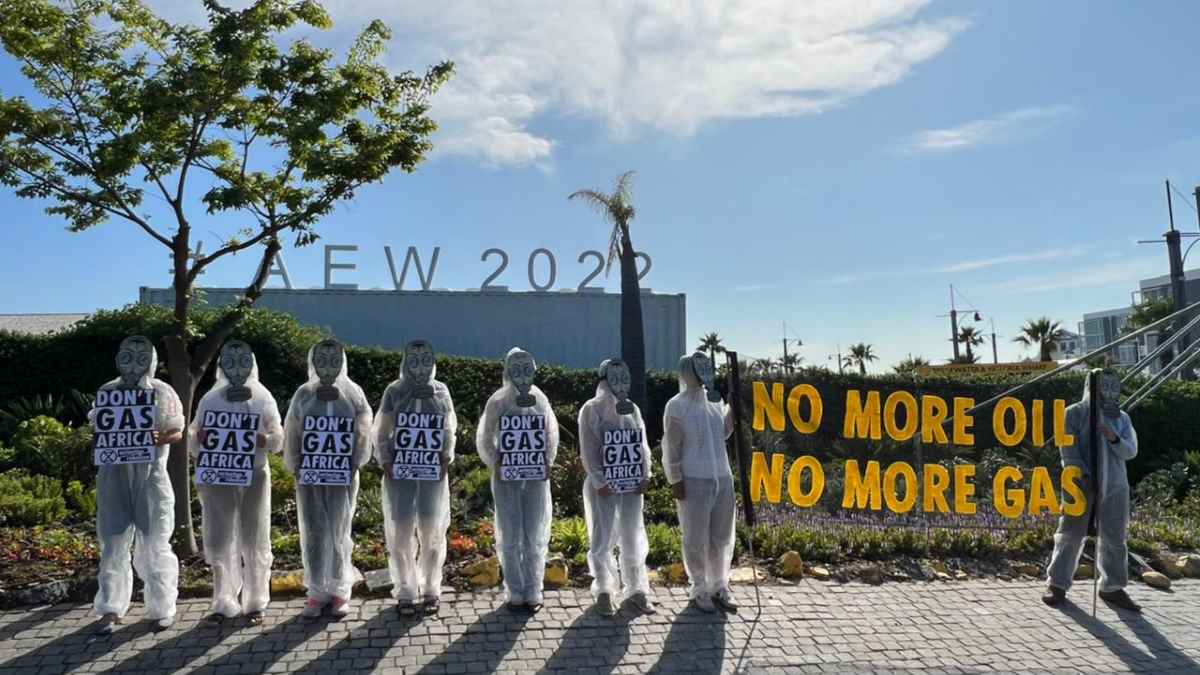
The response from Europe has been a wave of new lawsuits undermines energy poverty, climate justice, jobs and our economy recovery. No one loves the environment more than we do. We are the greatest environmental lovers and should not take lectures on it. Western Groups have targeted African energy sector and are working hard to make lawsuits against financing African oil and gas a growing and thriving industry.

The difference is that anti African lawsuits from Friends of the Earth (https://bit.ly/3Xj6X0u) Chloé Farand (https://bit.ly/3GEolpu) Extinction Rebellion (https://bit.ly/3GNbkdf) undermine businesses of all sizes, our competitiveness and our economic recovery. You almost have to admire their ingenuity and dishonesty. They have engineered devastating public relations campaigns against Africans while their homes are powered by coal. Fortunately, U.K. judges have not yet bought their tactics — but that doesn’t mean these hate groups will stop trying!

Condemning Africans to poverty and misery is wrong. Preventing us from using our natural resources for our development while you take even our coal to Europe to power your wealthy lifestyle and keep our children in the dark is sinful. They called it climate action. I hear dumb ideas every day of the week, but this one takes the cake!

The bottom line is, if you build a system conducive to lawsuits to prevent African development and condemn countries like Mozambique (https://bit.ly/3w9Dom5), Uganda (https://bit.ly/3Hao9Q6), South Africa (https://bit.ly/3Xl4GCe), Namibia (https://bit.ly/3XD1fGu), South Sudan (https://bit.ly/3XzaXKe), Kenya (https://bit.ly/3iJT4tf), they will come. Only one problem — they will destroy jobs, competitiveness and economic growth, and energy poverty.

Africa is being affected by a crisis NOT OF ITS OWN MAKING

There’s no denying that climate change is affecting Africa. One has only to look at the extended drought in the south to see how devastating things can be when customary weather patterns are disrupted.

The thing is, Africa is being affected by a crisis NOT OF ITS OWN MAKING. If contributing just 3% of global emissions could cause issues like what we’re seeing in Somalia, for example, the world’s nations that produce far more greenhouse gases should be dried up, under water, blown away, or burned to a crisp by now.

Consider this: Prominent American climate activist Bill McKibben (https://bit.ly/3iMLfTO) said that the world can’t fight climate change if TotalEnergies (https://bit.ly/3GEp1ew) and Uganda (https://bit.ly/3Hao9Q6) goes through with building the East African Crude Oil Pipeline. Yes, according to McKibben, that one action will derail the entire carbon reduction scheme and offset anything any of the world’s other countries are doing to reach net zero. Seems ridiculous, doesn’t it?

What’s even more perplexing—or perhaps outlandish—is that McKibben has taken aim at a pipeline that will transport just 210,000 barrels of oil per day. That’s roughly equivalent to 1.8% of the total output of the U.S., but he claims it must be stopped, or everything falls apart. What’s the point of any climate effort anywhere if it can be undone by a relatively small pipeline that might actually be a lifeline in one of the world’s most impoverished nations?

Chloé Farand a wealthy French activist whom according to our sources vetoed every decision in her previous Orgarnisation to hire black employees, has recently been deployed to Kenya with a mission to fight energy development in East Africa. Kenyans, Rwandans, Ugandans should pay special attention to this and also the upcoming vicious and dangerous campaign against EACOP.

Why will someone who refuses to work or seat around people of color be so keen to work in Africa in the name of Climate justice. Her racist past does not qualify her to talk about fighting for Africans in Kenya and Uganda. Racism, sexism and Anti Semitism are wrong, and we Africans must forcefully condemn it. Farand should start by apologizing rather than running to Kenya so she can go back to Europe and say look, I have a black friend. Nice Try but we got you. While we believe in Africa’s openness and free speech, we will vigorously oppose and confront any action to prevent the development of EACOP and our fight against energy poverty.

And speaking of pressure from powerful external forces, is Chloé Farand, Extinction Rebellion, Friends of the Earth, Greenpeace’s approach truly free of “neo-colonial” elements? I didn’t know Greenpeace was a Pan Africanist NGO. Is the NGO using its position as one of the world’s most well-known environmental groups to ensure that local environmental advocates have a bigger bully pulpit? Is its opposition to EACOP rooted in the dreams and desires of ordinary Ugandans and Tanzanians, or is it trying to impose a solution from outside, on the basis of the global environmental movement’s pre-existing animus towards fossil fuels?

It’s wrong to use a historically and emotionally loaded word like “neo-colonialism” in this instance. It’s wrong to imply that Tanzania and Uganda have been coerced into working with foreign corporations, and it’s wrong to invoke colonialism in the hope of convincing Africans to listen to a different group of people who think they know best.

Let Africans decide for themselves!

Distributed by APO Group on behalf of African Energy Chamber.

Events

As global power structures shift, Invest Africa convenes The Africa Debate 2026 to redefine partnership in a changing world

Published

on

Debate

The Africa Debate 2026 will provide a platform for this essential, era-defining discussion, convening leaders to explore how Africa and its partners can build more balanced, resilient and sustainable models of cooperation

LONDON, United Kingdom, February 5, 2026/APO Group/ –As African economies assert greater agency in a rapidly evolving global order, Invest Africa (www.InvestAfrica.com) is delighted to announce The Africa Debate 2026, its flagship investment forum, taking place at the historic Guildhall in London on 3 June 2026.

Now in its 12th year, The Africa Debate has established itself as London’s premier platform for African investment dialogue since launching in 2014, convening over 800 global decision-makers annually to shape the future of trade, finance, investment, and development across the continent.

Under the theme “Redefining Partnership: Navigating a World in Transition”, this year’s forum will focus on Africa’s response to global economic realignment with greater agency, ambition and economic sovereignty.

The Africa Debate puts Africa’s priorities at the centre of the conversation, moving beyond traditional narratives to focus on ownership, resilience and long-term value creation.

“Volatility is not new to Africa. What is changing is the opportunity to respond with greater agency and ambition,” says Invest Africa CEO Chantelé Carrington.

“This year’s edition of The Africa Debate asks how we strengthen economic sovereignty — from access to capital and investment to financial and industrial policy — so African economies can take greater ownership of their growth. Success will be defined by how effectively we turn disruption into leverage and partnership into shared value.”

The Africa Debate 2026 will provide a platform for this essential, era-defining discussion, convening leaders to explore how Africa and its partners can build more balanced, resilient and sustainable models of cooperation.

Key challenges driving the debate

Core focus areas for this year’s edition of The Africa Debate include:

This year’s edition of The Africa Debate asks how we strengthen economic sovereignty — from access to capital and investment to financial and industrial policy

Global Realignment & New Partnerships

How shifting geopolitical and economic power structures are reshaping Africa’s global partnerships, trade dynamics and investment landscape.

Financing Africa’s Future

The growing need to reform the global financial architecture, new approaches to development finance, as well as the strengthening of market access and financial resilience of African economies in a changing global system.

Strategic Value Chains

Moving beyond primary exports to build local value chains in critical minerals for the green economy. Also addressing Africa’s energy access gap and mobilising investment in renewable and transitional energy systems.

Digital Transformation & Technology

Unlocking growth in fintech, AI and digital infrastructure to drive productivity, inclusion, and the next phase of Africa’s economic transformation.

The Africa Debate 2026 offers a unique platform for high-level dialogue, deal-making, and strategic engagement. Attendees will gain actionable insights from leading policymakers, investors and business leaders shaping Africa’s economic future, while building strategic partnerships that define the continent’s next growth phase.

Registration is now open (http://apo-opa.co/46b19gj).

Distributed by APO Group on behalf of Invest Africa.

Continue Reading

Business

Zion Adeoye terminated as Chief Executive Officer (CEO) of CLG due to serious personal and professional conduct violations

Published

on

CLG

After a thorough internal and external investigation, along with a disciplinary hearing chaired by Sbongiseni Dube, CLG (https://CLGglobal.com) has made the decision to terminate Zion Adeoye due to serious personal and professional conduct violations. This process adhered to the Code of Good Practice of the Labour Relations Act, ensuring fairness, transparency, and compliance with South African law.

Mr. Adeoye has been held accountable for several serious offenses, including:

  • Making malicious and defamatory statements against colleagues
  • Extortion
  • Intimidation
  • Fraud
  • Misuse of company funds
  • Theft and misappropriation of funds
  • Breach of fiduciary duty
  • Mismanagement

His actions are in direct contradiction to our firm’s core values. We do not approve of attorneys spending time in a Gentleman’s Club. CLG deeply regrets the impact this situation has had on our colleagues and continues to provide full support to those affected.

We want to express our gratitude to those who spoke up and to reassure everyone at the firm of our unwavering commitment to maintaining a respectful workplace. Misconduct of any kind is unacceptable and will be addressed decisively.

We recognize the seriousness of this matter and have referred it to the appropriate law enforcement, regulatory, and legal authorities in Nigeria, Mauritius, and South Africa. We kindly ask that the privacy of the third party involved be respected.

Distributed by APO Group on behalf of CLG.


Continue Reading

Business

The International Islamic Trade Finance Corporation (ITFC) Strengthens Partnership with the Republic of Djibouti through US$35 Million Financing Facility

Published

on

ITFC

This facility forms part of the US$600 million, three-year Framework Agreement signed in May 2023 between ITFC and the Republic of Djibouti, reflecting the strong and growing partnership between both parties

JEDDAH, Saudi Arabia, February 5, 2026/APO Group/ –The International Islamic Trade Finance Corporation (ITFC) (https://www.ITFC-IDB.org), a member of the Islamic Development Bank (IsDB) Group, has signed a US$35 million sovereign financing facility with the Republic of Djibouti to support the development of the country’s bunkering services sector and strengthen its position as a strategic regional maritime and trade hub.

The facility was signed at the ITFC Headquarters in Jeddah by Eng. Adeeb Yousuf Al-Aama, Chief Executive Officer of ITFC, and H.E. Ilyas Moussa Dawaleh, Minister of Economy and Finance in charge of Industry of the Republic of Djibouti.

The financing facility is expected to contribute to Djibouti’s economic growth and revenue diversification by reinforcing the competitiveness and attractiveness of the Djibouti Port as a “one-stop port” offering comprehensive vessel-related services. With Red Sea Bunkering (RSB) as the Executing Agency, the facility will support the procurement of refined petroleum products, thus boosting RSB’s bunkering operations, enhancing revenue diversification, and consolidating Djibouti’s role as a key logistics and trading hub in the Horn of Africa and the wider region.

We look forward to deepening this partnership, creating new opportunities, and leveraging collaborative programs to advance key sectors and drive sustainable economic growth

Commenting on the signing, Eng. Adeeb Yousuf Al-Aama, CEO of ITFC, stated:

“This financing reflects ITFC’s continued commitment to supporting Djibouti’s strategic development priorities, particularly in strengthening energy security, port competitiveness, and trade facilitation. We are proud to deepen our partnership with the Republic of Djibouti and contribute to sustainable economic growth and regional integration.”

H.E. Ilyas Moussa Dawaleh, Minister of Economy and Finance in charge of Industry of the Republic of Djibouti, commented: “Today’s signing marks an important milestone in the development of Djibouti’s bunkering services and reflects our strong and valued partnership with ITFC, particularly in the oil and gas sector. This collaboration supports our ambition to position Djibouti as a regional hub for integrated maritime and logistics services. We look forward to deepening this partnership, creating new opportunities, and leveraging collaborative programs to advance key sectors and drive sustainable economic growth.”

This facility forms part of the US$600 million, three-year Framework Agreement signed in May 2023 between ITFC and the Republic of Djibouti, reflecting the strong and growing partnership between both parties.

Since its inception in 2008, ITFC and the Republic of Djibouti have maintained a strong partnership, with a total of US$1.8 billion approved primarily supporting the country’s energy sector and trade development objectives.

Distributed by APO Group on behalf of International Islamic Trade Finance Corporation (ITFC).

Continue Reading

Trending