Connect with us
Anglostratits

Business

APO Group partners with the Catholic Church in Africa to provide comprehensive Public Relations support

Published

on

Catholic Church

Partnership with APO Group will bring greater cohesion to the Church’s pastoral communications strategy, helping to deliver the core messages of the Holy Father and the Vatican (Holy See) to Africa’s 251 million Catholics

VATICAN CITY, Vatican, May 26, 2022/APO Group/ — 

APO Group (www.APO-opa.com), the leading Pan-African communications consultancy and press release distribution service, and the Symposium of Episcopal Conferences of Africa and Madagascar (SECAM) (www.SECAM.org), today announced a working partnership aimed at providing extensive Media and Public Relations support to the Catholic Church in Africa (Holy See) (www.Vatican.va).

By working with the SECAM, the institution that coordinates the Catholic Church hierarchy’s pastoral work in Africa, APO Group will bring greater cohesion to the Church’s communications strategy, helping to deliver core messages of the Holy Father and the Holy See to Africa’s 251 million Catholics who are spread far and wide across the African diaspora. It will also publicise and present news and information about the life of the Church in Africa to a global audience.

The project is being carried out in collaboration with the Vatican Dicastery for Communications in Rome and the Pan-African Episcopal Committee for Social Communications (CEPACS) to ensure the Church’s communications strategies and initiatives are disseminated across Africa and beyond. 

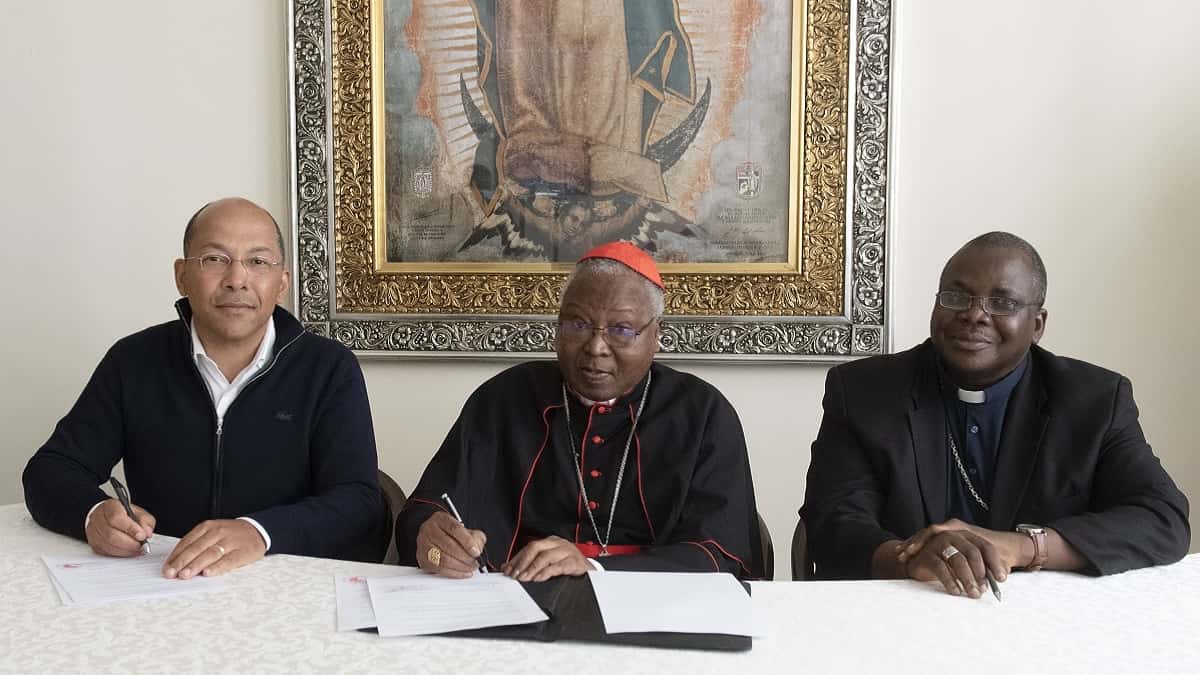
The partnership was formalized on Tuesday during a signing ceremony at the Vatican in Rome by His Eminence Cardinal Philippe Ouédraogo, Archbishop of Ouagadougou and President of SECAM, Most Reverend Emmanuel Badejo, Bishop of Oyo (Nigeria), President of CEPACS and member of the Vatican Dicastery for Communications, Monseigneur Janvier Marie Gustave Yameogo, official of the Vatican Dicastery for Communications, and Nicolas Pompigne-Mognard, Founder and Chairman of APO Group.

While Catholic populations are declining in many parts of the world, in Africa they are increasing fast.

The mission of SECAM is to preserve and foster communion, collaboration and joint action among the Catholic Episcopal Conferences of Africa and the Islands, ensuring that African Catholics are better connected to each other, to the Vatican and to the universal Church. 

The Pan-African Episcopal Committee for Social Communications (CEPACS) was established in 1971 in collaboration with the Pontifical Council for Social Communications to support the Symposium of Episcopal Conferences of Africa and Madagascar (SECAM) as an episcopal committee to coordinate pastoral communications in the mission of the Church in Africa.

APO Group is well qualified to provide communications support for SECAM and the Catholic Church in Africa.

APO Group will help us achieve continuity in our messaging that will ensure we are able to reach all African Catholics and promote organic pastoral solidarity on our continent

With a large client base made up of multinational companies, institutions and African governments, APO Group helps organizations as diverse as the Islamic Development Bank (IsDB), Coca-Cola and FIFA achieve communications goals across Africa.

For SECAM, APO Group will provide support across a broad range of communications services, including the distribution of press releases, training of communications staff, and the facilitation of meetings with media and other organizations intended to foster new relationships and raise the profile of the Catholic Church in Africa. 

For example, in February, APO Group coordinated a three-day official visit to Expo 2020 in Dubai for SECAM’s President, His Eminence Cardinal Philippe Ouédraogo, who is the highest-ranking member of the Roman Catholic Church in Africa.

APO Group will also work to train communications professionals within all Africa’s regional episcopal conferences:

  • Symposium of Episcopal Conferences of Africa and Madagascar (SECAM)
  • Association of Episcopal Conferences of Central Africa (ACEAC)
  • Association of Episcopal Conferences of Central Africa Region (ACERAC)
  • Regional Episcopal Conference of West Africa (RECOWA/CERAO)
  • Assembly of the Catholic Hierarchy of Egypt (AHCE)
  • Regional Episcopal Conference of North Africa (CERNA)
  • Association of Member Episcopal Conferences of Eastern Africa (AMECEA)
  • Inter-Regional Meeting of the Bishops of Southern Africa (IMBISA)
  • Episcopal Conferences of the Indian Ocean (CEDOI)

“Through APO Group’s communications experience and Public Relations expertise, we can make deeper connections with media and other prominent organizations,” said His Eminence Cardinal Philippe Ouédraogo, Head of the Catholic Church in Africa and President of SECAM. “APO Group will help us achieve continuity in our messaging that will ensure we are able to reach all African Catholics and promote organic pastoral solidarity on our continent.”

“Our mission is to ensure that Catholics from all over Africa feel connected to the Holy Father, the universal Church and the Vatican in their day-to-day faith experience,” said Bishop Badejo, a member of the Vatican Dicastery for Communications and President of CEPACS. “Through APO Group’s training and communications expertise, our episcopal conferences and officials can better deliver our message to the very heart of Africa and the world.”

“This is an exciting and ambitious project that allows us to harness our truly Pan-African reach,” said Nicolas Pompigne-Mognard (www.Pompigne-Mognard.com), Founder and Chairman of APO Group. “I’m grateful to His Eminence Cardinal Philippe Ouédraogo, Bishop Emmanuel Badejo, and the Catholic Church in Africa for the opportunity to work closely with the Episcopal Conferences in delivering informative, positive pastoral content to millions of Africans.”

Distributed by APO Group on behalf of APO Group.

Business

African Energy Week (AEW) 2026 Technical Sessions Put Technology Behind Africa’s Next Energy Projects in Focus

Published

on

African Energy Chamber

Day 2 technical sessions at African Energy Week 2026 will examine frontier exploration, major gas developments, project economics and the technologies supporting Africa’s expanding oil, gas and LNG sectors

CAPE TOWN, South Africa, September 22, 2026/APO Group/ –African Energy Week (AEW) 2026’s Day 2 Technical Stages will put the technology and technical expertise behind Africa’s next wave of energy projects in focus, with sessions covering subsurface interpretation, deepwater exploration, gas development, project economics, digitalization, offshore operations and infrastructure.


The program will unfold across two exhibition-hall stages, with the Drill Room focusing on practical applications across exploration, gas development, offshore operations and LNG, while the Innovation Hub will examine frontier exploration, energy markets, digital technologies and infrastructure. Together, the sessions connect project-level technologies with the wider investment and development challenges facing Africa’s energy industry.

The day opens with GeoEnergy Petroleum Director Maged Fahim, who will examine how legacy and newly acquired subsurface datasets can be integrated with modern technologies to identify additional upstream opportunities. TGS Principal Exploration Advisor Felicia Winter will then focus on Angola’s deepwater basins, examining how modern seismic acquisition and imaging can be used to reinterpret existing data and evaluate frontier plays.

The discussions come as Angola seeks to build on renewed offshore activity. TotalEnergies announced in September that it plans to invest $10 billion in Angola over the next five years, including in exploration, while advancing its $6 billion Kaminho deepwater development.

Gas development will take center stage through two presentations by TotalEnergies. Alexandre Depiesse, GPI Venus, will address appraisal strategies and commercial viability for Orange Basin discoveries, while Mozambique LNG Operations and Project Director Nicolas Cambefort will examine development and optimisation of the Rovuma Basin gas resources. Mozambique LNG, a 13.1-million-ton-per-year project in Area 1 led by TotalEnergies, resumed activities in January 2026 following the lifting of force majeure, putting development of Mozambique’s major offshore gas resources back into focus.

AEW 2026 reflects the practical challenges facing Africa’s energy industry as projects move from resource potential toward development and production

The Republic of Congo National Showcase will provide another perspective on Africa’s expanding LNG industry. The country’s Congo LNG project reached a new stage in February 2026 with the start of commercial production from its second phase. The addition of the Nguya FLNG unit brought total liquefaction capacity to 3 million tons per year, expanding Congo’s ability to monetize its offshore gas resources.

The program will then broaden from individual projects to the continent-wide investment outlook with the launch of The State of African Energy 2027. AEC Senior Vice President Verner Ayukegba and S&P Global Energy Executive Director Max Pietzsch will present the outlook, covering upstream oil and gas, LNG, downstream markets, power, renewables and critical minerals against changing demand, trade flows and energy security requirements.

Project decision-making will remain under examination as S&P Global Energy Technical Research Analyst Tasnika Goorhoo presents “From Limited Data to Better Decisions: How Benchmarking Strengthens Upstream Project Outcomes.” The session will examine how comparative project data can help operators assess performance, costs and development outcomes.

NOV Vice President Mats Anderson will address offshore optimization through high-speed downhole connectivity and real-time distributed measurements, examining how faster access to downhole information can improve operational visibility and decision-making.

Infrastructure will also feature prominently, with Kenyon International West Africa CEO Victor Ekpenyong examining asset integrity and pipeline infrastructure through the company’s CACTUS and FlexSteel technologies. Honeywell Technologies Africa will close the technology-focused sessions with its end-to-end LNG offering, while SLB, InSwitch, the Petroleum Directorate of Sierra Leone and PETROSEN will bring additional perspectives on technology, digitalization and energy services.

“AEW 2026 reflects the practical challenges facing Africa’s energy industry as projects move from resource potential toward development and production,” said NJ Ayuk, Executive Chairman of the AEC. “From subsurface interpretation and deepwater exploration to LNG development, project benchmarking, digitalization and infrastructure, these technical sessions highlight the expertise and technologies needed to develop Africa’s resources efficiently and create lasting value across the energy value chain.”

AEW 2026 takes place from October 12–16 in Cape Town, bringing together governments, investors, operators and technology providers to discuss investment, project development and the future of Africa’s energy sector.

Distributed by APO Group on behalf of African Energy Chamber.


Continue Reading

Business

Rising power costs put energy strategy at the centre of industrial competitiveness

Published

on

South Africa

C&I Energy + Storage Summit Johannesburg to focus on the procurement, cost and investment decisions facing South Africa’s large energy users

JOHANNESBURG, South Africa, September 22, 2026/APO Group/ –The cost of electricity is no longer only an energy issue for South African businesses. It is increasingly a question of competitiveness, investment and long-term operational resilience.

Recent figures show the pressure on large power users. Business Day reported on 7 September that South Africa’s mining and industrial majors paid Eskom R115 billion for electricity in the 2025/26 financial year. According to Eskom’s annual report, industrial electricity demand fell by more than 22% over the same period as high power costs weighed on energy-intensive operations.


At the same time, major businesses are moving to alternative supply. Reuters reported on 26 August that South African mining companies are accelerating investment in renewable energy to cut costs, diversify supply and meet decarbonisation targets.

For commercial and industrial energy users, the question is no longer simply how to secure power. It is how to buy it, what to invest in, and which energy strategy makes the strongest commercial sense.

Energy procurement is becoming more complex

Businesses are now weighing several procurement options at once. Should they sign a long-term PPA? Buy through an electricity trader? Wheel renewable power across the grid? Invest in behind-the-meter generation? Add battery storage? Each option carries different implications for cost, risk, contracting and long-term flexibility.

These decisions will take centre stage at the C&I Energy + Storage Summit Johannesburg, taking place on 28–29 October 2026 at The Maslow Hotel, Sandton. The programme is built around the practical challenges facing energy buyers today, with a focus on real projects, commercial models and implementation rather than technology in isolation.

A programme built around the buyer’s decisions

The summit closes with the C&I Decision Clinic: Ask the Experts, a masterclass where attendees submit real project challenges in advance and receive practical, anonymised responses from experts. Questions on the table include whether to build onsite PV or sign a wheeled PPA, how much battery storage makes commercial sense, what a bankable project preparation pack should contain, and what financiers require before term sheet stage.

It follows The C&I Energy Playbook: Five decisions business leaders need to make now, a closing panel in which the moderators of key summit sessions distil the programme into the priorities C&I businesses should act on.

Other sessions address the questions buyers are asking now:

  • Energy storage beyond backup power: unlocking commercial value examines peak shaving, demand charge management, energy arbitrage and hybrid PV-plus-storage business models, along with the operational realities of dispatch, degradation and warranties.
  • Making public-private engagement work for you unpacks how wheeling agreements are structured in practice, where interface risks arise, and how businesses can engage utilities and municipalities early.
  • Reducing energy costs without building new generation is a case-study-led workshop on energy efficiency, operational optimisation, demand response and digital energy management.
  • Projects Spotlight gives energy users the floor to share the strategies they have implemented, the lessons learned and the outcomes achieved.

The programme opens with the keynote panel Threats and opportunities in South Africa’s industrial future, bringing together policymakers, industrial leaders, financiers, and energy and water experts.

Bringing energy buyers into the conversation

The summit’s Hosted Buyer Programme is designed for qualified end-user energy buyers across sectors including mining, manufacturing, property, agriculture and other energy-intensive industries. Hosted buyers take part in the full programme and receive curated engagement with solution providers across energy procurement, storage deployment and project development.

Four events, one venue

The summit is co-located with the EIUG Conference, Water Security Africa and the Data Centre Summit, bringing the energy, water and digital infrastructure communities together in Sandton. It is brought to you by Enlit Africa, with ESI Africa as host media, and is accredited by the SAIEE.

Qualified commercial and industrial energy users can apply for the Hosted Buyer Programme at https://apo-opa.co/4yPnXOg, and bring their project questions to the Decision Clinic.

Full programme: https://apo-opa.co/4xK2ANv


Distributed by APO Group on behalf of VUKA Group.


Continue Reading

Events

Beyond the carbon credit: Who sets the terms for Africa’s carbon markets?

Published

on

From project ownership and verification to pricing and benefit-sharing, CMAS 2026 will bring African market leaders and global decision-makers together to examine who creates and captures value

KIGALI, Rwanda, September 22, 2026/APO Group/ –A carbon credit may be traded as a single unit, but its value is shaped long before it reaches a buyer. Decisions about project ownership, finance, data, verification and benefit-sharing determine who participates, who carries the risk and who ultimately benefits. As new regulations and international partnerships expand market access, these questions are becoming increasingly important across Africa.


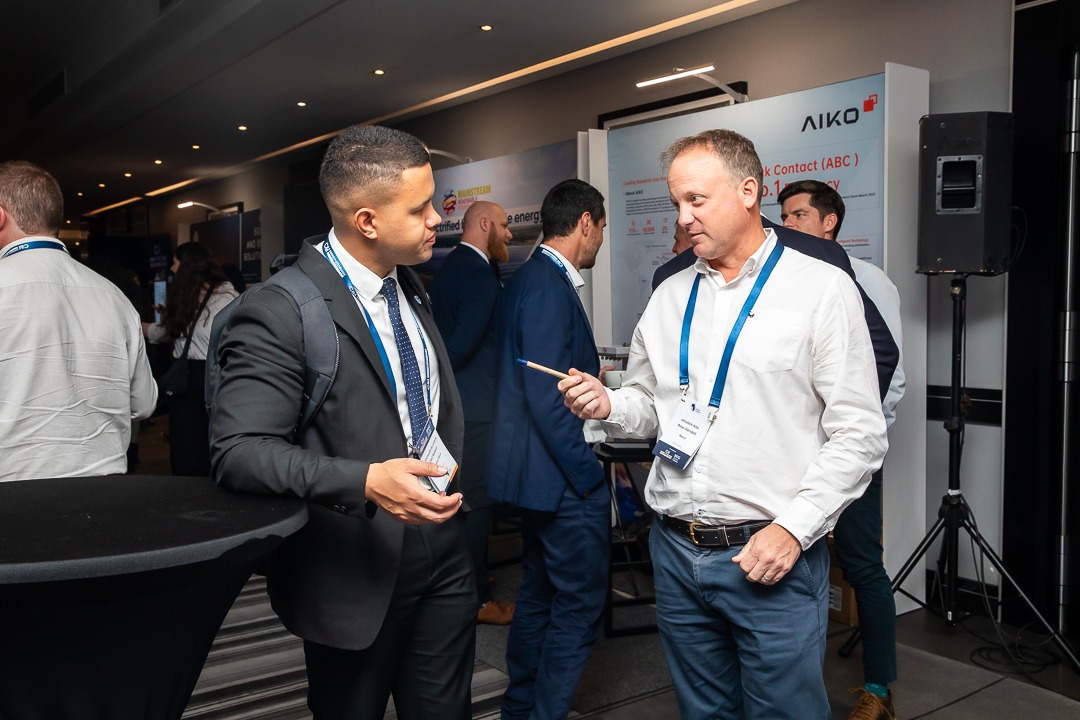
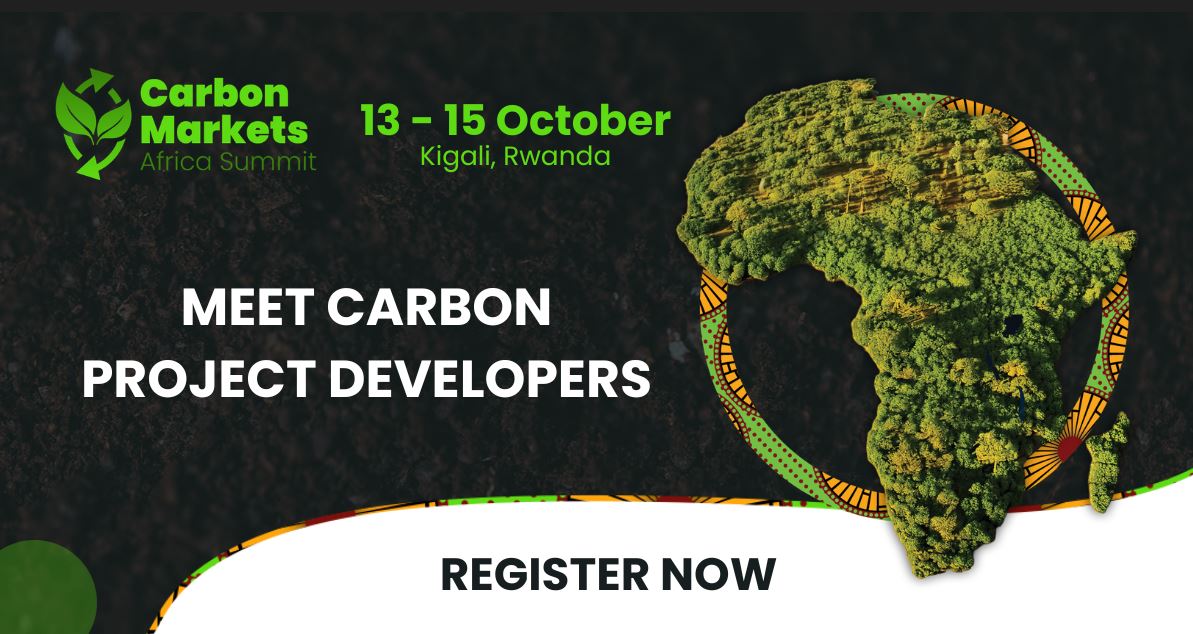
They will be central to the Carbon Markets Africa Summit (CMAS) 2026, taking place from 13 to 15 October at the Kigali Convention Centre in Rwanda. The summit will convene African governments, project developers, investors, buyers and technical experts involved in decisions across the carbon-market value chain.

Countries are approaching these decisions from different regulatory, economic and environmental positions. While recent developments in East Africa demonstrate growing market activity, questions concerning international requirements, technical capacity, investment and benefit-sharing are relevant across Africa.

Ousmane Fall SARR, Coordinator of the West African Alliance on Carbon Markets and Climate Finance, says:

“African countries are developing carbon markets from different starting points. Stronger African expertise and regional cooperation will be important if the continent is to contribute to the standards and market practices that determine how its projects compete, attract investment and create value.”

Against this continental backdrop, East Africa provides a timely example of how the market is developing. In January 2026, Rwanda and Singapore invited applications for carbon-credit projects under their bilateral Implementation Agreement, aligned with Article 6 of the Paris Agreement. Credits from authorised projects may be used by eligible Singapore-based carbon tax-liable companies to offset up to 5% of their taxable emissions, subject to both governments’ requirements.

African countries are developing carbon markets from different starting points

Across the continent, carbon market frameworks are rapidly taking shape. Kenya and Uganda are strengthening regulatory oversight, regional partnerships are helping governments build market capacity and infrastructure, and South Africa is advancing reforms to modernise its carbon-credit ecosystem and attract investment. Together, these developments are bringing greater focus to questions of authorisation, project ownership, verification, pricing and access to international buyers, while also raising expectations that carbon finance should deliver sustainable economic and development value beyond the credit itself.

Emmanuelle Nicholls, Portfolio Director for CMAS, says:

“A carbon credit may be the final product, but behind it are decisions about ownership, data, risk, pricing and who ultimately benefits. The conversations in Kigali will examine what credible participation looks like across the full carbon-market value chain.”

These decisions have consequences beyond individual transactions. Carbon finance is increasingly connected to conservation, agriculture, soil restoration, food security, clean energy and waste management. Its success will therefore also be judged by whether projects produce credible environmental outcomes and lasting benefits for African economies and communities.

A practical example comes from the Chinko Conservation Area in the Central African Republic, where revenue from the Chinko Carbon Project is channelled through a community fund that supports locally selected initiatives, including the expansion of a medical centre in Agoumar. At CMAS 2026, African Parks and Welthungerhilfe, both Bronze Sponsors, will share perspectives on how carbon finance can support conservation, climate resilience, food systems and community development, while highlighting broader questions around project governance, impact and the distribution of value.

From project-level impact to market-wide structures, these questions will underpin discussions at CMAS 2026. The programme will address government authorisation, buyer requirements, pricing and offtake, investment risk, early-stage finance, registries and African measurement, reporting and verification capacity. It will connect the question of who sets the terms with the practical requirements for building credible, investment-ready projects and transactions.

CMAS 2026 is hosted by the Ministry of Environment of Rwanda, with UNDP and the African Development Bank as host organisations, the Development Bank of Southern Africa as host partner and AUDA-NEPAD as strategic institutional partner.

Taking place ahead of COP31, CMAS will focus attention on the decisions behind every carbon credit and what they mean for African governments, projects, investors and communities.

Distributed by APO Group on behalf of VUKA Group.


Continue Reading

Trending