

Business
Stellantis Reports Q1 2024 Net Revenues and Shipments Reflecting New Product Transition

Stellantis Pro One commercial vehicles achieved market share leadership in the Middle East & Africa region in the quarter with 2L% market share
We are reducing inventories to reinforce our strong relative pricing ahead of our new or mid-cycle product launches this year in key regions
AMSTERDAM, The Netherlands, May 7, 2024/APO Group/ —
Net revenues of €41.7 billion, down 12% compared to Q1 2023 primarily due to volume, mix and foreign exchange headwinds, partly offset by firm net pricing; Consolidated shipments(1) of 1,335 thousand units, down 10%, reflecting production actions and inventory management to prepare for new product wave in H2 2024 compared with strong shipments in Q1 2023 to build inventory following a prolonged period of supply constraints; Total new vehicle inventory of 1,3U3 thousand units (Company inventory of 423 thousand units) at March 31, 2024, reflecting improving level and structure versus December 2023; Global BEV and LEV sales increased by 8% and 13%, respectively, versus Q1 2023; ongoing global focus with new BEVs launching throughout 2024; Ordinary dividend of €1.55 per share (1G% increase versus prior year) approved at AGM to be paid to shareholders on May 3, 2024; €3.0 billion share buyback on track for 2024 completion.
“While Q1 2024 year-over-year shipments and Net revenues comparisons were difficult due to transitions in our next generation product portfolio manufactured on new platforms, we are delivering clear improvements in key commercial dynamics with customer sales outpacing shipments. We are reducing inventories to reinforce our strong relative pricing ahead of our new or mid-cycle product launches this year in key regions. During Q1 2024, we have introduced four new models out of our full-year launch plan of 25 models, including 18 BEV nameplates, which we believe sets the stage for materially improved growth and profitability in the second half of the year.”
| RESULTS FROM CONTINUING OPERATIONS | FY 2024 GUIDANCE – CONFIRMEDRevenue backdrop: SupportiveAOI Margin(2): Double digit minimum commitment Industrial Free Cash Flows(3): Positive | |||
| Q1 2024 | Q1 2023 | Change | ||
| Combined shipments (000 units) | 1,371 | 1,538 | (11)% | |
| Consolidated shipments (000 units) | 1,335 | 1,47L | (10)% | |
| Net revenues (C billion) | 41.7 | 47.2 | (12)% | |
All reported data is unaudited. Reference should be made to the section “Safe Harbor Statement” included elsewhere within this document.
Stellantis N.V. today reported first quarter 2024 Net revenues and shipments reflecting production actions and inventory management strategies to prepare for the upcoming new product wave. Sales to customers were unchanged from prior year, with growth in Middle East & Africa (up 23% year-over-year) and Enlarged Europe (up L% year-over-year). Global BEV sales were up 8% and North America PHEV sales were up 7U% year-over-year. Jeep® Wrangler, Jeep® Grand Cherokee and Dodge Hornet were the top three most sold PHEVs in the U.S.(4) Stellantis Pro One commercial vehicles achieved market share leadership in the Middle East & Africa region in the quarter with 2L% market share, while maintaining its No. 1 position in both EU30 and South America, on its quest to achieve global market leadership by 2027. In EU30 BEV sales, Pro One also takes the top spot with 33% market share.
The Company’s key achievements toward the Dare Forward 2030 strategic plan include:
| CARE | TECH | VALUE |
| Announced partnership with California Air Resources Board that avoids 10-12 million metric tons of greenhouse gases in theU.S. and enhances ongoing commitment to strengthen Stellantis’ electrification offensive by promoting electric vehicle awareness, expanding charging infrastructure and driving dealer readiness.Redistributed C1.U billion to employees in 2024, totaling CL billion since 2021, based on record 2023 Full Year results.Conducted third global employee survey in February as part of the continuous listening approach to improve overall working experience and well-being. Nearly 1L2,000 employees responded – a 71% participation rate, an 8-point increase compared to prior year.Engaged young people in career development actions through:Battery Workforce Challenge, managed by Argonne National Laboratory for the U.S.Department of Energy, challenging teams to design, build, test and integrate an advanced battery pack for Ram ProMaster EV.Drive for Design contest, hosted by the Stellantis North America design team, invitedhigh school students to create their dream vehicle for 2040.As part of a broader stakeholder engagement plan, Stellantis CEO Carlos Tavares was joined by four internationally known experts and students from three universities in France, Morocco and the U.S. for the second annual Freedom of Mobility Forum to debate “How will our planet accommodate the mobility needs of eight billion people?” | Introduced three BEVs: Fiat Topolino, Maserati Grecale Folgore, Ram ProMaster EV; launch plan maintained. | Announced record investment plan for South America totaling C5.L billion (RT30 billion) from 2025 to 2030 to support the launch of more than 40 new products during the period as well as the development of new Bio- Hybrid technologies, innovative decarbonization technologies across the automotive supply chain, and strategic new business opportunities.Signed two fleet agreements:SIXT could buy up to 250,000 vehicles for its rental fleet in itscorporate countries across Europe and North America over the next three years.Ayvens will encourage affiliates to buy up to 500,000 vehicles for its long-termleasing fleet across Europe over the next three years.At the Shareholders’ Annual General Meeting on April 1L, 2024, C4.7 billion annual dividend approved (C1.55 per share), to be paid on May 3, 2024.On-going execution of C3.0 billion share buyback program.On track to deliver total capital returns in 2024 over C7.7 billion, representing an 11% yield as a percentage of Stellantis market capitalization on January 1, 2024. |
GUIDANCE AND OUTLOOK: The Company is reiterating a minimum commitment of double-digit Adjusted operating income (AOI) margin in 2024, as well as positive Industrial free cash flow, despite macroeconomic uncertainties.
On April 30, 2024 at 2:00 p.m. CEST / 8:00 a.m. EDT, a live webcast and conference call will be held to present Stellantis’ First Quarter 2024 Shipments and Revenues. The webcast and recorded replay will be accessible under the Investors section of the Stellantis corporate website at www.Stellantis.com. The presentation material is expected to be posted under the Investors section of the Stellantis corporate website at approximately 8:00 a.m. CEST / 2:00 a.m. EDT on April 30, 2024.
UPCOMING EVENTS: Investor Day – June 13, 2024; First Half 2024 Results – July 25, 2024; Third Quarter Shipments & Revenues – October 31, 2024
SEGMENT PERFORMANCE
NORTH AMERICA
| Q1 2024 | Q1 2023 | Change • Shipments down 20%, due largely to portfolio transitions, including refreshed Ram 1500 and new Dodge Charger, partly offset by growth in Jeep Wagoneer, which more thandoubled(102) • Net revenues down 15%, due to lower volumes and negative FX translation effects; partly offset by positive nameplate mix and net pricing from carryover actions and reduced(3,481) incentive spend | |
| Shipments (000s) | 407 | 50U | |
| Net revenues (C million) | 1U,2U1 | 22,772 | |
| ENLARGED EUROPE | |||
| Q1 2024 | Q1 2023 | Change • Shipments down L%, due to inventory reduction efforts with lower volumes mainly of Peugeot 3008, for which new model will ramp in Q2 2024, Fiat 500 and Opel Mokka, partlyoffset by growth in Jeep Avenger, Fiat Ducato & Panda and Citroën C3(42) • Net revenues down 13%, due to decreased volumes, higher buyback commitments due to improving rental car business, lower LEV mix and negative net pricing(2,055) | |
MIDDLE EAST & AFRICA
| Q1 2024 | Q1 2023 | ||
| Combined shipments(000s)(1) | 154 | 131 | |
| Consolidated shipments(000s)(1) | 118 | 83 | |
| Net revenues (C million) | 2,L87 | 2,1LL | |
| SOUTH AMERICA | |||
| Q1 2024 | Q1 2023 | ||
| Shipments (000s) | 177 | 1U1 | |
| Net revenues (C million) | 3,4LL | 3,523 | |
CHINA AND INDIA & ASIA PACIFIC
| Q1 2024 | Q1 2023 | ||
| Combined shipments(000s)(1) | 15 | 42 | |
| Consolidated shipments(000s)(1) | 15 | 28 | |
| Net revenues (C million) | 525 | U81 | |
| MASERATI | |||
| Q1 2024 | Q1 2023 | ||
| Shipments (000s) | 3.3 | 8.4 | |
| Net revenues (C million) | 313 | LU1 | |
Reconciliations
Net revenues from external customers to Net revenues
| 2024 (C million) | NOPTH 6MEPIC6 | ENL6PGED EUPOPE | MIDDLE E6ST & 6łPIC6 | SOUTH 6MEPIC6 | CHIN6 6ND INDI6 & 6SI6 P6CIłIC | M6SEP6TI | OTHEP(*) | STELL6NTIS |
| Net revenues from external customers | 1U,2U0 | 13,U85 | 2,L87 | 3,47L | 524 | 312 | 1,423 | ?1,GU7 |
| Net revenues from transactions with other segments | 1 | LL | — | (10) | 1 | 1 | (5U) | — |
| Nsť rsvsnuss | 1U,2U1 | 1?,051 | 2,G37 | 3,?GG | 525 | 313 | 1,3G? | ?1,GU7 |
(*) Other activities, unallocated items and eliminations
| 2023 (C million) | NOPTH 6MEPIC6 | ENL6PGED EUPOPE | MIDDLE E6ST & 6łPIC6 | SOUTH 6MEPIC6 | CHIN6 6ND INDI6 & 6SI6 P6CIłIC | M6SEP6TI | OTHEP(*) | STELL6NTIS |
| Net revenues from external customers | 22,772 | 1L,087 | 2,1LL | 3,547 | U7U | LU2 | UU2 | ?7,235 |
| Net revenues from transactions with other segments | — | 1U | — | (24) | 2 | (1) | 4 | — |
| Nsť rsvsnuss | 22,772 | 1G,10G | 2,1GG | 3,523 | U31 | GU1 | UUG | ?7,235 |
(*) Other activities, unallocated items and eliminations
Distributed by APO Group on behalf of Stellantis.












Business
Enlit Africa seeks contributions that move the conversation from strategy to execution: ensuring a Future Fit Africa

Business
CEM Africa Awards 2026 set to recognise Africa’s leading Customer Experience (CX) talent and innovation

The 2025 awards attracted more than 80 entries and 31 finalists, culminating in eight award winners
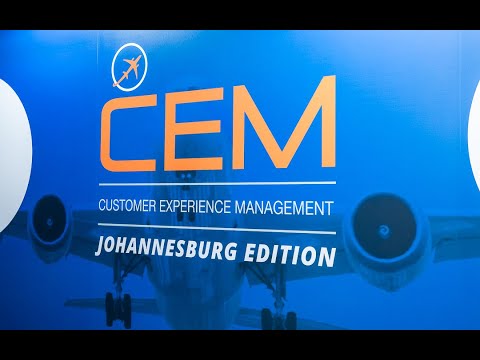
The calibre of organisations and individuals recognised through the CEM Africa Awards demonstrates just how much extraordinary CX work is being done across the continent
JOHANNESBURG, South Africa, September 25, 2026/APO Group/ –Customer experience professionals, teams and organisations across Africa have just days remaining to enter the 2026 CEM Africa Awards, with free applications closing on 30 September 2026.
Taking place on 10 November 2026 at the NH Hotel in Sandton, Johannesburg, the Customer Experience Africa Awards form part of the CEM Africa platform and recognise the individuals, teams, technologies and initiatives raising the standard of customer experience across the continent.
For organisations considering whether to enter, the company they could be keeping provides a compelling indication of the calibre of the awards.
A growing roll call of African CX leaders
The 2025 awards attracted more than 80 entries and 31 finalists, culminating in eight award winners. Finalists represented organisations spanning financial services, technology, telecommunications, retail, insurance, public services and social impact.
Among them were Absa, Capitec Bank, Santam, Telesure Investment Holdings, Equity Bank, Takealot.com, NTT DATA, Frogfoot, Telviva, Harambee Youth Employment Accelerator, the University of Pretoria and South Africa’s Department of Social Development.
The 2025 winners included Serisha Iyer of Absa Corporate and Investment Banking, named Rising Star in CX; Alma Angela Olela of Jubilee Health Insurance, named CX Leader of the Year; and Franco Cotumaccio of Shadow Global, winner of Breaking Barriers in CX.
Corporate winners included Telesure Investment Holdings for Best Overall CX Solution, Krisp for Best Use of AI, Telviva for Best Enterprise Contact Centre Platform, Harambee Youth Employment Accelerator for Best Customer Experience Team of the Year and the University of Pretoria for Best Citizen Experience Initiative.
That follows a 2024 edition in which winners included NCBA Bank, MultiChoice, Digital Solutions Group, Absa Bank and Telviva, alongside individual CX leaders from across the continent.
More than a trophy
For entrants, recognition through the CEM Africa Awards puts their work in front of a wider African CX community and an independent judging panel drawn from across the industry.
The 2026 judging panel includes global CX specialist Ian Golding; Andrew (Dré) Enebeli, Head of CX & Engagement at Access Bank; Dr Oliver Museka, President and Founder of IRDM College Eswatini; Jonathan Daniels, Managing Director of CX Centric; Joven Pillay, Partner and Head of Customer Consulting at KPMG; and Qaalfa Dibeehi, Managing Partner at Human2Outcome.
This year’s awards recognise excellence across four broad pillars – People, Innovation, Transformation and Government – covering categories including CX Leader of the Year, Rising Star in CX, Breaking Barriers in CX, Best Overall CX Solution, Best Use of AI, Best Enterprise Contact Centre Platform, Best Customer Experience Team of the Year, Best Digital Transformation in Public Services and Best Citizen Experience Initiative.
“The calibre of organisations and individuals recognised through the CEM Africa Awards demonstrates just how much extraordinary CX work is being done across the continent. These awards give that work a platform. Whether it is a major transformation programme, an innovative use of technology or an individual changing how their organisation thinks about the customer, we want to make sure Africa’s best work is being seen and recognised.”
- Briteny Price, Event Manager and CEM Africa Awards Director
Final opportunity to enter
Applications for the 2026 CEM Africa Awards are free and remain open until 30 September 2026. Finalists will be announced in October, ahead of the awards ceremony on 10 November at the NH Hotel, Sandton.
Organisations, teams and individuals working to improve customer and citizen experience across Africa are encouraged to submit their entries before the deadline.
Apply for the CEM Africa Awards 2026 by 30 September 2026
Submit your application (https://apo-opa.co/4hdcimx)
Explore the CEM Africa Awards
Visit the CEM Africa Awards website (https://apo-opa.co/4iNXzzM)
Distributed by APO Group on behalf of VUKA Group.
Business
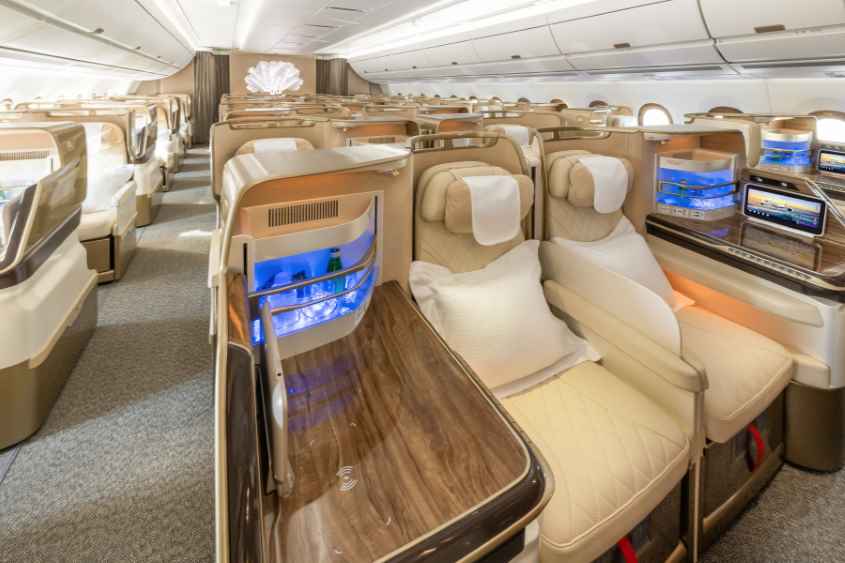
Emirates to bring the A350 to Nairobi, introducing next-generation cabin experiences
-

 Energy4 days ago
Democratic Republic of the Congo (DRC) Brings Oil Development Push to African Energy Week (AEW) 2026 as Hydrocarbons Minister Leads Sector Agenda
-
 Business4 days ago
Hong Kong outlines strategies for deepening development of the Guangdong-Hong Kong-Macao Greater Bay Area and enhancing green transformation
-
 Business4 days ago
AFRICLOUD Opens Lagos Region and Local-Currency Payments in African Markets
-

 Business4 days ago
Africa Finance Corporation (AFC) Supports Successful Close of ₦729 Billion Series 2 Bonds to Advance Nigeria’s Power Sector Reforms
-

 Business4 days ago
Binance Invests $100 Million in Circle, Expands Strategic Partnership and Renews for Five Years
-

 Business4 days ago
Alamein Africa Forum to bring together key political and business leaders
-

 Events3 days ago
Global Mayors Dialogue in Wuhan focuses on urban innovation and cooperation
-
Business4 days ago
South Africa’s Orange Basin Gains Momentum as Navitas Takes Block 1 CBK Operatorship